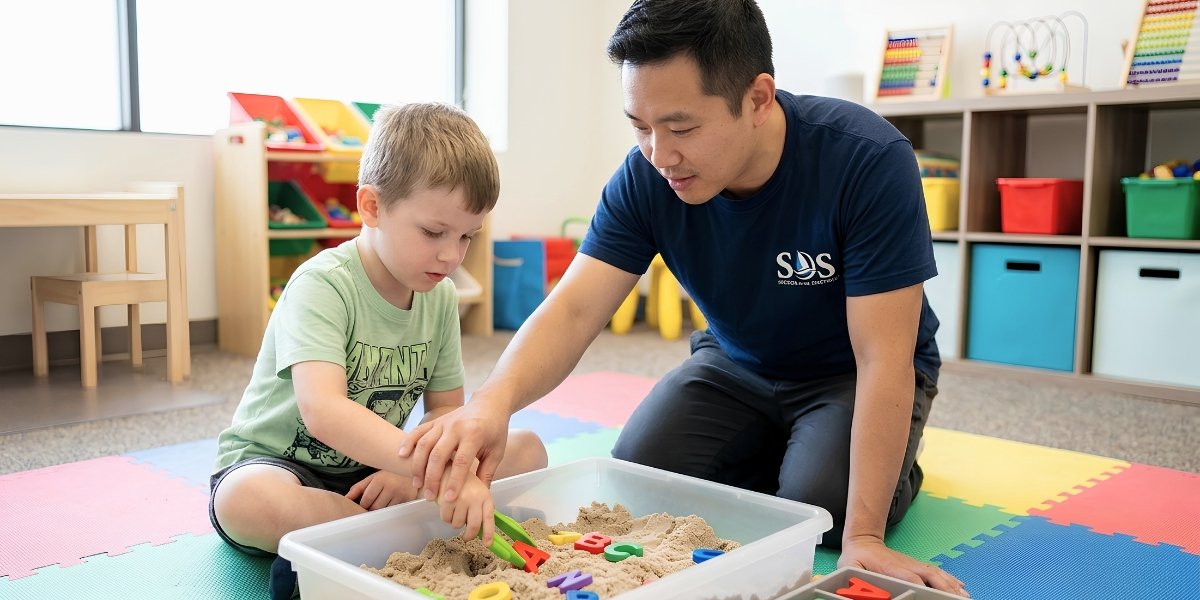
The environment within which therapy for autism is carried out has evolved significantly over the last few decades. In the early days of Applied Behavioral Analysis (ABA), autism therapy would mostly take place within the confines of the children’s homes. The therapists would work alongside the children and their families in familiar settings, often focusing on behaviors exhibited in the children’s day-to-day activities. With the increasing diagnosis of autism and an increase in the availability of behavioral therapy within health facilities, new environments for therapy emerged. Specific autism therapy centers began appearing as another means of delivering autism therapy outside the home.
The evolution of autism treatment services has paralleled that of diagnosis and recognition. Per the CDC, about one in 31 eight-year-old children in the United States was diagnosed with an autism spectrum disorder in 2022, which is up from one in 150 children diagnosed in 2000. With the increase in identified cases came a need for behavioral treatment that many healthcare organizations could not keep up with. The long queues, staff shortages, and increasing public awareness led service providers to think outside the box about delivery mechanisms while retaining the clinical aspect.
Home-based ABA became the dominant service model during the early development of intensive behavioral intervention. One reason was practical. Families often needed support in helping children develop communication, self-care, and daily living skills within their own environments. Working inside the home also allowed therapists to observe family routines and coach parents directly during treatment sessions. Parent participation remains an important component of many ABA programs today, and several researchers continue to view caregiver involvement as a key factor in helping children practice newly learned skills outside scheduled therapy sessions. At the same time, home-based care can pose logistical challenges, including scheduling, travel time, supervision, and the consistency of treatment environments.
The establishment of center-based treatment facilities became more widespread as providers sought specialized environments for behavioral interventions. Specialized treatment centers provided space for learning, peer engagement, clinical observation, and multidisciplinary services in a single location. At the same time, these centers enabled supervisors and clinicians to attend multiple treatment sessions without having to travel much. During the 2000s and 2010s, the number of staff members specializing in autism treatment increased, leading many organizations to establish their own treatment centers. Nevertheless, center-based treatment did not eliminate home-based treatment.
Research comparing treatment settings remains relatively limited, and experts have generally avoided presenting one model as universally preferable. A retrospective program evaluation published in Behavior Analysis in Practice examined clinical records from 313 children receiving ABA services and reported higher rates of skill mastery during center-based sessions than home-based sessions. The authors noted that variables such as greater supervision, reduced distractions, and additional opportunities for structured socialization might account for the findings. On the other hand, the study was retrospective, and further studies are needed to determine which aspects of the treatment settings account for the observed differences.
Other researchers have reached a more balanced conclusion by focusing on individual needs rather than identifying a single superior environment. A review published in the Journal of Autism and Developmental Disorders concluded that both home-based and clinic-based ABA offer distinct advantages. Home settings can offer more opportunities for family involvement and practicing daily living skills, whereas clinic settings can provide a more organized learning environment and greater availability of supervision and socialization with other children. In their paper, the authors noted that the treatment location should be chosen in accordance with the therapeutic objectives, the child’s educational needs, and the family situation.
These developments created opportunities for organizations that focused on center-based treatment. Success On The Spectrum entered the autism services market in Houston, Texas, in 2015, during a period when demand for ABA therapy was expanding nationwide. Founded by Nichole Daher, the organization initially operated a center-based clinic that combined Applied Behavior Analysis with speech therapy, occupational therapy, and caregiver training. According to company information, demand for services led to rapid expansion within the Houston area before the organization began exploring ways to establish additional locations in other parts of the country.
A significant change occurred in 2018 with the creation of SOS Franchising. Rather than expanding through acquisitions, Success On The Spectrum adopted a franchise model to open new center-based treatment locations. The organization has described this as the first franchise system dedicated to ABA services in the United States. Under the model, locally owned clinics operate using standardized procedures related to staff training, clinical supervision, operational systems, and quality monitoring. The approach introduced franchising into a sector where expansion had more commonly occurred through independent ownership or private equity-backed acquisitions.
The company’s focus on treatment centers, therefore, reflected general industry trends rather than being an isolated case. Success On The Spectrum ABA centers incorporate mock classrooms where children practice classroom routines such as raising their hands, participating in group instruction, following teacher directions, and transitioning between activities before entering school settings. Sensory rooms provide a controlled environment where therapists can teach self-regulation strategies while addressing sensory processing needs using individualized interventions. Life skills rooms simulate real-world environments in which children practice activities of daily living, including preparing simple meals, completing household chores, organizing personal belongings, dressing independently, and developing other functional skills that support long-term independence.
By incorporating these specialized spaces into treatment, center-based programs can provide structured opportunities to teach skills that extend beyond discrete behavioral targets and prepare children for success in school, home, and community settings.
This organization also expanded its community outreach by hosting autism festivals, parent workshops, and annual autism proms, all covered by the media in several states. These efforts, although they do not constitute clinical practice, highlight how certain organizations based on treatment centers have sought to promote themselves as community centers and treatment providers.
Over the late 2010s and into the early 2020s, service providers for people with autism became increasingly interested in facilities equipped for multidisciplinary service provision, parental training, and sensory environments.
The issue of treatment settings is continuously evolving as the number of people with autism increases, forcing healthcare providers to look for means of meeting the increasing demand for their services. Home-based ABA may be seen as an important form of treatment in such cases when the treatment objectives relate to routine activities and caregiver training. Treatment centers will continue expanding as well. Success on the Spectrum’s growth from a single Houston clinic into a national franchise network reflects changing approaches to autism service delivery rather than a replacement for existing models. Together, home-based and center-based programs now form complementary parts of a healthcare system that continues to adapt to the changing needs of autistic children and their families.
Disclaimer: This article is for informational purposes only and does not constitute medical advice. Autism treatment should be individualized, and families should consult qualified healthcare professionals when evaluating therapy options.