Saksham Bhartiya’s starting point for Centsible Education was not a classroom or a competition. It was the street outside it. He kept seeing children selling balloons and flowers who should have been in school, and it struck him that financial education, where it existed at all, was not reaching the people who needed it most. On the other end of his own experience, he had gone through years of schooling without a single class on personal finance. Compound interest showed up as a math problem to solve, never as something that would eventually happen to his own savings. That gap, between what schools taught and what people actually needed to know before making expensive mistakes with their money, became the reason Centsible Education exists.
Building for the Room, Not the Curriculum
Saksham did not start by writing a generic financial literacy course and looking for an audience. He started by figuring out who was actually going to be in the room and building around them. Centsible now teaches across three broad age groups, each with its own curriculum rather than the same deck with a different introduction slide. Children between 6 and 18 get sessions on the basics of saving and compounding, aimed at building the habit early. Adults between 19 and 42 get instruction on insurance and different account types, since that is the stage where people are actually making those decisions for the first time. Seniors 55 and older get retirement planning, since that is what is actually relevant to their lives.
That same instinct, design for the specific person in front of you rather than a general audience, shaped Centsible’s approach to language and format. The platform now runs in six languages, selected based on how many people each one would actually let Centsible reach rather than translating indiscriminately. For younger learners, Saksham built a set of story books that rework stories children already know into financial lessons. The Three Little Pigs becomes a lesson about investing, using a format kids are already comfortable with instead of introducing something unfamiliar and hoping it lands. For older students, he built a crypto simulator, not as a novelty but as a practical check: school will not test whether a student actually understood a concept like investing, so the simulator gives Centsible a way to see if a student can apply the idea, not just sit through a lesson about it. An AI tutor named Penny handles a different problem entirely, letting students ask questions and get explanations shaped around however they specifically get stuck, rather than a single one-size-fits-all answer.
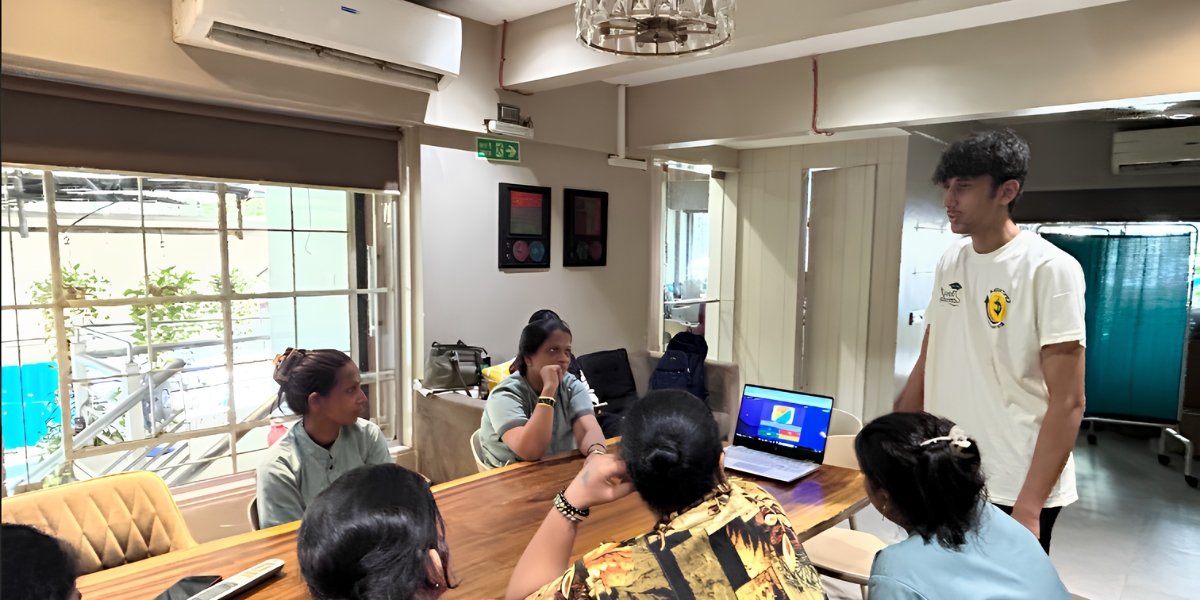
The NGO partnerships that gave Centsible access to real audiences, including Desire Society, Sahabhaav, and Assisi Bhavan, each required the same audience-first thinking. The content at each organization looks different on paper, even where core concepts overlap, because the people being taught are not the same. When Assisi Bhavan told Saksham that senior citizens in India often do not manage their own finances directly, meaning a session built around personal money management was not landing the way the team expected, he adjusted the approach for that specific partner rather than treating the feedback as a one-off exception.
Measuring What Actually Changed
Saksham holds Centsible to a standard most youth-led education efforts do not bother setting: attendance is not success. He had watched other financial literacy programs run a single session, mark attendance, and call it impact, without ever checking whether anything had actually changed for the people who sat through it. Centsible runs a quiz at the end of every session, not as a formality but as the actual check on whether the material landed. If a batch underperforms on certain questions, that flags a gap in the curriculum or the teaching, and the next session gets adjusted accordingly.
The clearest example of that standard in practice came out of a banking-focused session built specifically around different account types rather than a general talk about why saving matters. Three people who had never had a bank account before opened one as a direct result. Saksham’s team did not stop there. They stayed in touch with those three people and now send reminders for monthly deposits, so the account becomes a habit rather than something opened once and forgotten.
Not every outcome shows up as a number. During a session at a senior citizen care facility, a staff member asked about the Sukanya Samriddhi Yojana, a government savings scheme, and the team walked her through how it actually worked. Saksham describes watching the concept visibly click for her, the kind of genuine engagement that does not come from someone sitting through a mandatory training. That reaction, someone leaving with something they did not have before, whether a bank account or the confidence to ask the right question about their own money, is the outcome Centsible is actually built to produce.
The same design-for-the-audience thinking that shaped Centsible in India carried directly into how it expanded abroad. The Switzerland chapter started when Saksham reached out to a friend there directly. The Australia chapter started the other way, with a student reaching out to him first, interested in bringing Centsible to their own school. Both chapters have since run sessions using the Centsible curriculum, reaching more than 20 students so far, evidence that the underlying problem, nobody teaching young people this anywhere, was never unique to India.
Where the Discipline Points Next
He intends to pursue a career in Private Equity, and he is direct that the two paths are not in tension. The same rigor that tells him whether a Centsible session actually changed behavior, rather than just filled a room, is the rigor an investment decision depends on. What he wants to carry from one into the other is not the subject matter but the standard: build for the specific people or the specific market in front of you, track whether the underlying thing you are betting on is actually true, and treat a good story as insufficient until the outcome confirms it. Centsible Education, still free, still expanding one language and one country at a time, is what that standard looks like when the outcome you are chasing is not a return but a bank account that did not exist the month before.