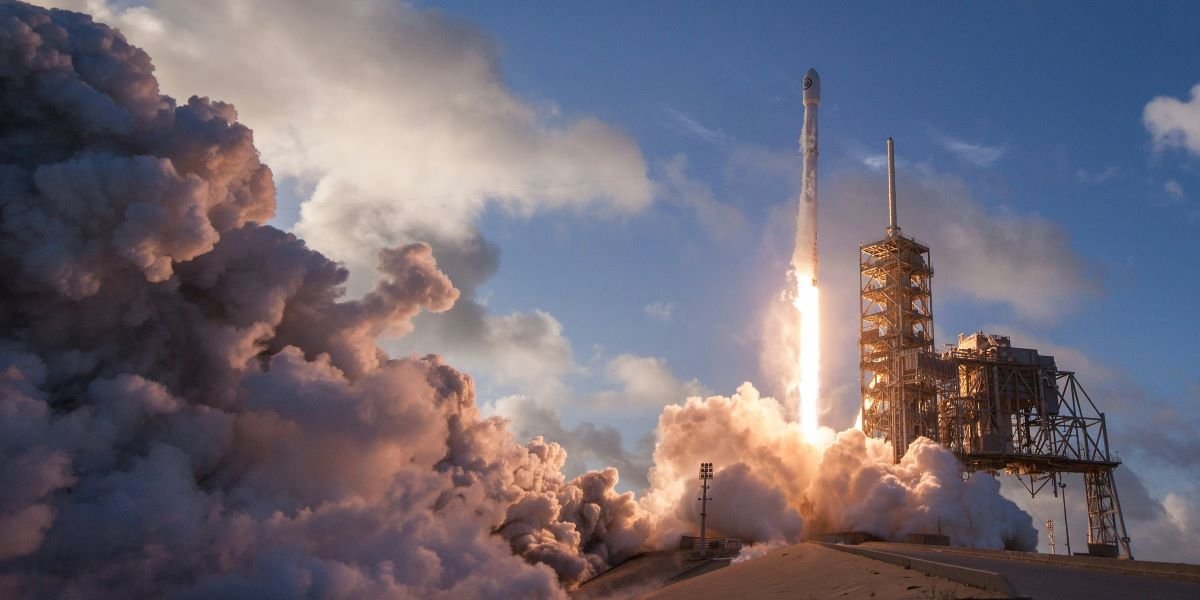
SpaceX’s Starship reached orbit for the first time on September 28, 2026, during Integrated Flight Test-14 from Starbase, Texas. It deployed 26 Starlink V3 satellites before an early splashdown in the North Pacific. The milestone opens a busy week for U.S. human spaceflight, with NASA’s Crew-13 scheduled to launch to the International Space Station on Thursday, October 1.
Key Takeaways
- Starship lifted off at 8:48:59 a.m. ET on September 28 from Starbase, Texas, six days after its original September 22 target.
- The flight deployed 26 Starlink V3 satellites, the first operational satellites of that generation.
- One of the ship’s six engines shut down early, and SpaceX brought the vehicle home after 3 hours, 8 minutes and 27 seconds instead of completing the planned six orbits.
- Starship reached orbit 18 years to the day after SpaceX’s Falcon 1 first reached orbit on September 28, 2008.
- Crew-13 is scheduled to launch Thursday at 11:10 a.m. ET from Cape Canaveral Space Force Station, with docking at the ISS planned for 8:00 p.m. ET.
- NASA has contracted for three more Crew Dragon flights in 2027 and 2028, while the ISS remains scheduled for deorbit in 2030.
Starship Flight 14 Reaches Orbit Despite an Early Engine Shutdown
Starship’s 14th integrated flight test was the first attempt to put the vehicle into orbit. Previous Starship test flights had traveled through space on suborbital paths toward the Indian Ocean without reaching orbit. Flight 14 was designed to go further, with six orbits, a satellite deployment and a controlled splashdown in the Pacific Ocean west of Chile.
The flight did not go entirely to plan. One of the six engines on the Starship upper stage shut down early. SpaceX still carried out the orbital insertion burn, and about 25 minutes after liftoff the ship fired a single Raptor engine briefly to enter orbit. The Super Heavy booster also had issues with two of its engines during ascent.
SpaceX had said before the flight that it would not take the final step into orbit unless it was certain there was enough redundancy in the hardware needed for the deorbit burn at the end of the mission. That condition was met. Because of the engine shutdown, though, SpaceX decided to end the flight early. Instead of a roughly 10-hour mission ending west of Chile, Starship splashed down in the North Pacific, north of Hawaii, just before noon ET.
“Splashdown confirmed. Congratulations to the entire SpaceX team on the first orbital flight of Starship!” SpaceX posted on its official X account.
Starlink V3 Deployment Makes Flight 14 Starship’s First Commercial Mission
The satellite deployment gave Flight 14 a commercial purpose that earlier test flights did not have. Starship deployed 26 Starlink V3 satellites, the first operational satellites of the new generation. That made Flight 14 the first Starship mission to deliver a revenue-generating payload, supporting SpaceX’s satellite internet business, which is the company’s main revenue source.
That payload capacity is central to Starship’s business case. A fully operational Starship is designed to carry far more mass per launch than current rockets, which would let SpaceX expand its satellite network faster and, over time, lower the cost of each launch. For U.S. consumers, especially in rural areas and places without fiber, faster deployment of new-generation satellites could affect the availability and capacity of satellite internet service.
Flight 14 also marks progress for NASA’s lunar program. Starship is the vehicle NASA selected as a human landing system for Artemis. The Artemis II mission carried four astronauts around the Moon in April 2026, so an orbital Starship is a necessary step toward the landing missions that follow.
Crew-13 Prepares for Thursday Launch to the International Space Station
While Starship dominated Monday’s headlines, NASA and SpaceX are preparing for the next crew rotation. The Falcon 9 rocket and Dragon spacecraft for Crew-13 rolled out to the launch pad at Cape Canaveral Space Force Station on Sunday, September 27.
The four-person Crew-13 team is NASA astronaut Jessica Watkins as commander, NASA astronaut Luke Delaney as pilot, Canadian Space Agency astronaut Joshua Kutryk as mission specialist, and Roscosmos cosmonaut Sergey Teteryatnikov as mission specialist. The crew arrived at Kennedy Space Center on September 26. A prelaunch news conference is scheduled for Wednesday, September 30, at 2:30 p.m. ET, and liftoff is set for Thursday at 11:10 a.m. ET, weather permitting.
Crew Dragon’s Role Grows as NASA Plans the Space Station’s Final Years
Crew-13 comes at a moment when NASA depends heavily on a single crew vehicle. SpaceX’s Crew Dragon is currently the only U.S. spacecraft that can ferry astronauts to and from the ISS. NASA recently contracted for three more Crew Dragon flights in 2027 and 2028.
The timeline is also a planning challenge. SpaceX intends to retire Crew Dragon and the Falcon 9 rocket once Starship is operational. The ISS is scheduled to be deorbited in 2030, and the Senate Commerce Committee is working to extend the station’s life to 2032. Starship’s first orbital flight makes the question of what comes next more pressing for NASA and its partners.
FAQs
Did SpaceX’s Starship reach orbit?
Yes, Starship reached orbit for the first time on September 28, 2026, during Integrated Flight Test-14. It deployed 26 Starlink V3 satellites before splashing down in the North Pacific.
Why did Starship Flight 14 end early?
One of the ship’s six engines shut down early, so SpaceX decided to return the vehicle ahead of schedule. The mission lasted 3 hours, 8 minutes and 27 seconds instead of the roughly 10 hours planned.
When does Crew-13 launch to the International Space Station?
Crew-13 is scheduled to launch Thursday, October 1, 2026, at 11:10 a.m. ET from Cape Canaveral Space Force Station in Florida. Docking with the ISS is planned for 8:00 p.m. ET the same day.
Who is on the Crew-13 mission?
The Crew-13 team is NASA astronauts Jessica Watkins (commander) and Luke Delaney (pilot), Canadian Space Agency astronaut Joshua Kutryk, and Roscosmos cosmonaut Sergey Teteryatnikov. Kutryk and Teteryatnikov serve as mission specialists.
What are Starlink V3 satellites?
Starlink V3 satellites are the newest generation of SpaceX’s internet satellites. The 26 satellites deployed on Starship Flight 14 are the first operational V3 satellites in the network.