By: Daisy Melendez
The American beauty aisle can resemble a pageant with too many tiaras. Everyone glows. Everyone is “clean.” Everyone promises the sort of reinvention once reserved for Hollywood starlets and presidential comebacks. Amid that parade of polished claims, trust has become the rarest ingredient on the shelf. That is why Dear Klairs’ move into the physical U.S. stores of OLIVE YOUNG, Korea’s leading beauty and lifestyle retailer, feels less like another product shuffle and more like a meaningful retail moment.
K-beauty has spent years charming American consumers with glass-skin aspirations, inventive ingredients, and packaging polished enough for its own close-up. Novelty, however, burns fast. American shoppers have grown more discerning, and many now want more than aesthetic appeal. They want brands that can represent Korean skincare with consistency, clarity, and staying power. Wishcompany’s expansion with Dear, Klairs, and By Wishtrend into Olive Young’s U.S. retail footprint suggests a category that is growing up gracefully, rather than simply chasing the next bright, shiny bottle.
Why Credibility Matters in K-Beauty’s U.S. Expansion
American consumers have learned that skincare hype can spread at the speed of an algorithm and disappear just as quickly. Social media can create overnight sensations, but it does not automatically create trust. That reality matters in a category as crowded as beauty, where every label claims to be transformative and every serum seems to arrive with a halo.
K-beauty faces an additional challenge. Western marketing has often reduced it to shorthand, turning a complex skincare culture into a blur of trends and 10-step mythology. A more sophisticated U.S. shopper now wants proof of formulation discipline and brand coherence. Those shoppers are not simply buying Korean skincare because it is Korean. They are choosing brands that seem capable of carrying that identity with substance.
Wishcompany has some foundation for that argument. The South Korean company has operated internationally for years, and Klairs already has a visible U.S. presence through retailers including Ulta. That matters because credibility rarely arrives wrapped in novelty alone. It usually comes from consistency over time.
Dear Klairs, as a Credibility Builder
Dear Klairs has built a reputation on calm rather than commotion. Plenty of beauty brands behave as if they are auditioning for attention, but Klairs has long leaned on a gentler proposition: skincare for sensitive skin, presented with clarity rather than chaos. That brand identity has given it a steadier kind of authority.
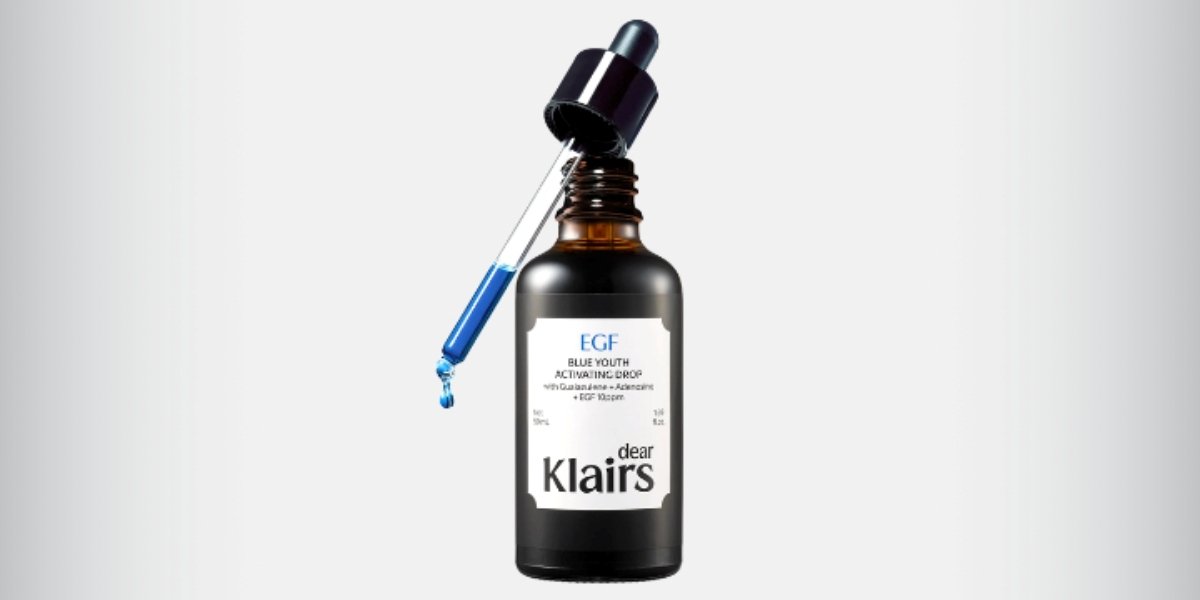
The products associated with this latest U.S. retail move fit that profile. Freshly Juiced Vitamin Drop is already one of the brand’s best-known products, and Midnight Blue Youth Activating Drop extends the same emphasis on care and restraint. Klairs’ appeal comes from the sense that it is not trying to dazzle consumers into submission. It is trying to earn repeat trust, which is a more durable achievement.
That distinction matters in the American market. Too often, irritation gets marketed as evidence that a product is “working,” as though skincare must punish before it can perform. Klairs offers a different message. Gentle does not have to mean forgettable, and measured does not have to mean bland. A brand that knows its lane can sometimes travel farther than one that constantly changes lanes.
OLIVE YOUNG U.S. as a Validation Layer
Retail placement still means something, even in an age dominated by scrolling, swiping, and one-click evangelism. Shelf space at OLIVE YOUNG’s U.S. stores does not make a brand infallible, but it does function as a meaningful signal. Curation matters, especially in K-beauty, where abundance can thrill consumers one minute and overwhelm them the next.
OLIVE YOUNG’s U.S. expansion, beginning in Pasadena and extending to Century City, gives American shoppers a more guided entry point into the category. That setting can help brands such as Dear Klairs appear not merely trendy, but contextually credible. A curated retailer often acts as interpreter as much as seller, helping consumers separate substance from spectacle.
What “Stateside” Acceptance Could Look Like Next
Dear Klairs is unlikely to gain ground in America by pretending to be a domestic beauty brand with a Korean accent. Stronger prospects lie in doing the opposite. Its appeal rests in offering a distinctly Korean approach to skincare, one shaped by gentleness, patience, and formulation clarity that happens to travel well across borders.
That may be the larger lesson for K-beauty in the United States. The brands with staying power may not be the loudest ones. They may be the ones who feel most coherent when the marketing lights dim. American beauty has never been short on drama. A brand such as Dear, Klairs makes a persuasive case for something rarer: credibility with good skin and no need to shout.