By: Matthew Davis
In 1997, most websites were selling approximately twenty percent of their available advertising inventory and leaving the other eighty percent empty with zero revenue attached to it. The industry hadn’t figured out how to sell the rest, partly because the tools weren’t mature, partly because the demand wasn’t there yet, and partly because nobody had applied the right mental model to the problem. David Moore had spent almost two decades figuring out how to sell television inventory that the networks considered unsellable. He looked at the internet and saw the same structural problem with the same available solution.
He went after direct response advertisers who would pay for performance, using models that anticipated pay-per-click and commission structures before anyone had standardized that terminology. The approach was essentially what television station rep firms had been doing for years. You took inventory nobody else could sell, you found buyers who cared about response rather than prestige, and you priced it accordingly. Substituting website for television station made it sellable to buyers who didn’t understand the new medium because they recognized the underlying logic of what they were being asked to do.
That original insight survived the crash even though the specific business built around it did not. When ninety percent of the websites paying 24/7 for ad representation went under, most of the revenue went with them. But when Real Media’s technology gave them the tools to execute the idea properly after the 2001 merger, and when Xaxis built a very large business on the same logic inside WPP years later, the vision proved correct. The inventory had real value. You had to be willing to sell all of it, and willing to survive long enough to build the infrastructure to do it reliably at scale.
What the Crash Actually Was
The dot-com crash is remembered primarily as a story about foolishness and excess, and there was genuinely plenty of both. David was at a family reunion in January of 2000 telling eighty-five relatives how extraordinary business was while the stock sat at its all-time high, a memory he recounts with the appropriate self-awareness. But the crash was also a story about invention happening in real time, and that dimension of the period tends to get buried under the Pets.com jokes and the retrospective wisdom of people who claim they saw it coming.
Pets.com is remembered as the defining symbol of dot-com stupidity. But Pets.com was right about the fundamental market opportunity. People do want to buy pet food online. Chewy does exactly that today, with a mature business model, faster shipping, and better logistics than anyone could access in 1999. The idea wasn’t wrong. It was early, and it was executed in a capital environment that rewarded growth over sustainability until the moment it didn’t.
Almost everything the digital advertising industry runs on today, including ad serving technology, behavioral targeting, performance-based pricing models, and viewability measurement standards, was invented by people who then lost their jobs when the capital dried up and the companies they worked for collapsed. The bubble popped. The ideas underneath the bubble didn’t. If you only know the period through the crash narrative, you are looking at the wreckage and missing the blueprints that were embedded in it.
What the IAB Changed
David’s involvement with the Interactive Advertising Bureau, eventually as chairman and then as the first chairman of the IAB Tech Lab, taught him something that shaped his decisions inside WPP in ways that had significant financial consequences. A rising tide lifts all boats, and the work of creating industry standards, however unglamorous and however slow, was what made the whole category sellable to serious advertisers with serious budgets.
Before the IAB created common formats and measurement standards, internet advertising was genuinely the Wild West, with every company operating on its own definitions of what they were selling and how to verify whether it worked. That chaos protected nobody and served nobody well. Standards created the stability that let real investment flow in, and real investment was what turned an interesting experiment into an actual industry.
That lesson applied directly to the Xaxis deal. When David and Irwin Gotlieb structured the joint venture, GroupM received seventy percent and 24/7 received thirty. Sir Martin Sorrell told David it was a terrible deal for his side and offered to renegotiate. David declined. If GroupM owned a meaningful stake, they would actively feed the business, and everyone would make more money from a larger pool than they would from a larger percentage of a smaller one. That is an industry-level way of thinking applied inside a single corporate negotiation, and it was one of the best decisions he made at WPP.
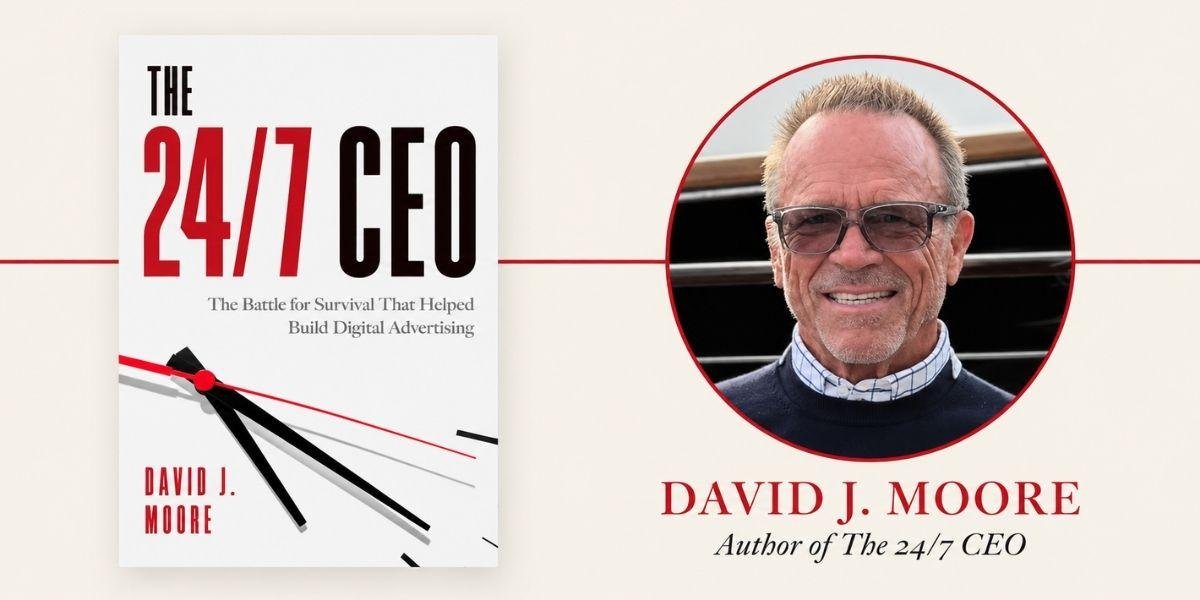
The story of how internet advertising was actually invented. The 24/7 CEO by David Moore is available now on Amazon.