By: Laura Zanky
There is a distinction at the heart of The Gift of Time that Erika Debrah Reed makes early and returns to throughout the book, and it is one that most discussions of artificial intelligence never quite arrive at. The distinction is between efficiency and meaning. A society, she writes, may become extraordinarily efficient while remaining deeply confused about what its efficiencies are for. Earlier technological revolutions promised liberation from repetitive labor and in many respects delivered it. Mechanized farming reduced physical toil. Modern transportation compressed journeys. Networked computing made vast archives instantly accessible. And yet every gain also reorganized expectations. The capacity to answer messages instantly became the expectation of instant response. Increased productivity became a justification for increased output. The line between work and life blurred. The modern individual, surrounded by tools designed to save time, often feels starved of it.
Reed does not offer this observation as a reason for pessimism about AI. She offers it as a reason for intentionality, as the specific argument for why the question of what we will do with AI-enabled time savings is more important than the question of how much time AI will save us. The technology alone does not guarantee anything. The transformation requires a prior clarity about what you actually want to do with the time you are reclaiming, and that clarity is the thing the book is most fundamentally trying to help you develop.
That purpose shapes everything about the book’s structure and tone. Reed traces the philosophy of time from Aristotle to Einstein not because it is interesting background material but because you cannot think clearly about what it means to have more time without understanding what time actually is. She follows the history of autonomous vehicles not to predict adoption curves but to understand how technology changes the experience of being human inside a moving world. She examines humanoid robotics not to speculate about job displacement but to explore what becomes possible for caregiving, for elder independence, for the redistribution of domestic labor, when machines absorb the physically consuming and emotionally draining maintenance work of daily life.
Reed’s background- engineering, strategic management, Kellogg MBA, senior strategist for a major retail organization, advisor to venture capital- brings a specific and unusually grounded intelligence to these questions. She is not theorizing from the outside about what AI might eventually produce. She is someone whose professional life is spent inside the systems that are producing it, and her writing reflects that proximity in every chapter.
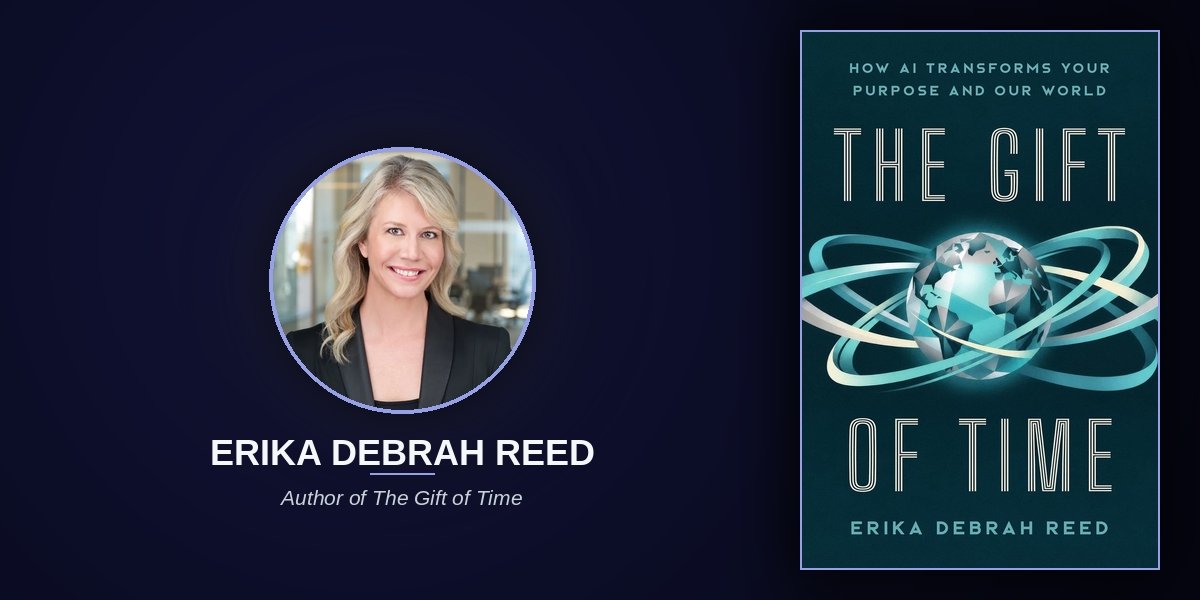
The Gift of Time is the book that takes seriously both the extraordinary promise of what AI is returning to human beings and the genuine difficulty of receiving that gift well. Both of those things deserve to be taken seriously, and Reed takes both of them seriously with equal care.
If you want an AI book that respects both the genuine promise of the technology and the genuine challenge of living within it well, The Gift of Time by Erika Debrah Reed is the most thoughtful and the most complete treatment currently available. Grab your copy on Amazon today and start the most important preparation for the AI era: figuring out what you will do with the time it gives back.