
By: Eden Halliday
The landscape of real estate investment is evolving rapidly. As housing affordability becomes a critical issue in major and secondary markets alike, investors are seeking new models that balance strong cash flow with operational ease. One of the fastest-growing strategies in this space is mid-term co-living, particularly when paired with platforms like PadSplit. But while the returns on rent-by-room models are attractive on paper, execution is another story. From identifying properties that qualify for co-living conversion to coordinating renovations, furnishings, utilities, and property management, it’s an intensive process. That’s where CoLiving LaunchPad comes in. This service-oriented platform specializes in helping investors acquire, set up, and rent co-living properties without having to become full-time landlords or project managers. In this article, we explore the full lifecycle of a mid-term rental conversion and how CoLiving LaunchPad simplifies each step, making it feasible and even enjoyable for everyday professionals and investors to participate in the co-living movement.
Understanding the Mid-Term Co-Living Model
Unlike short-term rentals (which focus on nightly guests) or long-term leases (which lock tenants into 12-month agreements), mid-term co-living homes cater to renters looking for flexibility and affordability. These tenants often include:
- Gig economy workers
- Healthcare professionals on travel assignments
- People relocating to new cities
- Individuals facing credit or income verification challenges
- Young adults priced out of traditional apartment rentals
In a PadSplit-style property, each bedroom is rented individually, typically every week. Renters gain access to a private bedroom and shared common spaces, such as bathrooms, kitchens, and living areas. The model provides affordable housing options to those who need them and stronger potential income for owners willing to spend on the right structure.
The Real Challenge: Execution
While the economics of mid-term co-living look attractive, the barrier to entry is high. Investors must navigate:
- Zoning laws and neighborhood regulations
- Construction or layout modifications to increase bedroom count
- Furnishing multiple spaces with budget-conscious but durable products
- Setting up all utilities and services, including Wi-Fi, smart locks, and appliances
- Listing and managing the property on platforms like PadSplit
- Hiring a manager (or self-managing), weekly payments, check-ins, cleanings, and repairs
Many would-be investors never move past the research phase because of the perceived (and actual) operational lift. That’s the exact problem CoLiving LaunchPad set out to solve.
What Is CoLiving LaunchPad?
CoLiving LaunchPad is a done-for-you service platform that helps buyers:
- Find homes suited for co-living conversion
- Coordinate required design, furnishing, and permitting
- Launch the home on mid-term rental platforms like PadSplit
- Introduce property management or help facilitate day-to-day hosting
In short, it’s a turnkey experience for real estate investors who want cash flow without complexity.
The 6-Step CoLiving LaunchPad System
Let’s take a closer look at how CoLiving LaunchPad works:
1. Property Discovery and Underwriting
CoLiving LaunchPad begins by helping clients source eligible home properties with floor plans, zoning, and locations that can accommodate 5 to 8 bedrooms post-renovation. These properties are typically in markets where PadSplit operates and where there is strong demand for affordable housing. Each property is underwritten based on estimated rent-per-room projections, cost of furnishing, and proximity to employment hubs.
2. Design & Renovation Coordination
Once a property is selected and under contract, the team evaluates how to optimize it for co-living. This often includes:
- Converting dining rooms or flex rooms into bedrooms
- Adding partition walls or doors for privacy
- Updating bathrooms and kitchens for shared living
- Installing durable flooring and lighting
LaunchPad coordinates general contractors and ensures any updates align with platform guidelines.
3. Furnishing & Setup
A professionally designed furnishing package is installed, including:
- Bedroom furniture for each room (bed, nightstand, dresser)
- Kitchen essentials and small appliances
- Common area seating and decor
- Smart locks or keypads for entry
- Wi-Fi and utility setup
The entire setup is managed by CoLiving LaunchPad, allowing investors to remain hands-off.
4. Platform Listing and Onboarding
After the property is ready, it is listed on PadSplit (or another approved platform). LaunchPad assists with:
- Professional photography
- Setting up weekly rental pricing per room
- Writing platform-compliant descriptions
- Ensuring platform approvals and verification steps are complete
5. Host Manager Pairing
Most investors don’t want to manage tenant communication, weekly payments, repairs, or turnovers. CoLiving LaunchPad introduces property owners to vetted host managers, individuals, or companies experienced in operating PadSplits or similar co-living homes.
6. Ongoing Oversight
Even after the home is live, LaunchPad provides limited post-launch support, helping address early issues and offering continued access to support vendors.
Benefits of the CoLiving LaunchPad Model
Here’s why this model is gaining traction with investors:
1. Passive-Ready Investment
For those with full-time jobs, families, or existing portfolios, managing contractors, purchasing furniture, and onboarding listings is simply not feasible. CoLiving LaunchPad offers a hands-off option.
2. Speed to Income
Whereas traditional renovation projects can stretch out for months, LaunchPad has standardized its operations to launch most projects within 30–45 days of closing.
3. Cash Flow Optimization
Renting by the room often increases total monthly gross income. Many co-living homes generate 2x–3x the revenue of a single-tenant lease, though this varies by market.
4. Compliance Awareness
LaunchPad ensures that zoning, room layout, and rental terms align with local laws and PadSplit requirements, helping investors avoid costly mistakes.
5. Impact-Oriented Returns
Each co-living home can house 5–8 individuals who would otherwise struggle to find stable, affordable housing. For socially conscious investors, this creates an appealing dual benefit.
Common Use Cases
Let’s consider a few types of investors that are well-suited to CoLiving LaunchPad’s service:
Remote Professionals Individuals with strong income but no time to manage a real estate asset can deploy capital into a managed co-living project and earn rental income passively.
First-Time Investors
Those looking for a structured introduction to real estate can override guesswork and learn through a managed, end-to-end process.
Mission-Driven Landlords Owners with a heart for housing may find satisfaction in contributing to affordable living, while still earning returns that outperform traditional rentals.
Portfolio Diversifiers
Experienced investors seeking to diversify from vacation rentals or long-term leases can tap into mid-term co-living with professional support.
Why the Mid-Term Rental Model Outperforms in Today’s Market
Several structural trends are making co-living models more relevant:
Migration & Urbanization: Cities are drawing in more workers, but housing is not keeping pace.
Remote Work & Gig Economy: People need flexibility, not 12-month leases.
Affordability Crisis: With inflation and rent spikes, renters are turning to room-by-room housing.
Municipal Restrictions on STRs: As Airbnb regulations increase, co-living offers a more stable alternative.
Investor Pressure: Traditional rentals often don’t cash flow at 7%+ mortgage rates. Mid-term strategies are filling the gap.
CoLiving LaunchPad capitalizes on all these trends by helping investors deploy faster, more efficiently, and with mission-aligned returns.
Risk Considerations
Even with a managed experience, co-living is not risk-free. Investors should evaluate:
Platform Terms and Policies
PadSplit may change fees, requirements, or onboarding timelines, which could affect performance.
Local Regulations
Although LaunchPad reviews zoning and code, investors should still confirm local compliance.
Vacancy Rates
While demand is strong, room turnover can be higher than long-term tenants. Proper host management is key.
Wear and Tear
Shared spaces can see higher usage, increasing maintenance costs over time.
These risks are inherent to any rental model, but with coordinated execution, they can be mitigated or planned for more effectively.
Financial Illustration (Example Only)
Let’s examine a sample profile. Note: These are estimates based on PadSplit public data and may vary widely.
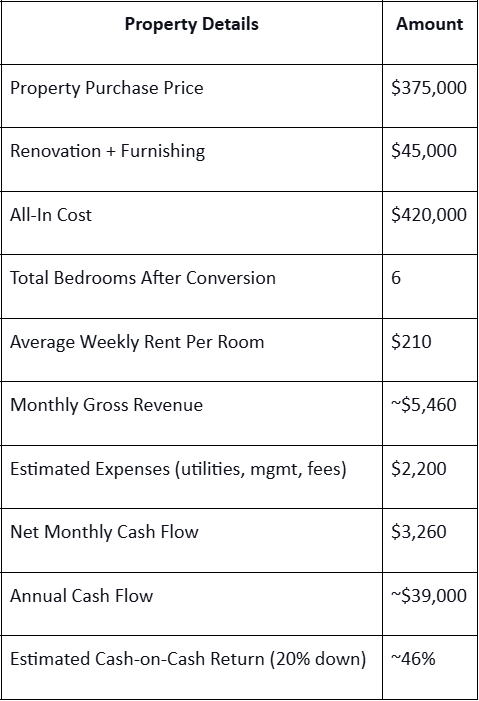
Again, actual performance will depend on local conditions, room occupancy, and management quality.
Final Thoughts
Mid-term co-living is no longer a fringe strategy; it’s becoming a legitimate asset class for modern real estate investors. The challenge isn’t the concept; it’s the complexity. That’s what CoLiving LaunchPad is built to resolve. With the right service partner, investors can scale co-living homes that both generate income and make a social difference. It’s a model that reflects the new realities of housing demand, economic uncertainty, and investor expectations.
As housing needs evolve, so too must our strategies. And with services like CoLiving LaunchPad, real estate innovation is now more accessible than ever before.
Visit here for more information on CoLiving LaunchPad:
https://colivinglaunchpad.com/frequently-asked-questions
Disclaimer: This article is for informational purposes only and does not constitute financial or investment advice. Investments in real estate carry risks, and past performance is not indicative of future results. Always consult with a qualified professional before making any investment decisions.