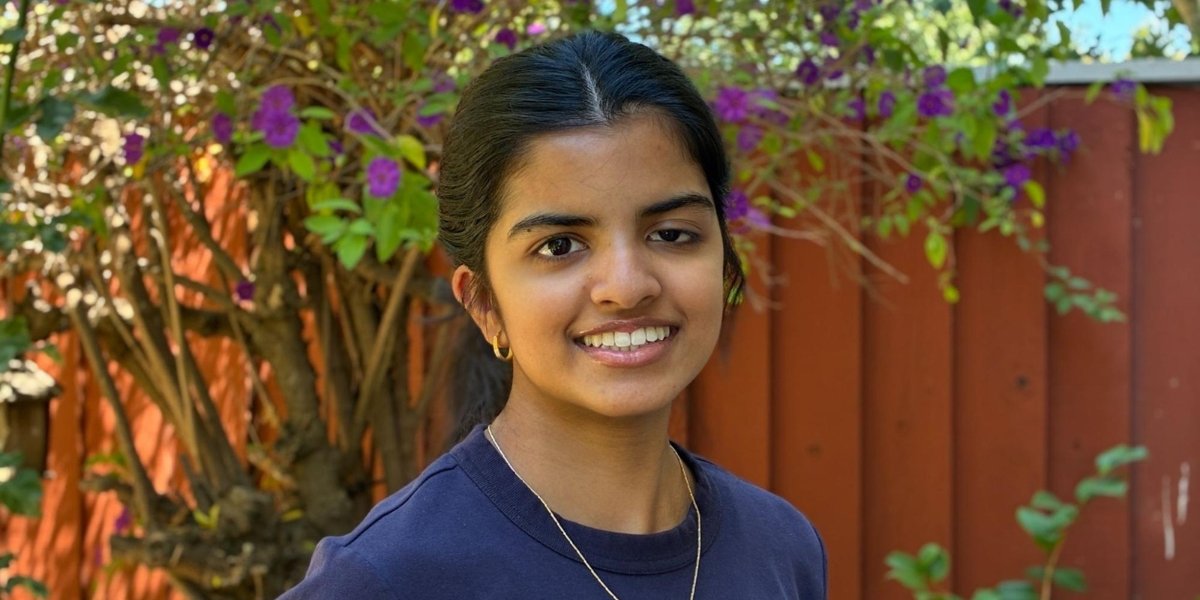
Sharika Anuj first understood the gap in local food distribution while volunteering at a community food drive. After visitors had taken what they needed, pounds of vegetables remained, yet the next drive was two weeks away, and the produce could not be kept. On the way home, she passed unhoused people near the freeway, about a mile from where the food had been discarded. The contrast suggested a problem that was not only about supply but also about coordination.
That observation led to GivingSpoon, a youth-led nonprofit organization that connects surplus prepared food with organizations serving communities experiencing food insecurity. Sharika founded the initiative herself before classmates joined her team. The initiative now reports having delivered more than 10,000 meals and served over 1,500 families. The figures are striking, but the organization began with a narrower experiment: could software move available food to nearby people before it became waste?
Sharika started by teaching herself Swift through online tutorials and coding the GivingSpoon mobile app from scratch. After months of work, she secured a listing on Apple’s App Store in 2025. The early version allowed households with leftover food from parties or gatherings to post donation requests that college students could collect. As the project developed, Sharika expanded the model to involve community organizations and volunteers, turning a simple exchange tool into a broader food recovery system.
The app is designed around a practical sequence. A donor lists available food, notes allergens and provides a pickup location. A beneficiary organization can claim the donation, after which a volunteer can collect it and complete the delivery. By keeping the information in one place, GivingSpoon reduces the calls and messages that can slow a time-sensitive handoff. The app is intended to make coordination simpler without removing the local relationships on which distribution depends. She has also received support from a professional Swift developer on a feature that would allow the same organization to operate as both a donor and a beneficiary.
Building the technology proved more predictable than persuading organizations to use it. Sharika initially imagined GivingSpoon as a largely hands-off platform, but she soon found herself visiting restaurants and searching for the people authorized to approve donations. Some businesses worried about food liability, while others simply did not connect her with a decision-maker. She responded by sharpening her pitch and carrying supporting documents that addressed those concerns.
The experience changed her understanding of leadership. “You have to get your hands dirty,” she said, reflecting on the hours spent visiting businesses without knowing whether the owner would be present. GivingSpoon’s food donations have so far come from temples, while restaurant participation remains a goal. Rather than disguise that limitation, Sharika has adapted by building relationships with community groups that already understand local distribution needs.
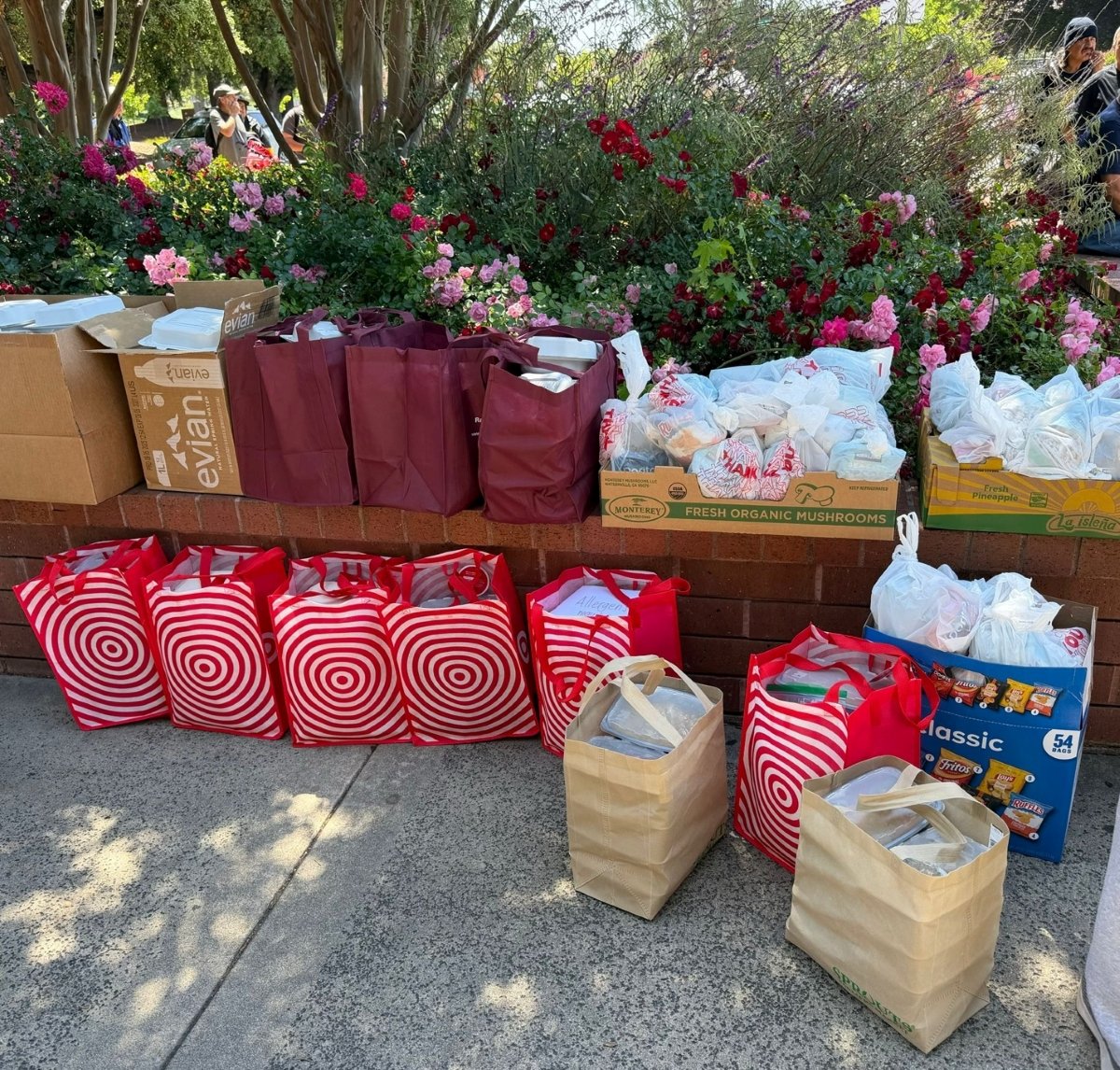
Helping Hands Silicon Valley became one of the most important of those relationships. After Sharika cold-emailed local nonprofit leaders, the organization agreed to receive prepared meals sourced through GivingSpoon and distribute them near a public library. Volunteers also carried food by van to people living in freeway encampments, reaching places that GivingSpoon’s own network could not serve easily. When Sharika delivered food in person, she saw a long line of people waiting beside a bench while volunteers prepared to distribute it.
At the time, GivingSpoon had delivered about 200 meals, well below Sharika’s initial target of 1,000. The number had felt modest until she saw the line. “Even though it’s a small number, it’s actually doing a lot,” she recalled. That encounter helped her see impact less as a target on a dashboard and more as a series of individual meals that reached people with few alternatives.
Other organizations have supported Sharika’s initiative in different ways. Martha’s Kitchen has distributed GivingSpoon materials on reducing household food waste and making fuller use of groceries. Swipe Out Hunger invited Sharika to present the initiative to staff and college chapter leaders, while Young Planet Leaders awarded GivingSpoon a grant to support its growth and further app development.
GivingSpoon also fits within Sharika’s longer interest in applying technology to environmental problems. In an earlier paper published by the National High School Journal of Science, she compared machine-learning models for predicting California air quality and explored how artificial intelligence and machine learning can be applied to environmental challenges. She does not regard that project as the center of her story, but it helped shape her interest in sustainability and responsible technology. GivingSpoon translates that interest into a system whose social value can be observed directly.
Sharika’s long-term ambition is to create a connected California network in which restaurants can post surplus food at the end of the day and nearby organizations can respond quickly, with volunteers handling delivery where required. The immediate work is less glamorous. It involves improving the app and recruiting more donors while building confidence one relationship at a time. Yet GivingSpoon has already moved beyond the question that first prompted it, whether discarded food could reach people only a mile away. Sharika is now testing whether a local solution can become reliable enough to travel much further.