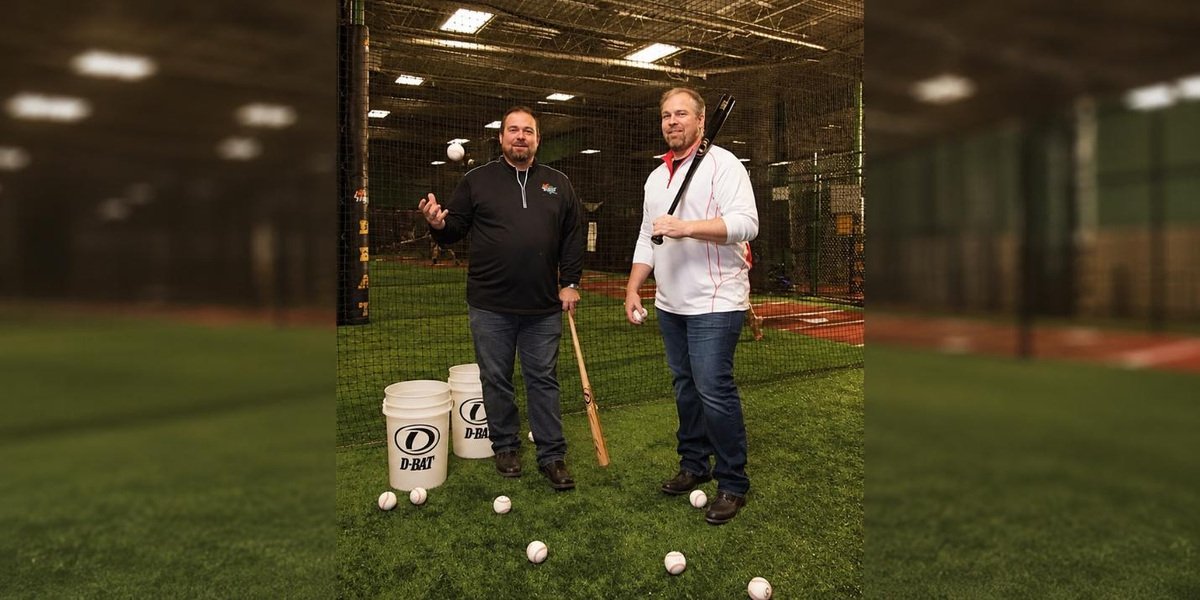
Before year-round training was prevalent in youth baseball and softball, training took place within the context of seasons in schools, local teams, and summer tournaments. By the late 1990s, though, participation trends had begun to shift. Parents became more interested in having their children gain access to indoor facilities where training could take place independent of the weather, and former players began establishing their own private academies dedicated to training individuals in skills. At the same time, manufacturers expanded the equipment they offered, which was used only for training.
It was during this period that Cade Griffis, Kyle Griffis, and Craig Penfold established D-BAT in Addison, Texas, in November 1998. The academy grew from Griffis’s earlier work as a baseball instructor, during which he traveled across Texas providing private lessons after his playing career. Rather than operating as a seasonal training center, the new facility was built around year-round instruction for baseball and softball players. The objective was simple. Players could receive individual coaching, use indoor batting cages, and continue practicing outside traditional playing seasons. The academy reflected a broader movement toward structured, continuous player development that was emerging across amateur sports during the late 1990s.
The backgrounds of those involved shaped the organization’s early direction. Griffis had played collegiate baseball at Dallas Baptist University, where he earned NAIA All American recognition, before signing with the Kansas City Royals organization. His experience later extended into professional scouting with the Chicago White Sox. Those roles exposed him to different stages of player development, from college competition and professional baseball to talent evaluation. Kyle Griffis was also involved in building the business during its formative years, helping establish the operational foundation that supported its early growth.
Instruction remained the academy’s primary focus, but the business soon expanded beyond coaching. In April 2001, D-BAT opened a wood bat manufacturing facility in Mount Pleasant, Texas, which would become D-BAT Sports. The company initially produced wooden baseball bats before expanding its product catalog to include gloves, batting gloves, apparel, baseballs, softball equipment, and training accessories. According to published reports, the products were distributed through Academy locations and independent dealers. By combining instruction with equipment manufacturing, the organization developed two connected business operations that supported one another while serving the same customer base.
This combination reflected a practical business decision rather than a departure from the company’s original purpose. Players attending lessons often required replacement equipment, while instructors could demonstrate products within the same environment where they were used. Although many sporting goods companies manufacture equipment without operating training facilities, D-BAT developed both activities together. Industry coverage at the time described the company as expanding beyond instruction into manufacturing while continuing to operate baseball academies. The two divisions grew alongside each other rather than functioning as separate enterprises.
Publicly available information about the company also includes the coaching methodology, which focuses on individual training. The idea was not to give the same lesson to all athletes, but rather to adjust each class based on each player’s age, level of experience, and skills. Even though this idea is based solely on company information and not on independent assessment, it can be seen as part of a broader trend that became very popular in private sports coaching in the first years of the 2000s.
As the academy network expanded, the instructional model remained tied to standardized programming. Coaches across different locations followed common teaching structures while still working with individual athletes. This balance between consistency and flexibility became part of the organization’s operational framework as additional academies opened. Standardized scheduling, lesson formats, and facility layouts also helped create a more uniform experience for players and families regardless of location. Such systems later supported the company’s move into franchising. However, the emphasis on instruction remained central to daily operations.
The equipment business expanded alongside these instructional programs. D-BAT Sports continued manufacturing and distributing baseball and softball products while academy locations served as practical settings where players could use equipment during lessons and practice sessions. This arrangement allowed the company to connect product development with everyday training environments. Public reporting has documented the expansion of the product line. However, it does not directly attribute technical innovations or breakthroughs in equipment design to Griffis.
Youth baseball and softball participation has remained substantial throughout the United States. According to participation studies published by the Sports & Fitness Industry Association, millions of children continue to play organized baseball and softball each year, supporting continued demand for instruction outside school and in recreational leagues. Within this broader landscape, private academies have become an established part of player development for many athletes seeking additional coaching. D-BAT developed within this changing environment, combining indoor training facilities with equipment distribution under a single organizational structure.
Over time, the academy expanded from one location in Addison into a franchise network operating across numerous states and international markets. Throughout that growth, instruction remained closely connected to the company’s broader business model. Rather than separating coaching from equipment sales, D-BAT continued developing both areas together. Cade Griffis remained associated with executive leadership, while Kyle Griffis continued to be identified with the organization’s early development. Their work reflects the evolution of a business that linked player instruction with equipment manufacturing at a time when year-round sports training was becoming more visible in youth baseball and softball in the United States.