By: Gene Scarpetti
From country radio success and entrepreneurial ventures to genre-bending artistry and autism advocacy, two Western Pennsylvania musicians are proving that creativity, community, and ambition can thrive together.
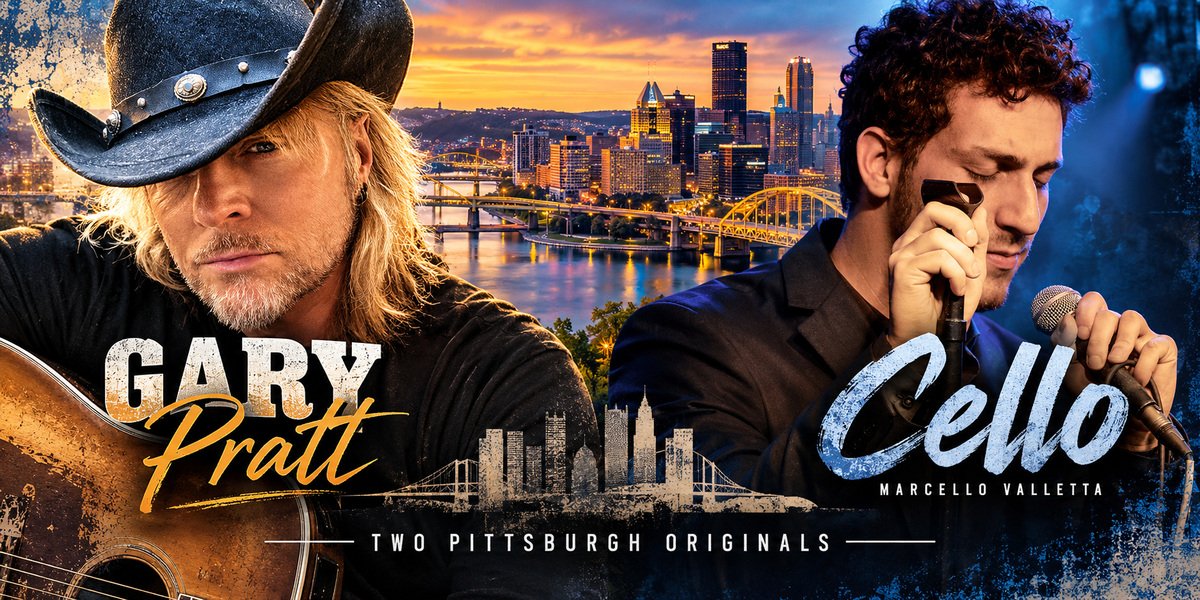
Pittsburgh has always been a city that appreciates hard work, authenticity, and people who aren’t afraid to follow their own paths. Those qualities have helped define its music scene for generations, producing artists whose creativity extends well beyond traditional industry boundaries. Two musicians carrying that spirit forward are country recording artistGary Pratt and alternative singer-songwriter Cello, born Marcello Valletta.
Their musical styles might seem worlds apart, but both have established careers that reflect the determination, versatility, and entrepreneurial mindset of Western Pennsylvania. Whether they’re performing for audiences, developing creative projects, or contributing to their communities, Pratt and Valletta demonstrate that success in music can take many forms.
Gary Pratt: Country Music, Business, and a Career Built on Connection
For Gary Pratt, music has always been about connecting with people. Raised in Slickville, a small coal-mining community outside Pittsburgh, Pratt developed an appreciation for the storytelling traditions of country music. Today, his career includes international chart success, industry awards, and performances alongside some of country’s most recognizable names.
Pratt has shared stages with Dwight Yoakam, Pam Tillis, Lorrie Morgan, Ronnie Milsap, Crystal Gayle, and Neal McCoy. His album Something Worth Remembering, dedicated to his late brother, helped establish him as a significant presence in independent country music. The project included collaborations with respected Nashville musicians and songwriters, while his single “A Song You Can Drink a Beer To” reached No. 1 on an international iTunes chart.
His accomplishments include International Singer-Songwriters Association recognition, Josie Music Awards nominations, and multiple appearances on independent country radio charts.
In 2026, Pratt continued expanding his catalog with “Buzzin’,” a spirited country recording written by Jon Pardi, Bart Butler, and Kenneth Johnson. He followed it with “4th of July,” a romantic summer anthem featuring vocalist Kate Szallar. Produced by Nashville musician Adam Ernst, the July release highlighted the chemistry between Pratt and Szallar, who have become an increasingly important performing partnership.
But there’s another side to Pratt’s professional life that many listeners might not realize. Away from recording studios and concert stages, he is an entrepreneur who operates LeJardin Florals in Greensburg. The floral business allows him to express his creativity in an entirely different setting, balancing the demands of an established local enterprise with those of a recording career.
Looking ahead, Pratt’s continuing work with Szallar and producer Adam Ernst points toward additional music and expanded performance opportunities. His career remains rooted in the belief that country music’s greatest strength lies in genuine human connection.
Cello: Turning Personal Experience Into Artistic Expression
For Marcello Valletta, known professionally as Cello, music represents a different kind of creative journey. The Pittsburgh singer-songwriter, actor, and published poet has developed an unconventional sound that combines alternative pop, indie rock, R&B, melodic rap, and spoken-word performance.
Rather than allowing genre expectations to dictate his creative direction, Cello approaches songwriting as an extension of storytelling. His music explores identity, emotional vulnerability, complicated relationships, faith, and the sometimes-difficult process of understanding oneself.
His nine-track album, Singing to Serpents, released March 1, 2026, brought those artistic instincts into sharper focus. Featuring songs including “Stay Here,” “Elevate,” “Sucks to Be Used,” “Cravings,” and “Faith,” the collection captured an artist willing to confront uncomfortable emotions without sacrificing melody or accessibility.
The album was celebrated with a Pittsburgh release performance at Spirit, further connecting Cello’s personal artistic journey with the city’s independent music community. His single “Stay Here” also reached No. 13 on the National Radio Hits Pop/Rock chart, demonstrating his growing reach beyond regional audiences.
Outside music, Valletta’s interests are equally compelling. As an actor and published poet, he continues exploring different avenues of performance and creative communication. He has also become involved with autism advocacy, drawing upon his personal experiences with autism and ADHD.
Through his connection with Band Together Pittsburgh, an organization dedicated to creating musical opportunities for people on the autism spectrum, Valletta has participated in an artistic community centered on inclusion and self-expression. His involvement has included performing in the organization’s A Very Yinzer Christmas production at Pittsburgh’s Benedum Center.
Valletta is also working toward becoming a certified peer-support professional in the autism field, an ambition that could eventually allow him to help others through the combination of personal experience, advocacy, and creative expression.
What’s Next for Two Pittsburgh Originals?
The future looks promising for both musicians, although their paths remain distinctly different. Pratt is continuing to develop his partnership with Kate Szallar while pursuing additional recordings, live appearances, and the ongoing responsibilities of his Greensburg business. Cello, meanwhile, has the opportunity to build upon Singing to Serpents, explore further acting and writing projects, and expand his advocacy work.
Both artists are associated with Pittsburgh-based MTS Management Group, connecting their individual pursuits to a broader independent music network.
Ultimately, Gary Pratt and Marcello Valletta represent two sides of Pittsburgh’s creative identity. One builds bridges through country music’s familiar stories; the other challenges expectations through fearless emotional expression. Both understand that making music is about more than collecting streams, awards, or applause.
It’s about building something meaningful, staying connected to your roots, and finding new ways to make a difference.
And in a city built on determination, that’s a tradition worth carrying forward.