By: Dar Downling
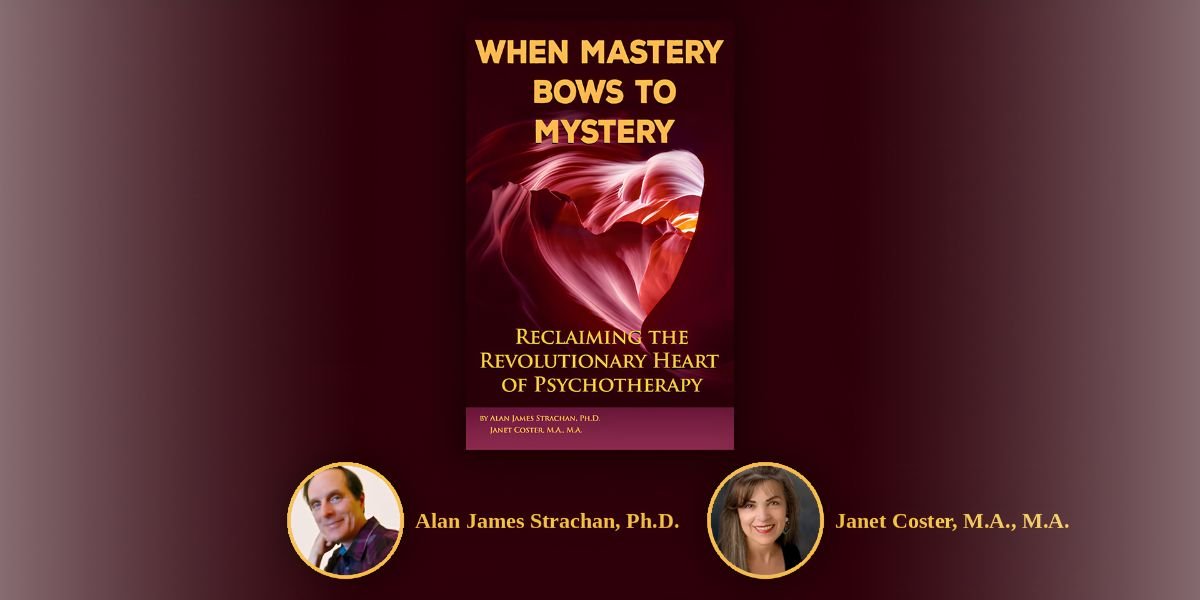
Alan James Strachan and Janet Coster have spent their professional lives at the intersection of psychology, spirituality, and philosophy, and When Mastery Bows to Mystery is the book that most fully expresses what that particular intersection of commitments produces when turned toward the question of what psychotherapy has become and what it may need to reclaim.
It is a book written with conviction and care, by two people who clearly value their field enough to be troubled by where they believe it is heading and willing to say so with the specificity and intellectual rigor the subject demands.
The central argument is one that many practitioners may have been sensing without having a sufficient framework to articulate. Modern psychotherapy, in its drive toward evidence-based practice, standardized protocols, and measurable outcomes, has gradually shifted its center of gravity from the relationship to the technique, from the person to the diagnosis, and from the transformative encounter to the managed intervention.
Strachan and Coster do not make this argument as nostalgia for a simpler time or as resistance to scientific rigor. They make it as clinicians who have spent decades witnessing what can produce transformation in a therapeutic relationship and who have arrived at a clear and serious conclusion: some of the elements most responsible for genuine change may be the same ones the current model is at risk of undervaluing.
The personal stories woven through the book give it an emotional texture and a human warmth that purely theoretical treatments of the same argument can lack. These are not simply hypothetical cases assembled to illustrate a point. They are accounts of therapeutic relationships that illuminate the difference between therapy as technique and therapy as genuine human encounter in ways that an abstract argument alone could not fully replicate.
Strachan writes from more than forty years in private practice and nine years as staff counselor at SRI International. Coster brings her own deep experience as a transpersonal counselor and spiritual director. Together, they offer a quality of accumulated wisdom that feels earned.
What also distinguishes this book from more narrowly professional treatments of the same concerns is its willingness to place psychotherapy within a larger ethical and political context. The argument that genuine therapy is not only a personal or relational act but also a sociopolitical one is among the book’s more notable contributions.
The authors suggest that the healing of individual suffering cannot be fully separated from the social and political forces that generate and perpetuate that suffering. It is an argument made with intellectual seriousness and moral clarity, and it gives the book a wider relevance beyond the consulting room.
When Mastery Bows to Mystery is a meaningful read for anyone practicing psychotherapy, studying it, or trying to understand what genuine human healing may require. Strachan and Coster have written a book that raises important questions about the field and brings the weight of experience, reflection, and conviction to the conversation.
If you are a therapist, a student of psychology, or simply someone who believes that genuine human healing deserves more than a standardized protocol and a measurable outcome, When Mastery Bows to Mystery by Alan James Strachan and Janet Coster is the book that makes that belief both intellectually rigorous and practically urgent. Head over to Amazon and get your copy today and discover what psychotherapy looks like when it reclaims its soul and its spine.
Disclaimer: This article is intended for general informational and editorial purposes only. It does not provide medical, psychological, psychiatric, therapeutic, spiritual, or mental health advice, and it should not be relied upon as a substitute for guidance from a qualified professional. Any discussion of psychotherapy, clinical practice, diagnosis, treatment methods, emotional healing, spirituality, or mental health care is provided for general context only. Readers experiencing mental health concerns should consult a licensed mental health professional, physician, or other qualified provider.