By: Michael Shank
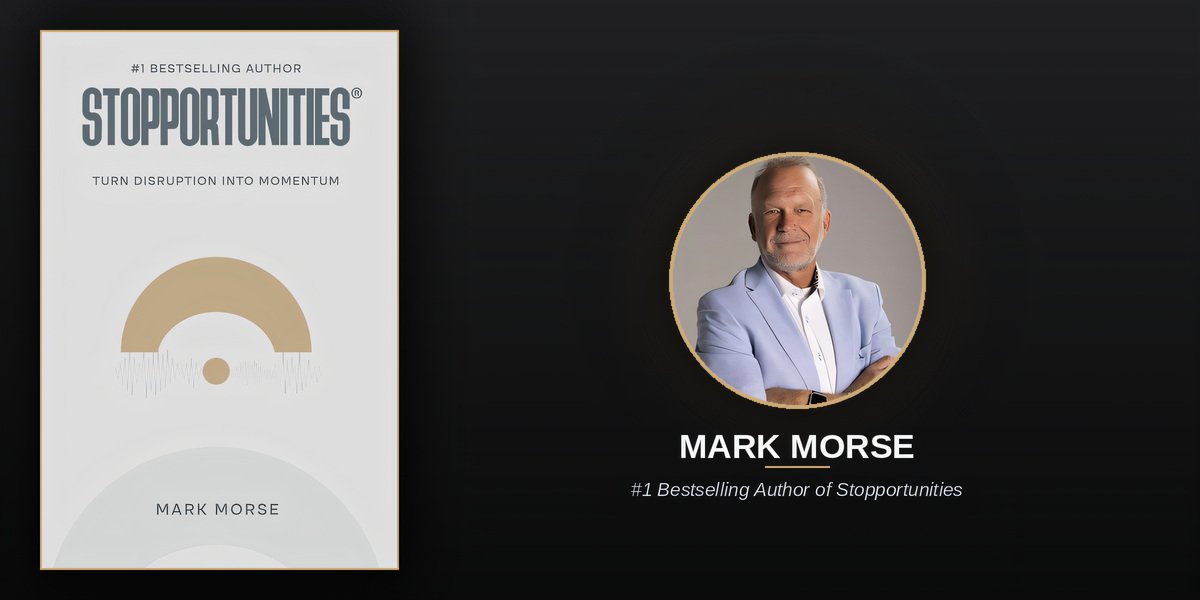
There is a particular kind of identity that builds up slowly and invisibly over two decades of entrepreneurship. It is not arrogance exactly, and it is not ego in the obvious sense. It is the gradual fusion of self and company, the way a founder’s sense of who they are becomes inseparable from what they have built. Mark Morse spent more than twenty years building Morsekode, a Minneapolis-based brand and marketing agency. When he sold it and became a Managing Partner at Gravity Global, he discovered something that all those years of running his own business had not fully prepared him to see.
He had become the company. And becoming part of something larger required him to figure out who he was without it.
What the Acquisition Revealed
The transition happened quickly. Mark was still leading, still serving clients and people, still doing work he cared about. But overnight he was no longer the guy. He was no longer the person ultimately responsible for every decision, every culture question, every financial outcome, every person on the team. He was one among many. And that created something he didn’t expect: relief mixed with disorientation.
What surprised him was how much clarity came from giving up some control. Separated from the total responsibility of ownership, he could finally distinguish the things he had done because he owned the business from the things he was genuinely energized and called to do. Those were not the same list. Running a business for twenty years had required him to do many things that had nothing to do with his actual strengths or deepest interests. He had done them well. He had done them because they needed doing. Stepping back revealed the difference.
The questions that emerged in that space were the kind that constant forward momentum tends to suppress. What did he actually love about leadership? Where did he create real value? Who was he when he was not defined as the founder? What did he want to carry forward, and what was he finally willing to put down?
When Success Is the Disruption
One of the more counterintuitive ideas in Stopportunities is that the hardest Stopportunities to recognize are not the ones forced by crisis. They are the ones hidden inside success. Mark was not in trouble when he decided to sell. The agency had great clients, a strong team, real momentum. By most measures, things were working. That is precisely why the question underneath the momentum was so easy to ignore.
Leaders are reasonably good at recognizing disruption when something breaks. The harder disruption is the quiet question emerging from inside something that is still producing results. Is this still taking them where they are called to go? Are they still building what they are meant to build? Is the momentum taking them somewhere, or is it simply taking them?
Those questions don’t force themselves into the conversation during a crisis. They require a leader to stop long enough to hear them when everything seems fine. That is the Stopportunity that most leaders miss entirely.
What He Wants to Build Next
The pause after selling Morsekode gave Mark something that twenty years of building it could not. The space to ask not just what was next for the business but who he wanted to become next. Those are related questions, but they are not the same question, and entrepreneurship tends to collapse them into one.
That distinction, between what you are building and who you are becoming, is one of the animating ideas of the book. And it came directly from the personal experience of a man who spent two decades building something significant, paused long enough to understand what it had cost and what it had given him, and emerged from that pause with a clarity about stewardship and purpose that the building itself had never produced.
The moments are inevitable, Mark writes at the end of the book. The momentum is up to you. He learned that in the months after selling everything he had built. The lesson made it into every chapter of what he wrote next.
If the most important question in your leadership right now is who you’re becoming, not just what you’re building, Stopportunities by Mark Morse is available now on Amazon. Sometimes the pause reveals more than the momentum ever could.