The strongest sports books are almost never about the sport alone.
Boxing may bring the reader to the ring. It may offer the sweat, the training, the bruises, the discipline, and the unforgiving drama of one person standing across from another with nowhere to hide. But that is not what makes a book stay with people. What stays is the private cost behind the public fight. The unseen pressure. The family history. The grief that never makes the highlight reel. The promise a person carries long before anyone knows his name.
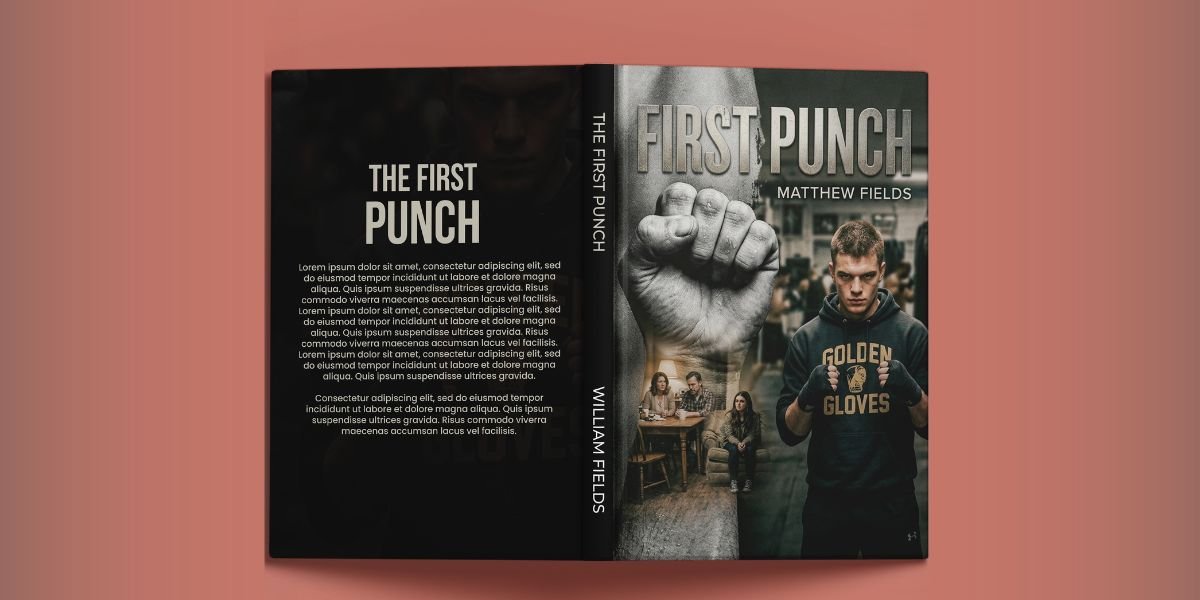
That is where Matthew Fields’ The First Punch earns its place. Fields understands something that the best sports narratives understand: the fight people pay attention to is rarely the first fight. By the time a boxer steps through the ropes, life has already landed blows the crowd will never see.
At the center of The First Punch is a young man shaped by family, grief, loyalty, and the hard discipline of boxing. Fields gives readers access to the emotional foundation beneath the fighter. His strength does not come from ego. It is built from memory, responsibility, loss, and the people who taught him what it means to stand up when staying down would be easier.
The book’s foundation is family. Matthew’s father, William, represents the kind of working-class sacrifice that rarely asks to be praised but quietly holds a household together. His mother, Kasey, gives the home its heart, warmth, and emotional steadiness. His sisters add tenderness and responsibility to the life Matthew is trying to protect. But it is Jesse, his brother, who gives the story its deepest emotional current.
Jesse is not treated as a background figure or a convenient source of motivation. His influence is woven through the story with care. He is the brother who teaches Matthew how to stand his ground, how to dream beyond the limits of their neighborhood, and how to believe in a future that has not yet shown any evidence of arriving. When Jesse’s path changes, Matthew’s life changes with it. His absence becomes more than grief. It becomes a calling.
That is one of the reasons the book has such strong crossover appeal. Yes, boxing readers will recognize the gym, the training, the discipline, and the physical test of the sport. But the story reaches beyond that category. It speaks to readers who have carried loss, readers who have grown up too quickly, readers who understand family duty, and readers who know what it means to keep a promise no one else can see.
The boxing gym becomes one of the book’s most important settings because it gives Matthew something life has not always offered him: structure. In the gym, pain has a purpose. Anger has to be controlled. Talent is not enough. Excuses do not matter. The ring is honest in a way the world often is not. It exposes weakness, rewards discipline, and forces a person to confront the truth about himself.
Fields does not romanticize that world. He does not turn boxing into an easy metaphor for triumph. The training hurts. The losses matter. The doubt is real. The emotional pressure follows Matthew home. Victory does not erase grief. A good performance does not quiet every fear. A strong punch does not heal every wound.
That honesty is what gives the book weight. The second layer of the story is Matthew’s identity as a writer. This is where the novel separates itself from a standard sports memoir. The ring teaches Matthew how to move through pain. The page teaches him how to understand it. Boxing gives him discipline. Writing gives him language. One demands physical courage. The other demands emotional honesty.
Together, those identities create a fuller portrait of a young man learning not only how to fight but how to make meaning out of what he has survived.
From a reader’s standpoint, The First Punch succeeds because it understands the difference between inspiration and emotional truth. Inspiration alone can feel thin. Emotional truth lasts. Matthew Fields has written a book for readers who want a story with force, heart, and purpose. It is for sports fans, but not only for sports fans. It is for anyone who has ever wondered whether pain can become something other than damage. It is for anyone who has had to rebuild, recommit, or keep going because someone they loved still mattered too much to let the promise die.
The First Punch reminds readers that the most important fight is often invisible. Sometimes the first punch is grief.
Sometimes it is fear. Sometimes it is the life you were handed before you knew how to name what it was doing to you. And sometimes, the only answer is to get up, train harder, write it down, and keep moving forward.