By: KeyCrew Media
Summer is when Conesus Lake sells itself. Fall and winter are when a buyer can see what a property is really like to own. The distance between those two conditions is the single largest source of mismatch between what a buyer expects from a lake property and what they get.
That gap narrows considerably in winter – which is the argument for shopping in a season almost nobody shops in.
What The Season Exposes
On Conesus Lake, in Livingston County, New York, activity contracts sharply once the water cools. A recent 90-day review of waterfront sales recorded 15 closings, averaging roughly five per month, and Matthew Sharman, who leads The Sharman Team at Real Broker NY LLC and works the Conesus market, says inventory typically drops further from there. Sellers are reluctant to list lake property in winter, and buyers are wary of purchasing what they cannot fully see.
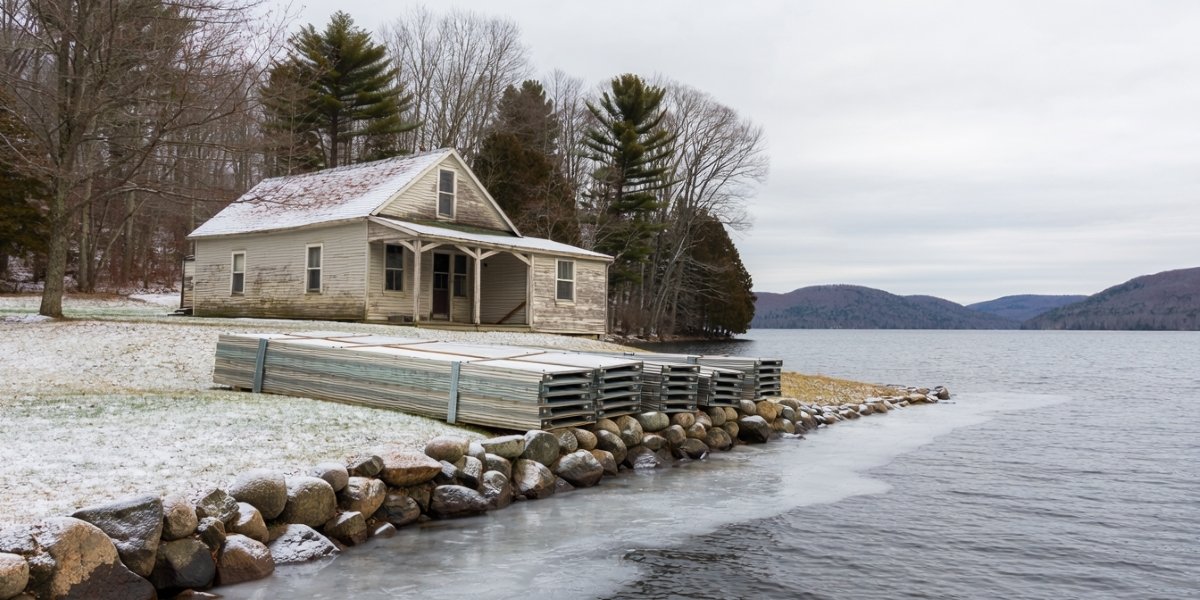
Both instincts are understandable. Snow and ice can cover roofs, grading, docks, and the shoreline entirely. A buyer in February is working with less visual information than a buyer in June, and some items will need an inspection contingency or a spring re-check rather than a judgment made through snow cover.
What they gain is a different category of information – and in Sharman’s view, the more consequential one.
“Everybody falls in love with a lake house in July,” Sharman says. “I want my buyers to see that same property in November, because that’s when you learn what owning it is actually like.”
The off-season puts the practical side of ownership in front of a buyer: how comfortable the house actually is, what access looks like in bad weather, how snow plowing is handled, whether shared driveways or shared arrangements are governed by anything written down, where everyone parks, and how much work the shoreline is going to demand. These are the conditions that determine whether a property fits a buyer’s routine, and they are almost entirely invisible on a warm afternoon in June.
For sellers, Sharman frames the same visit as an opportunity rather than a liability – a chance to explain how the property actually works, beyond how it photographs.
Whether any of it matters depends on the buyer. Someone intending seasonal use may be indifferent to insulation or to a stretch of road the town does not prioritize. Someone planning to live there year-round will not be. The point is that the off-season surfaces the question rather than deferring it.
The Motivated-Seller Assumption
The conventional reason to shop in winter is the belief that sellers are more desperate. Sharman does not accept the premise.
“Motivation belongs to the seller, not a season,” he says.
Winter listings exist for particular reasons rather than seasonal ones, and in a market with genuinely low inventory, a good property listed in January is still a good property with little competing against it. Priced correctly and marketed properly, it can command a strong number regardless of the month.
There is one category that does perform distinctively in winter, and it runs counter to intuition: properties needing renovation. The logic is usability. Buyers are calculating when they can start using a lake house, and a January purchase leaves three or four months to complete work before the season opens. An April purchase on the same property costs the buyer that summer entirely. “If someone buys it in April and they have to renovate it, their whole summer’s shot,” Sharman says.
Where The Real Advantage Sits
The genuine winter edge, in Sharman’s account, is not price leverage but proximity.
A substantial share of buyers on these lakes are not local. When a property comes up in February, a buyer in Rochester, Syracuse or Buffalo can be standing in it the same week. A buyer in California or Florida cannot, or will not. Competition thins not because demand has disappeared but because distance has become a filter.
Spring reverses it. Snowbirds return, travel gets easier, winter damage becomes visible, and the buyers who want to purchase in March and use the property in June all arrive at once. Sharman describes spring pricing as historically unforgiving for buyers for exactly that reason.
His advice to someone weighing the two is not to treat winter as a compromise. “Don’t be afraid of the winter, look at it as an opportunity,” he says. He is careful not to extend that into a claim about pricing, which he says would need numbers behind it.
What he will not do is let the calendar carry the decision. “The calendar can create an opportunity, but it can’t make the wrong house right,” he says.
Diligence In A Season With Less To Look At
Buying with reduced visibility raises the premium on documentation. Sharman describes his pre-purchase process as largely a matter of working through material that is not public-facing: disclosures, surveys and prior listing history, reviewed before a buyer commits.
“My job is to get them into the right situation, not to sell them a house,” he says.
He notes that the directness of that process surprises some clients initially. “I’m not pressuring them, I’m educating them,” he says. The outcome is frequently a decision not to proceed, which he regards as a success rather than a loss – particularly given how many of his buyers are traveling two hours or more to view a property. A problem identifiable from the paperwork should not cost someone a weekend.
Winter sharpens one more thing worth flagging to sellers. A property listed in January is often photographed in January, and those become the only images it has. Sharman’s recommendation to anyone preparing a sale across a longer horizon is to capture the property in July and again in October, so the listing can show the property across the year rather than under snow. “Let’s get pictures in July, let’s get pictures in October,” he says.
In a season when every competing listing is photographed white, that is not a small advantage.
About the Expert
Matthew Sharman is a lakefront and lifestyle real estate authority with The Sharman Team at Real Broker NY LLC, serving Greater Rochester, the GLOW region, and the western Finger Lakes, with particular expertise in Conesus Lake and Livingston County lakefront proper
Disclaimer: This article is based on information provided by the expert source cited above. It is intended for general informational purposes only and does not constitute legal, financial, or real estate advice. Readers should conduct their own research and consult qualified professionals before making any real estate or financial decisions.