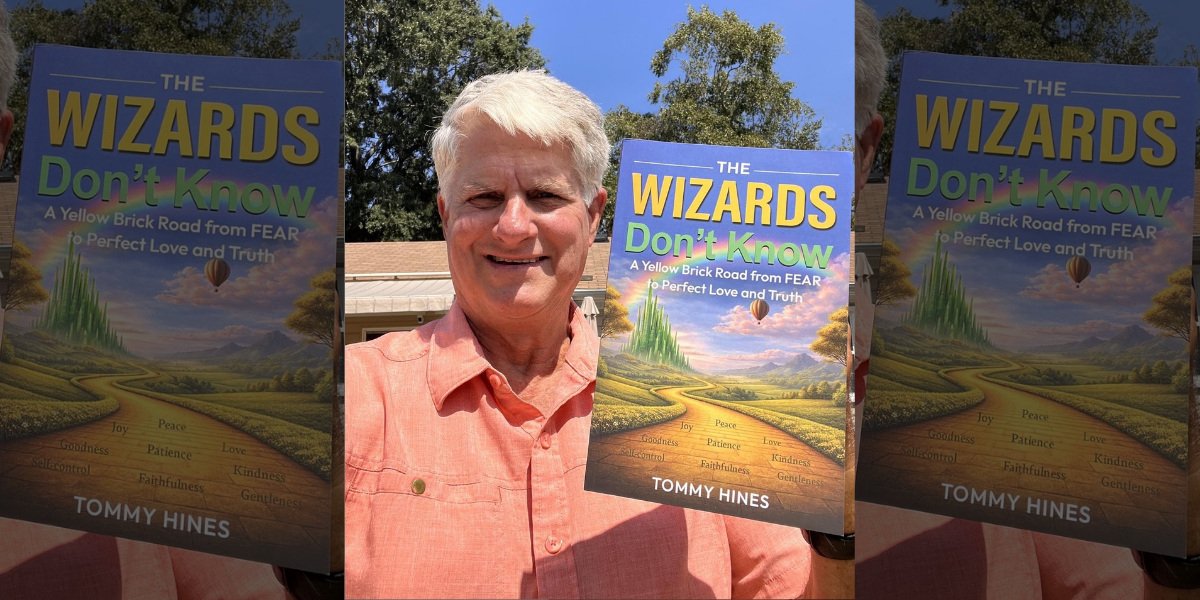
In “The Wizards Don’t Know,” the author uses familiar characters and symbols to examine self-worth, faith, forgiveness and the beliefs people inherit from others
Few stories have remained as culturally recognizable as The Wizard of Oz. Its yellow road, ruby slippers and unlikely group of travelers have inspired generations of interpretations. For author Tommy Hines, better known as the Perfect Home Guy, those familiar symbols offer a framework for examining a deeply human question: How can people move beyond fear and learn to live with greater love, humility and purpose?
In his book, The Wizards Don’t Know: A Yellow Brick Road from FEAR to Perfect Love and Truth, Hines revisits the classic journey through the lens of personal development and spiritual reflection. His central argument begins with an acknowledgment that every person can become lost, misled, flawed or uncertain at different points in life. Those imperfections, he suggests, do not diminish a person’s value or erase the individual gifts and purposes that each person may carry.
Rather than presenting growth as a destination reached through certainty, Hines focuses on the importance of questioning what people have been taught. He draws particular attention to one of the Wizard’s final admissions in The Wizard of Oz: “I don’t know how it works.”
For Hines, that line captures the limitations of authority. Teachers, parents, religious leaders and other influential figures may be educated, sincere and well-intentioned, yet still pass along beliefs shaped by their own fears, misunderstandings or incomplete knowledge. His book encourages readers to respectfully examine those lessons instead of accepting every inherited belief as unquestionable truth.
The project took shape during Hines’ first experience with self-employment, when he opened the New SELF Center for SELF Improvement, a stress-management venture informed by his own struggle with low self-esteem. What began as a professional endeavor became a period of personal renewal and study.
Hines explored different religious and philosophical traditions, searching for common principles that could connect people rather than divide them. He became particularly interested in the recurring emphasis on love, compassion, forgiveness and unity. That search ultimately influenced the symbolic structure of The Wizards Don’t Know.
Within Hines’ interpretation, Dorothy’s companions represent three interconnected parts of the human soul. The Scarecrow symbolizes the mind, the Tin Man represents the heart and the Lion embodies spirit expressed through courage and action. Each character believes something essential is missing, although the qualities they seek are already evident in the way they respond to challenges.
The ruby slippers carry a similarly personal meaning. Hines interprets them as a symbol of faith, power and protection. Throughout the story, Dorothy possesses more agency than she initially understands. Hines uses that idea to explore how fear, doubt and harmful influences can prevent people from recognizing the strength they already have.
Fear itself becomes a central subject in the book. Hines presents the word as an acronym for “False Education Appearing Real,” describing the ways inaccurate or incomplete lessons can shape a person’s identity and decisions. These lessons may come from religious hypocrisy, painful family relationships, absent parents, social pressure or other experiences that distort a person’s understanding of love and self-worth.
His discussion of religion is intended to invite examination rather than demand adherence to one institution. Hines also addresses readers who identify as atheist, agnostic or skeptical, asking only that they approach the material with curiosity and a willingness to reconsider established assumptions. The book’s broader concern is not whether readers share the same theology. It is whether they can examine the role that pride, resentment and fear may play in keeping people separated from one another.
Forgiveness is an important part of that process, although Hines does not frame it as approval of harmful behavior. Instead, he treats forgiveness as a way to recognize that those who caused harm may also have been acting from deception, pain or lessons they never learned to question. Understanding that cycle, he argues, can help individuals respond with better discernment while refusing to remain defined by past injuries.
The Yellow Brick Road represents the alternative. In Hines’ symbolism, it is the path on which people experience the fruits of a loving spirit, including patience, kindness, joy, peace and self-control. The road stands in contrast to the emotional “reds” of anxiety and anger and the “blues” associated with sadness and depression.
While phrases such as “live, laugh, love” can sound overly familiar, Hines considers the underlying idea worth recovering. Living on the Yellow Brick Road means actively choosing connection, humor, reflection and compassion instead of allowing fear to determine every response.
Those principles extend beyond the pages of the book. A portion of the book’s profits will support Perfect Love Homes, an IRS-recognized 501(c)(3) nonprofit created to serve the needs of children and young people. The organization plans to begin its work with a children’s home in Georgia while developing a broader national vision for helping children find greater stability, care and opportunity.
The charity was inspired in part by Dorothy’s experience as an orphan and the enduring call to care for widows and orphans. It also reflects Hines’ own life. His wife of six years had been a widow for a decade before they married, giving the mission a deeply personal connection. Hines had also considered becoming a foster parent. Perfect Love Homes represents a larger-scale expression of that same desire to provide children with the support, protection and sense of belonging every young person deserves.
The nonprofit brings another dimension to Hines’ interpretation of the Yellow Brick Road. The book asks readers to recognize their own value, but the charity puts that belief into practice by focusing on children whose circumstances may make it difficult for them to recognize their worth or imagine a more secure future.
The Wizards Don’t Know has also received an endorsement from Mark Cole, CEO of Maxwell Leadership, the leadership organization founded by internationally recognized author and speaker John C. Maxwell. Cole’s endorsement highlights the book’s invitation to move beyond external validation and begin trusting the wisdom and value found within.
Hines plans to expand those themes through The Yellow Brick Road Show, a 30-minute podcast expected to launch in November. The program will feature guests discussing difficult life experiences, the lessons they gained and the positive outcomes that followed. Comedians are also expected to contribute humor to many episodes, while music from the 1960s, 1970s, and 1980s will provide another entry point into conversations about love and unity.
The forthcoming show reflects Hines’ belief that serious personal subjects do not always have to be approached solemnly. Humor, music and candid storytelling can help audiences consider difficult ideas without feeling lectured or judged.
Outside his work as an author, Hines provides educational resources for homeowners and buyers through Perfect Home Guy. That work, the forthcoming podcast and Perfect Love Homes reflect a shared objective: helping people build stronger foundations in their homes, their relationships and their understanding of themselves.
The Wizards Don’t Know: A Yellow Brick Road from FEAR to Perfect Love and Truth is scheduled for publication during the first week of December. The book will be released in hardcover, softcover, audiobook and digital editions. Until its official publication, advance reader copies are available exclusively from the author through the Perfect Home Guy media page.
In Hines’ view, the journey is not about becoming perfect. It is about recognizing human imperfection without surrendering human worth, then continuing forward with a more open mind, a more compassionate heart and the courage to act.