By: Natalie Johnson
“A CEO told me he walked out of one meeting where his leadership team wanted faster results from AI and into another where an employee asked, ‘What does this mean for my job?’” William Paiva says. “Both rooms deserve an answer. And the CEO has to make one decision that takes both seriously: What work should we hand to AI, and what do we still need people to own? That’s the Middle Seat tension AI is creating.”
The pressure comes from both directions. Boards and leadership teams want evidence that the company is moving forward. The people doing the work want to know what will change, what support they will receive, and who will be accountable when something goes wrong. The leader responsible for making people and machines work together has to answer to both.
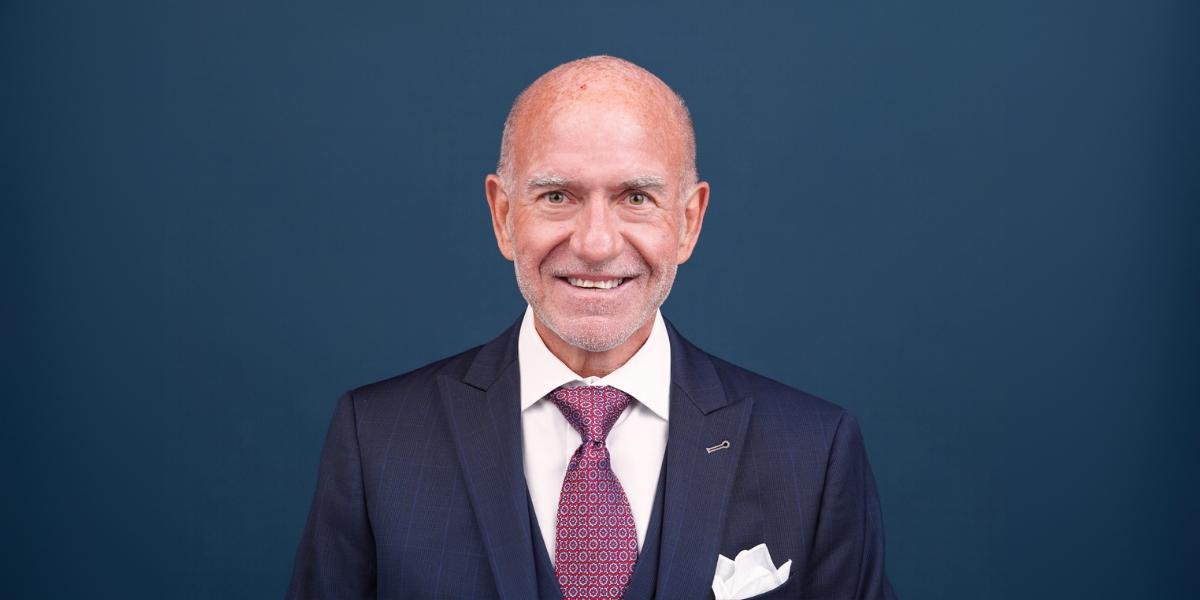
A molecular biologist turned healthcare venture investor, Paiva is Founder and Managing Partner of OLSF Ventures and Executive Director of Oklahoma State University’s Center for Health Systems Innovation. His career has required working between science, business, healthcare, and investment, worlds with different languages, incentives, and definitions of success.
He calls the philosophy behind that work Life in the Middle Seat: Put Yourself Where Opportunity Can Find You. Its application to AI begins with a leadership question: how do you turn the tension between what technology can do and what people need into work that produces useful results?
The Middle Seat Between Humans and AI
Paiva’s Middle Seat describes the space between perspectives that do not naturally understand one another. Working there means translating between them and staying engaged when the answers are uncomfortable.
Applied to AI, the framework places leaders between machine capabilities and the needs of the people who use them. They must decide which tasks to delegate, where technology should support human judgment, and which decisions require a person to retain authority.
An AI system may produce an analysis or recommendation, but a person must still own the decision to use it and the consequences that follow.
That distinction becomes harder to maintain when enthusiasm for a tool outruns understanding of the work it is meant to improve.
Start With the Work To Be Done
A useful first question is more specific than whether AI can do someone’s job: which parts of the work could it help perform, and under what conditions?
A role may combine document preparation, analysis, customer relationships, negotiation, and decisions requiring context. Treating that role as a single unit can obscure both the opportunity and the risk.
“The biggest mistake I see is picking the tool before you understand the workflow or job to be done,” Paiva says. “Sit with the people who do it. Ask where they lose time, what exceptions they handle, and what they check that never makes it into the manual. If AI speeds up one step but someone else spends that time checking and correcting the output, you’ve moved the work. You haven’t saved it.”
From there, the leader’s job is to design the handoffs: what the system prepares, what an employee reviews, and when the issue moves to someone with decision-making authority. Without those distinctions, an organization can make one task faster while leaving the larger problem unresolved.
Keep Accountability Visible
Human oversight means little unless someone has the time, information, and authority to exercise it.
A person expected to review AI-generated work needs to know what to check, what uncertainty matters, and when to stop the process. Assigning responsibility without providing those conditions creates the appearance of control without establishing a workable practice.
The Middle Seat framework asks leaders to make decision rights explicit. Who can approve an output? Who can override a recommendation? What requires escalation? Who owns the outcome?
These questions belong in the workflow before a pilot becomes routine. They also give employees a clearer understanding of where their expertise matters.
Lead the Human Transition
Employees need an honest explanation of what leaders are trying to accomplish and how their work may change. Paiva’s advice is to address the concern on day one, in plain terms: “I know some of you are wondering whether this means your job will change or go away. Here’s what we’re testing, why we’re testing it, and what we haven’t decided. We’ll give you time to learn the tool, and we need you to tell us where it helps and where it creates more work. Before we make decisions about roles, we’ll tell you what we learned and what it means for your team.”
Paiva also argues that automating part of someone’s workflow does not necessarily remove the role. He points to LegalZoom and AI-assisted radiology as examples of automation ultimately increasing demand and creating additional work, and in his view the time AI frees up can be redirected toward other work.
His framework also emphasizes learning the language of each group. In this setting, leaders must understand both the case for technological change and the concerns of the people expected to implement it.
Those concerns can reveal operational details a demonstration misses: exceptions, customer expectations, informal checks, and knowledge that has never been written down.
Involving employees in the design can help leaders understand what a useful deployment requires.
What Healthcare Shows About the Handoff
At CHSI, Paiva’s work on improving rural and Native American health depends on business, clinical, and technology perspectives working together. In healthcare, he sees workflow tasks such as scheduling, billing, and transcription as nearer-term opportunities for AI than clinical decisions, because they can free up clinical capacity.
Even there, the human handoff determines whether the technology helps. Consider an AI assistant designed to help patients keep track of next steps between visits and raise concerns with their care team.
“What stands out to me is the handoff,” Paiva says. “An AI assistant can remind a patient about a screening. But if the patient raises a medical concern, someone has to make sure it gets to the right person. That’s the Middle Seat work: the people who know how a clinic runs have to shape how the technology fits into it.”
Take the Smallest Sensible Step
Paiva’s shorthand for acting on possibility is “Sure, why not?” In an AI context, that means disciplined exploration: test an opportunity without assuming the whole destination is already known.
Choose a bounded task and establish how it performs today. Define who will review the results and what would justify continuing, changing, or stopping the pilot.
Measure the work that matters, including the time people spend checking and correcting outputs. Ask whether the change improves the overall workflow.
The result should be a decision supported by evidence, rather than a commitment sustained by excitement alone.
The Opportunity in the Middle
Middle Seat AI gives leaders a way to approach the human and organizational decisions surrounding technology. It asks them to match what a tool can do with the context it will operate in and the people who remain accountable for the result.
For Paiva, that is where the opportunity lies: helping different perspectives work together well enough to produce a useful next step.
William Paiva can be reached through LinkedIn.