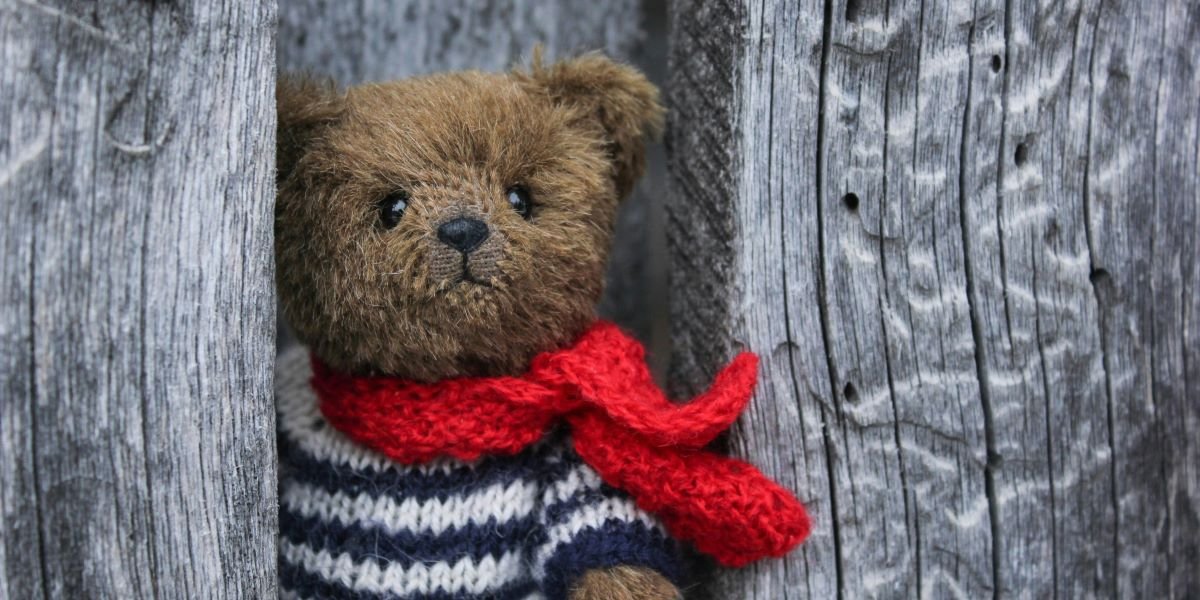
The stuffed bear that sits on nursery shelves around the world carries the name of a president, and the connection is not a marketing invention. It traces to a single hunting trip in 1902, a newspaper cartoon, and a Brooklyn shopkeeper who saw an opportunity. The story links a rugged outdoorsman to one of the gentlest objects in American childhood.
A Hunt That Produced No Bear
The episode began in November 1902, when Theodore Roosevelt traveled to Mississippi for a bear hunt at the invitation of the state’s governor. The trip was not going well. Roosevelt was hunting near Onward, Mississippi, on November 14, 1902, and unlike other hunters in the group, he had not located a single bear.
Eager to ensure the president got a trophy, his hosts forced the issue. Roosevelt’s assistants cornered and tied a black bear to a willow tree and summoned him to shoot it, but viewing this as extremely unsportsmanlike, he refused. The animal had been chased to exhaustion and restrained, and Roosevelt, himself an avid big-game hunter, considered shooting it under those conditions a violation of fair chase, the hunting ethic he had helped promote through the conservation club he co-founded years earlier.
A Cartoon That Spread The Story
The refusal would likely have faded into a minor anecdote without the press. News of the incident moved quickly, and a Washington political cartoonist turned it into a national image. Clifford Berryman’s cartoon appeared in the Washington Post on November 16, 1902, depicting Roosevelt with his rifle lowered, turning away from a tied bear in a gesture of refusal.
The drawing, titled “Drawing the Line in Mississippi,” carried more than one meaning. According to some sources, the cartoon referenced not just Roosevelt’s refusal to shoot but also his handling of a boundary dispute between Mississippi and Louisiana, while others read it as a comment on his stance on race relations. Whatever its political subtext, the public fixed on the bear. Berryman softened the animal in that cartoon and in later ones, shrinking it into something small and sympathetic, and that cuddly version took hold in the public imagination before any toy existed.
The Brooklyn Shop That Named It
The toy itself came from a small storefront in New York. Morris and Rose Michtom, a married Russian Jewish immigrant couple who ran a penny store selling candy and other items, followed the news of the president’s hunting trip. The couple also made stuffed animals, and Morris Michtom sewed a fabric bear in honor of the president, placing it in the shop window with a label reading “Teddy’s Bear.”
What followed turned a window display into a business. Michtom wrote to the White House asking to use the president’s name, and Roosevelt agreed. After receiving Roosevelt’s permission to use his name, Michtom mass-produced the toy bears, which were so popular that he soon founded the Ideal Toy Company. The firm grew into one of the largest toy manufacturers in the United States. Roosevelt, for his part, never profited from the arrangement, and by some accounts he privately disliked the nickname “Teddy” that the toy made permanent.
A Parallel Bear In Germany
The American origin story is only half the picture. At nearly the same moment, a German company arrived at a similar product on its own. Around the time the Michtoms developed their bear, the German company Steiff, founded in 1880 by seamstress Margarete Steiff, began making a plush bear designed in 1902 by her nephew Richard, who modeled it on real bears he sketched at the zoo. The Steiff bear, fully jointed and covered in mohair, debuted at a German toy fair in 1903 and was soon shipped to the United States in large numbers.
This is why histories sometimes credit different inventors. The Michtoms gave the toy its name through their window display, while Steiff gave it the jointed form that became the template for bears that followed. Both emerged within roughly a year of each other, on opposite sides of the Atlantic, and the timing helped the toy spread fast.
From Novelty To Permanent Fixture
The name caught on with remarkable speed. Within a few years, “teddy bear” had displaced older terms for stuffed bears in everyday English and become the standard description for the toy across the market. What began as a pointed political cartoon about a president’s conduct on a hunt had been absorbed into the language of childhood.
More than a century later, the connection endures even as most people who give or receive the toy have no memory of its origin. The teddy bear remains tied, by name and by accident of timing, to a day in Mississippi when a famous hunter declined to fire, and to the cartoonist and shopkeepers who turned that decision into something children have held ever since.