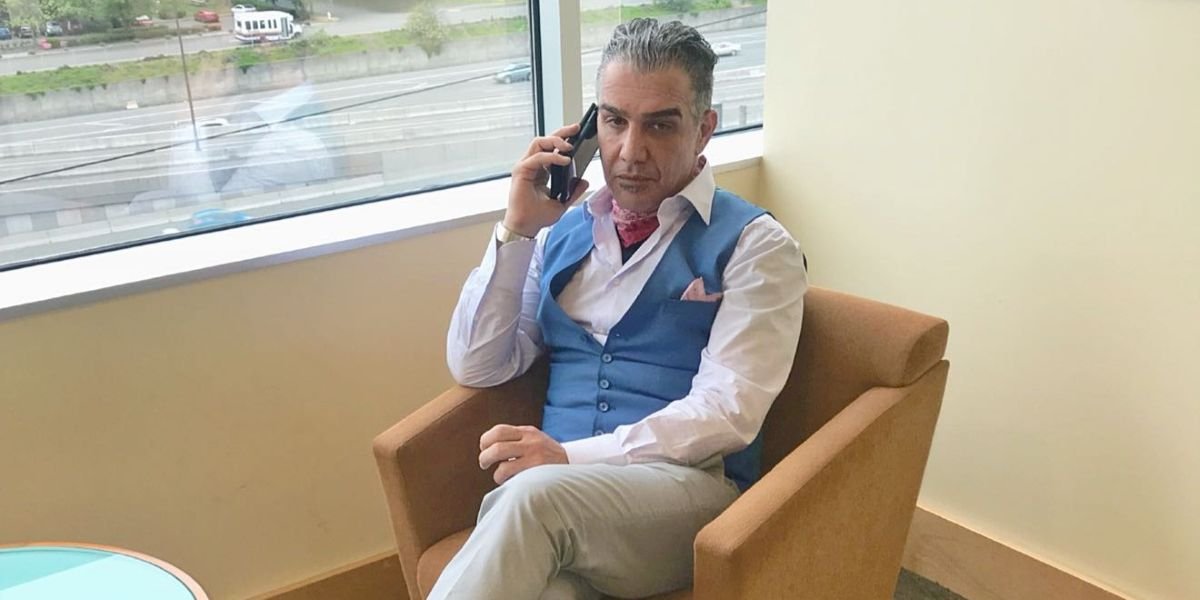
By: Dr. Alireza Panahpour, Biological Dentist and Integrative Dental Medicine Expert
How the Traditional Dental Approach Might Be Affecting Your Health
Tired of Cavities? The Issue Could Be Tied to Your Overall Health
You’re brushing twice a day. Flossing diligently. Swapping sugar for stevia. So why are you still racking up cavities like it’s a dental loyalty program?
Here’s an uncomfortable possibility: if you’re consistently developing cavities, bleeding gums, or calcified plaque (a.k.a. calculus), there could be something deeper going on. Something systemic.
For years, the dental mainstream didn’t acknowledge this.
The American dental model—built around the quick fix of “drill it, fill it, and bill it”—treats the tooth like a separate, isolated object. You’ve got a hole? Plug it. You’ve got inflammation? Scale it. And then come back in six months so we can do it all over again.
But emerging research—and long-overlooked wisdom—has begun challenging this model.
Holistic and biological dentists have been suggesting for decades that cavities and gum disease may not be solely the result of sugar or inconsistent hygiene. They can be symptoms of broader physiological dysfunction—nutritional, microbial, endocrine, and even immunological. In other words, the mouth may tell you that something might be wrong in the rest of your body.
Plaque Is a Message, Not Just a Mess
Let’s start with the plaque and calculus itself. The biofilm that builds up on your teeth isn’t random—it’s structured, adaptive, and deeply connected to your internal terrain.
Salivary pH, mineral content, oral microbiome diversity, and immune markers all influence whether your plaque stays soft or hardens into tartar. And whether that tartar leads to decay has less to do with how often you brush and more to do with what your body is metabolically doing between brushes.
Recent studies have suggested that individuals with dysbiosis of the oral microbiome—an imbalance of bacterial species—experience higher rates of demineralization, even when maintaining good hygiene. Research published in Nature Reviews Microbiology (Wade, 2013) indicates that caries are associated with microbial community shifts, not just pathogenic invaders. You don’t “catch” cavities from bad bacteria; your body can create the conditions in which they thrive.
Chronic Cavities = Chronic Deficiency
So why are some people plagued by fillings while others seem to sail through life with perfect enamel? The answer likely isn’t genetics. It’s about function.
A 2020 paper in Nutrients found that diets deficient in fat-soluble vitamins A, D, and K2—critical for calcium metabolism and dentin formation—were correlated with higher cavity rates, even in higher-income countries (Kresser, 2020). Weston A. Price documented similar findings nearly a century ago after traveling the world and observing native diets rich in organ meats, fermented foods, and mineral-dense staples—diets that promoted broad jaws, perfect arches, and little to no tooth decay. His observations were largely dismissed, overshadowed by fluoride slogans and sugar lobbying.
Today’s biological dentists are revisiting Price’s work. Rather than simply applying another composite filling, they’re asking: why is the enamel demineralizing in the first place? What’s happening in the gut, blood, or hormonal system that’s contributing to the tooth’s breakdown from within?
The End of Drill-and-Fill Dentistry?
“Drill it, fill it, bill it” isn’t just outdated anymore; it may be seen as insufficient.
Conventional dentistry teaches practitioners to wait until there’s visible decay, then intervene with a mechanical fix. But remineralization may be possible under the right conditions. Enamel has the potential to heal in certain circumstances. Several clinical trials have suggested that early-stage caries (white spot lesions) can be reversed with non-invasive therapies like nano-hydroxyapatite toothpaste, xylitol rinses, and dietary changes that support salivary buffering and mineral content (Kawasaki & Featherstone, 1997; Tao et al., 2022).
Yet how many dentists offer this? How many test salivary pH? Or screen for vitamin D deficiency? Or inquire about your cooking oils?
Biological dentists do.
What the Future Looks Like—And What’s Already Here
Leading-edge integrative practitioners are already practicing many of the approaches that may become standard in the future:
- Microbiome testing: Saliva panels that map out bacterial balance and predict caries and periodontitis risk.
- Biocompatibility screening: Testing for allergic or inflammatory reactions to dental materials before they’re used.
- Airway and sleep assessments: Recognizing that mouth breathing, apnea, and improper tongue posture can contribute to both decay and systemic inflammation.
- Remineralization protocols: Using topical calcium phosphate, ozone therapy, or nutritional interventions to avoid the need for drilling altogether.
- Root-cause diagnostics: Linking cavities to blood sugar dysregulation, low-grade systemic inflammation, or hormonal imbalances.
In other words, treating the mouth as part of the whole body.
It’s Not Woo. It’s Just Better Medicine.
Holistic dentistry was once dismissed as fringe. But now, as study after study aligns with what these outliers have long claimed—about microbiomes, minerals, and systemic inflammation—it’s becoming clearer: the so-called “fringe” might have been ahead of its time.
So if you’re tired of getting cavities despite doing “everything right,” perhaps it’s time to stop blaming your toothbrush and start asking your dentist tougher questions.
Because the future of dentistry isn’t just about better drills, it’s about asking better questions.
What You Can Do
Ask your dentist the questions they should already be asking you:
- How does this procedure affect my posture?
- Do you collaborate with chiropractors or osteopaths?
- Will this splint alter my vertical dimension?
- Do you evaluate for forward head posture or airway narrowing?
Your jaw isn’t just a hinge. It’s a key part of your entire structural and neurological network. And it’s time we started treating it like one.
Because the reality is: your pain isn’t random. Your fatigue isn’t just “stress.” Your slouch might not be laziness—it could be your bite. And until we begin connecting these dots, millions more will suffer in silence, believing it’s all in their head.
Well, it is. But not in the way you’ve been told.
Works Cited
Kawasaki, K., and Featherstone, J. D. B. “Effects of fluoride on acid demineralization and remineralization of human enamel in vitro.” Journal of Dental Research, vol. 76, no. 6, 1997, pp. 1881–1886. https://doi.org/10.1177/00220345970760060801
Kresser, Chris. “Vitamin K2: The Missing Nutrient for Heart and Bone Health.” Nutrients, vol. 12, no. 8, 2020, pp. 1–12. https://doi.org/10.3390/nu12082254
Tao, Shihua, et al. “Remineralization of enamel caries by biomimetic mineralization: a review of recent developments.” Frontiers in Bioengineering and Biotechnology, vol. 10, 2022, Article 963730. https://doi.org/10.3389/fbioe.2022.963730
Wade, William G. “The oral microbiome in health and disease.” Philosophical Transactions of the Royal Society B: Biological Sciences, vol. 370, no. 1675, 2015, 20140208. https://doi.org/10.1098/rstb.2014.0208
Weston A. Price. Nutrition and Physical Degeneration. 8th ed., Price-Pottenger Nutrition Foundation, 2003. (Originally published 1939.)
Dr. Alireza Panahpour is a biological and systemic dentist based in Santa Monica, California. An expert in Chirodontics and integrative dental medicine, he advocates for collaboration across chiropractic, osteopathic, and dental professions to treat the true origins of structural and systemic dysfunction.
Disclaimer: The information provided in this article is intended for general informational purposes only and is not a substitute for professional medical or dental advice. The views expressed by Dr. Alireza Panahpour are based on his personal experiences and research in biological and integrative dentistry. Individual dental needs and treatments may vary. Always consult with your dentist or healthcare provider before making any changes to your oral care routine or medical treatment plan.