By: Missive
An email lands in a shared inbox (sales@acme.com). It’s important—potentially a deal on the line—and the client is waiting for an answer. It seems urgent and likely needs prompt attention. You skim it, maybe forward it to a teammate or two with a quick “thoughts?” And then…it disappears. Lost in an endless chain of replies, buried under a flood of other messages, often slipping into the black hole of miscommunication and potential lack of accountability. This frequently happens in businesses worldwide, not necessarily because teams are disorganized but because email may not be optimized for modern collaboration. Missive was built to help address that.
Despite many advancements in workplace technology, a significant number of businesses still use Gmail and Outlook as their email client—tools designed in an era before remote teams, real-time collaboration, and the accelerated pace of modern business. These inboxes were originally implemented as an upgrade to fax machines rather than being built for teamwork. And that’s a key reason why they might be limiting companies today.
The Problem: Email Hasn’t Kept Up—But Work Has
Communication has evolved significantly over the last two decades, with teams increasingly relying on real-time collaboration. Yet, email has largely remained unchanged. The same inboxes that existed when businesses were faxing contracts are still the default today, even though they were primarily designed for individual use.
Conversations are now scattered across multiple platforms (emails, SMS, Messenger, WhatsApp, etc.), leaving teams struggling for context. To compensate, businesses often layer on numerous disconnected tools—Slack messages, project management apps, and endless CC chains—sometimes creating even more silos.
Forwarding emails, digging through fragmented threads, and waiting on responses can slow teams down when they need to move quickly. In many cases, instead of being a productivity tool, email can become a roadblock—one that businesses may struggle with in a world where real-time collaboration is increasingly expected.
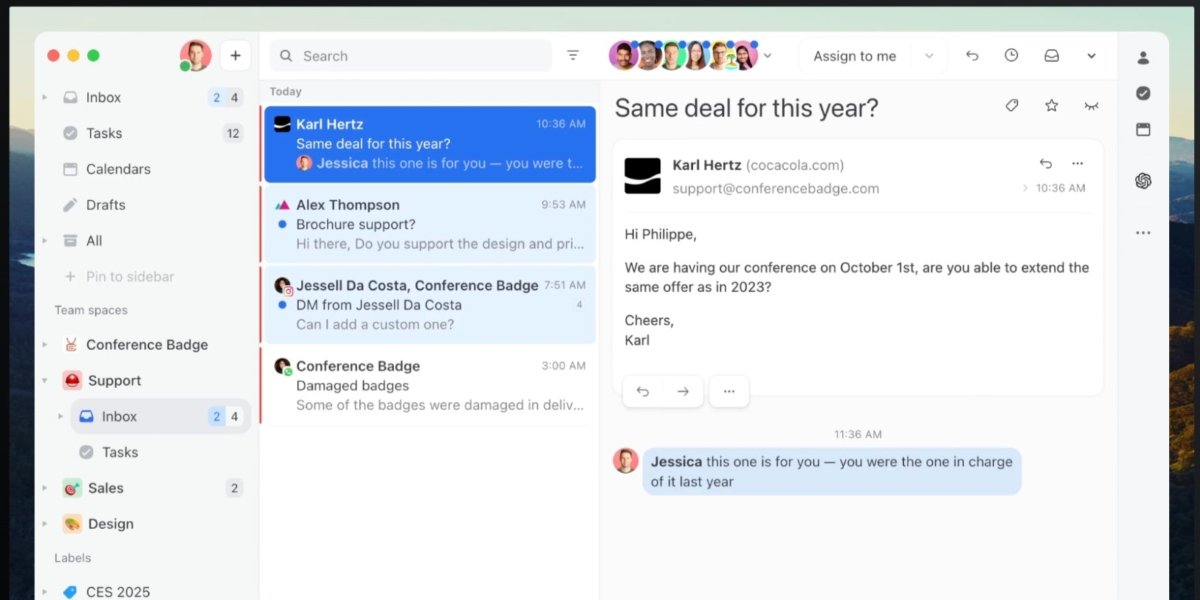
Traditional email often forces teams to work around it. Some tools aim to help teams work with it, while Missive seeks to unlock the power of collaboration from within. How?
- Collaborate on email drafts with your team in real-time.
- Discuss emails directly by tagging (@) teammates for feedback.
- Assign tasks seamlessly from personal or shared inboxes.
- Track accountability with visibility into who’s handling what.
The Shift: Why Businesses May Benefit from a Collaborative Inbox
If modern businesses want to work faster, smarter, and with fewer headaches, they might need an inbox that better supports collaboration. A workspace where teams can discuss, assign, and resolve tasks without switching between multiple apps.
Companies that have adopted collaboration-driven email tools like Missive often report a shift in how they work. Instead of scrambling to find lost emails, they can discuss messages in real time, assign tasks, track progress, and maintain visibility—all within the inbox. Fewer forwards. Less confusion. Potentially less wasted time.
Consider a legal practice where client emails are drafted collaboratively, helping ensure replies are thorough and accurate. Or a marketing agency where client requests can be managed efficiently—tasks assigned directly from the inbox rather than waiting for approvals in Slack or Asana.
This isn’t just about making email “better.” It’s about exploring what communication could be.
The Potential Consequences of Staying Stuck
Some businesses resist change, believing that since they’ve “made it work” with traditional email, there’s no reason to switch. However, the hidden costs of outdated systems might be higher than many realize. Team members can lose hours each week searching for emails, reconstructing context, and re-explaining details. Information bottlenecks and slow responses may frustrate clients. Cluttered inboxes and inefficient workflows could add unnecessary stress. Research suggests employees are more productive—and happier—when they have the right tools.
Ineffective email communication can create challenges for teams.
Yet, businesses often force email to do something it wasn’t designed for. Email isn’t going anywhere, but how companies use it may need to evolve. The future could belong to teams that embrace collaboration-first inboxes designed to reduce friction.
The Future: Where Your Inbox Could Become a Collaborative Hub
Email isn’t dying, but it might be overdue for an upgrade. For decades, businesses have worked around its limitations, patching it with side conversations, CC chains, and a growing number of disconnected tools. But what if email wasn’t the bottleneck? What if it became the backbone of collaboration?
An inbox of the future should ideally do more than house messages—it could automate routine tasks, facilitate discussions, and streamline delegation. Some companies have already made this shift, turning email into a real-time workspace.
Others, however, remain hesitant to change, which could lead to inefficiencies. Sooner or later, every company may need to decide: Will they keep struggling with outdated email, or could they transform it into a collaborative hub? The inbox isn’t disappearing, but how businesses adapt might shape their success.
Stay Stuck or Move Forward
For too long, businesses have tried to make email function in ways it wasn’t designed for. Tools should adapt to workflows, not the other way around. The shift toward a collaboration-first inbox isn’t just a luxury—it’s increasingly seen as a necessity for companies aiming to work smarter and faster.
Missive was built for this evolving era of email—where teams discuss, assign, and resolve emails seamlessly. Thousands of businesses have already made the switch, finding value in modernizing their workflows. The question is: Could this be the right time for you to explore it too?
Published by Jeremy S.