By: Henry Penshorn
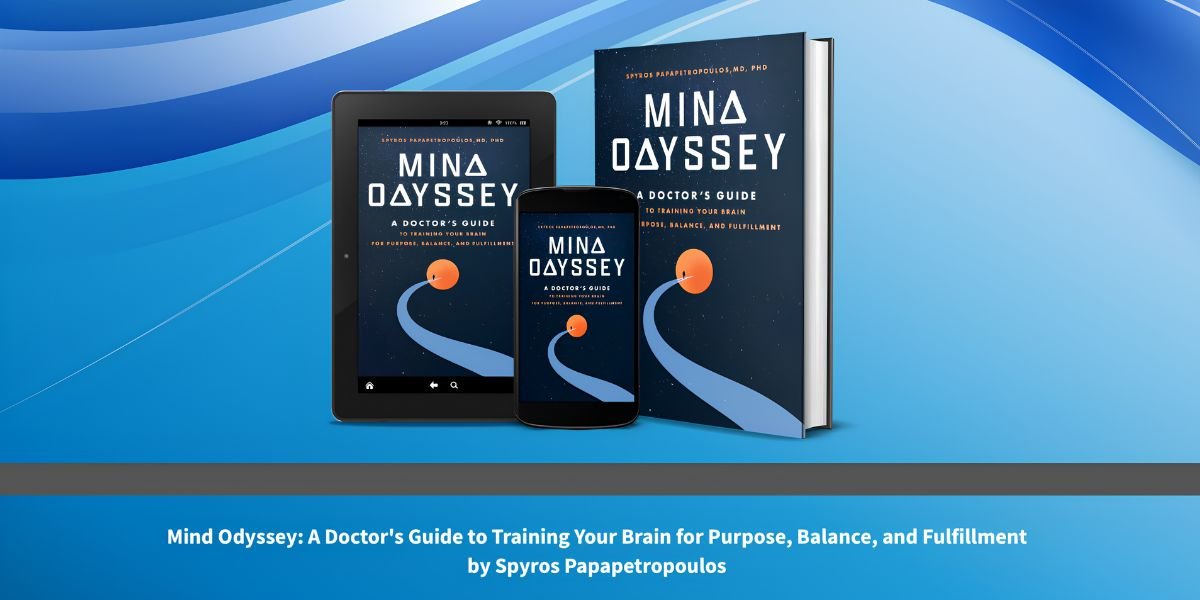
Most books about professional fulfillment make one of two mistakes. They either treat the subject as purely psychological, ignoring the neuroscience that actually explains why certain approaches to work feel sustaining and others feel draining, or they lean so heavily on the science that the human experience of trying to live a meaningful professional life gets lost somewhere between the prefrontal cortex and the dopamine receptors. Dr. Spyros Papapetropoulos avoids both mistakes with the ease of someone who has spent decades living at the intersection of neuroscience and leadership, and Mind Odyssey is the book that proves those two domains were always meant to be in conversation with each other.
The Odyssey metaphor that structures the book is not a literary flourish applied to make the content more interesting. It is a genuine intellectual move that Papapetropoulos makes with full awareness of what he is doing and why. Homer’s Odysseus is not simply trying to survive his journey home. He is trying to remain himself throughout it, to navigate temptation and catastrophe and the seductive comfort of places that would require him to stop being who he actually is, and to keep moving toward a destination that represents something real rather than merely something desirable. That is precisely the challenge that Papapetropoulos is describing when he writes about the modern professional navigating burnout and indecision and the accumulated weight of choices made for reasons that had more to do with external expectation than internal clarity.
The reading experience this book provides is one of progressive illumination. You begin with the section on purpose and discover that Papapetropoulos has a considerably more rigorous and more useful definition of the concept than most professional development writing offers. Purpose in his framework is not passion, a word he handles with appropriate skepticism, but the specific intersection of what you are genuinely good at, what drives and motivates you at a deep level, and how you are perceived by the people around you. That triangulation produces something considerably more stable and more actionable than passion, which tends to fluctuate with circumstances, and the brain science he brings to explain why makes the distinction feel genuinely important rather than merely semantic.
The section on balance is where the neuroscience becomes most immediately practical. Papapetropoulos is writing about emotional regulation in the context of professional ambition, about the specific cognitive tools that allow a person to remain clear-headed and values-aligned under the kind of pressure that most high-performing careers generate, and he writes about it with the authority of someone who has both researched these questions and lived them inside demanding leadership roles. The section on fulfillment completes the arc with a distinction that lingers long after you finish the book, the difference between the dopamine-driven happiness that success culture sells and the endorphin-fueled fulfillment that genuine purpose alignment actually produces.
Mind Odyssey is a book that will change what you ask of your professional life and give you the neuroscientific grounding to pursue the answers with real confidence. For anyone navigating a crossroads or simply sensing that more is possible than what they have been settling for, this is exactly the guide they need.
If you are ready to stop chasing the dopamine version of success and start building the kind of fulfillment that actually lasts, Mind Odyssey by Dr. Spyros Papapetropoulos is waiting for you on Amazon. Pick up your copy and discover what a neurologist who has spent decades studying the brain and leading at the highest levels of his field believes you are genuinely capable of building.