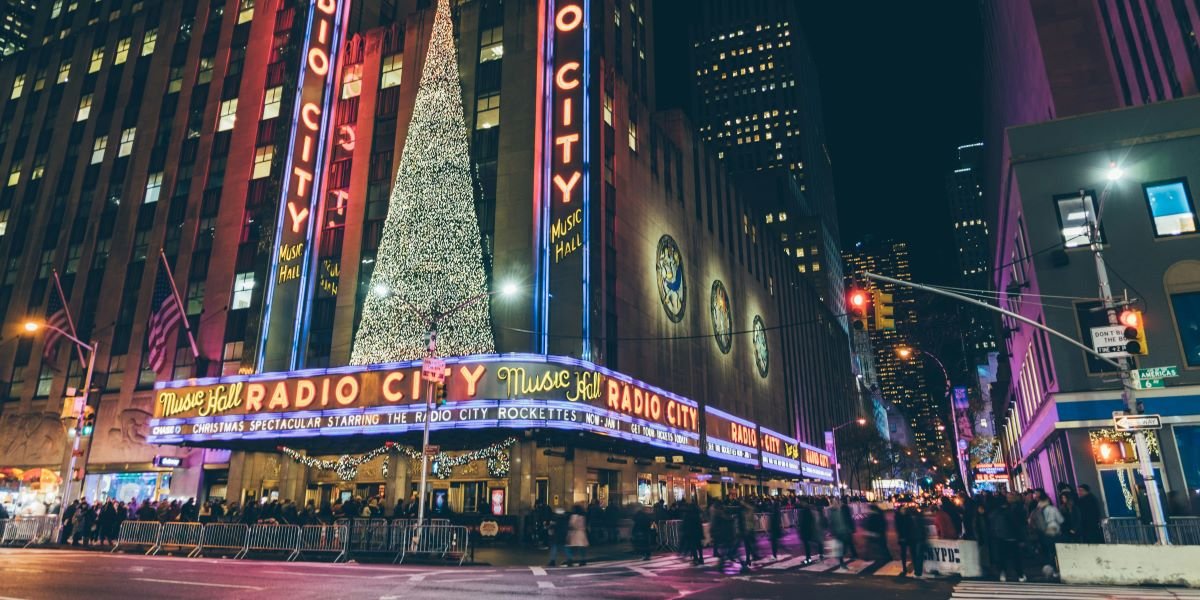
The 79th Tony Awards arrived June 7 at Radio City Music Hall riding a number that frames the entire night: $1.91 billion. That was the cumulative gross of the 2025-2026 Broadway season, a new annual record confirmed by the Broadway League and the second consecutive year the industry set a high-water mark. The figure, $1,910,903,835 to be exact, topped the prior season by 1 percent, and by a steeper 3.5 percent once adjusted for the fact that the previous year ran an unusual 53 weeks.
For a sector still measured against pre-pandemic peaks, the season offered evidence that the recovery is not merely a pricing illusion. On a like-for-like basis, attendance rose 1.8 percent and average ticket prices climbed 1.7 percent, with audiences filling 90.8 percent of available seats across 13,416 performances. Roughly 14.6 million people attended a Broadway show, and the League estimates the industry supported nearly 100,000 jobs across the New York region while feeding the restaurants, hotels, and transit traffic that depend on theater crowds. The hosting of the Tonys by pop star P!nk, who opened with a “Lady Marmalade” number alongside Megan Thee Stallion, underscored the commercial instinct at work: a telecast built to convert national attention into ticket sales.
No Single Show Ran the Table
If the box office story was about momentum, the awards themselves were about distribution. Tony voters spread recognition across the slate rather than anointing a single juggernaut. Schmigadoon!, the stage adaptation of the Apple TV+ series produced in part by Lorne Michaels, won Best Musical and four awards total, including Best Original Score for Cinco Paul.
Death of a Salesman emerged as the evening’s most-decorated production with six wins, including Best Revival of a Play. Accepting the prize, Nathan Lane credited director Joe Mantello and Arthur Miller, noting the 1949 drama remains, in his framing, as relevant to who Americans are now as it was at its premiere. The Ragtime revival, which began life in New York City Center’s prior season, took Best Revival of a Musical, and its stars Caissie Levy and Joshua Henry swept the lead musical acting categories, the first time in 28 years a single musical revival claimed both. Bess Wohl’s Liberation, which also won the Pulitzer Prize, took Best Play, making Wohl only the fourth female playwright to win the award in Tony history.
The Lost Boys and Schmigadoon! each matched Ragtime’s four wins, while Cats: The Jellicle Ball earned three.
A Historic Win and an Uncomfortable Footnote
The night’s most resonant cultural moment came from Cats: The Jellicle Ball, the reimagining of the Andrew Lloyd Webber staple through ballroom culture. Costume designer Qween Jean became the first openly transgender Tony Award winner, a milestone in an industry that has positioned itself as a leader on representation. The production also won Best Direction of a Musical for Zhailon Levingston and Bill Rauch and Best Choreography for Omari Wiles and Arturo Lyons.
Not every storyline was celebratory. Death of a Salesman’s haul marked the first Tony recognition connected to producer Scott Rudin since he withdrew from Broadway in 2021 following numerous allegations of abusive workplace behavior. Rudin went unmentioned during the telecast, a silence that spoke to the industry’s continued discomfort with a figure whose productions keep winning even as his name stays off the stage.
What the Numbers Signal Beyond the Theater District
For a national business audience, the season’s results read as a data point in a broader consumer pattern: Americans continuing to spend on live experiences even amid economic uncertainty. Concerts, sports, and theater have all drawn audiences willing to pay premiums for being in the room, and the Federal Reserve Bank of New York’s April Beige Book specifically noted that Broadway ticket sales remained strong. Broadway League President Jason Laks framed the record as a sign of resilience, casting the industry as one of New York’s economic engines rather than a niche cultural concern.
The caution beneath the celebration is real. Attendance, on the raw 52-week count, dipped slightly, meaning the gross record leaned partly on higher prices, and producers describe growing selectivity about which shows are economically viable to mount. A record season and a Tony night that spread its honors widely tell a story of health, but also of an industry doing more careful math about what gets made. For now, the headline holds: Broadway sold nearly $2 billion in tickets and threw a televised party to keep the momentum going into the summer.