By Bridget Mulroy
Luxury brands often find themselves balancing two competing priorities: honoring their heritage while remaining relevant to today’s consumers. IKRAA Caviar, a New York-based company with deep roots in the caviar business, appears to be navigating that balance with quiet confidence.
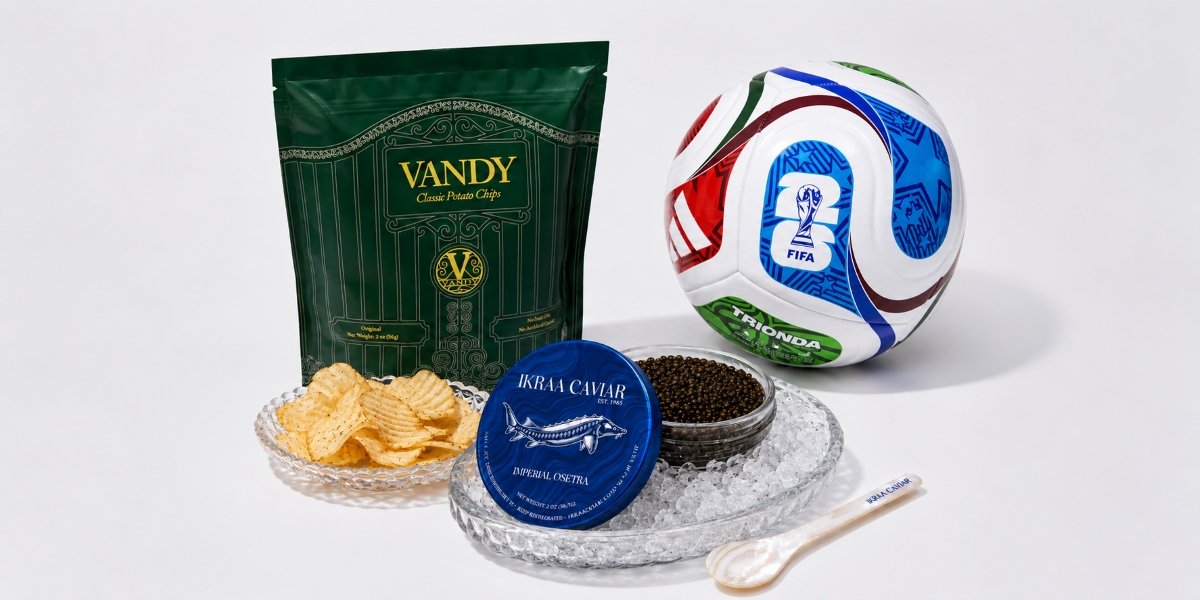
Its FIFA World Cup Limited Edition collection is a compelling example. At first glance, it might seem like another commemorative product tied to a global sporting event. Spend a little more time with it, however, and it becomes clear that the collection is part of a broader strategy, one that emphasizes heritage, craftsmanship, and the growing importance of shared experiences in luxury dining.
I first wrote about IKRAA in an earlier feature exploring the company’s history. What stood out to me then wasn’t simply the quality of the caviar, but the story behind it. The brand traces its roots to Eugene Dozortsev, whose work helped shape the American market for premium caviar decades ago. Today, that legacy continues through the next generation, with Arty and Anna building a company that respects those traditions while responding to a very different marketplace.
That history gives IKRAA a perspective that many younger luxury brands simply don’t have.
The World Cup collection reflects that perspective. Rather than relying on bold graphics or novelty alone, the presentation feels thoughtful and understated. It acknowledges the significance of an event that captures global attention every four years without allowing the packaging to overshadow the product itself.
That distinction matters.
Consumers purchasing luxury food today are often looking for more than premium ingredients. They want products that create a sense of occasion. Whether it’s a holiday dinner, a milestone celebration, or a gathering to watch a championship match, the experience has become just as important as what’s being served.
The FIFA World Cup naturally creates those moments. Restaurants fill with supporters, homes become gathering places, and people who might not ordinarily entertain find themselves planning menus for match day. A limited-edition collection built around that atmosphere feels less like a marketing exercise and more like a recognition of how people celebrate today.
IKRAA has been leaning into those experiences for some time.
In New York City, the company has become a familiar presence at private dinners, cultural events, fashion gatherings, and hospitality showcases. Its signature IKRAA Caviar Cart, now a recognizable feature at many upscale events, has introduced the product to guests in a way that feels welcoming rather than intimidating. Instead of remaining behind kitchen doors, the service becomes part of the experience itself, often drawing as much conversation as the menu.
The company’s presence extends well beyond New York. IKRAA caviar is served in respected restaurants throughout the city while continuing to appear on menus at restaurants and hospitality destinations around the country. That broader reach reflects steady growth built on relationships with chefs and restaurateurs who value consistency, sourcing, and quality as much as presentation.
Underlying that expansion is a sourcing philosophy that reflects the direction of the modern caviar industry. IKRAA works with established aquaculture farms across Europe and Asia, selecting its caviar for texture, flavor, and appearance while adhering to traditional Malossol methods. The emphasis remains on quality and responsible production rather than scale alone.
The World Cup collection fits naturally within that broader story. It isn’t intended to reinvent the brand or redefine what IKRAA represents. Instead, it offers another expression of the company’s identity, bringing together its long-standing commitment to craftsmanship with one of the world’s most celebrated sporting events.
Looking back at the brand since my earlier feature, what stands out isn’t a dramatic transformation but a steady evolution. IKRAA has expanded its visibility through restaurant partnerships, event activations, and thoughtfully curated releases, yet its guiding principles appear largely unchanged. The focus remains on producing exceptional caviar while allowing the company’s history to provide context rather than become the centerpiece.
In a luxury market that often rewards novelty and constant reinvention, that measured approach feels increasingly uncommon. It suggests that lasting success can still be built on consistency and that heritage, when paired with thoughtful execution, remains one of the strongest assets a brand can possess.