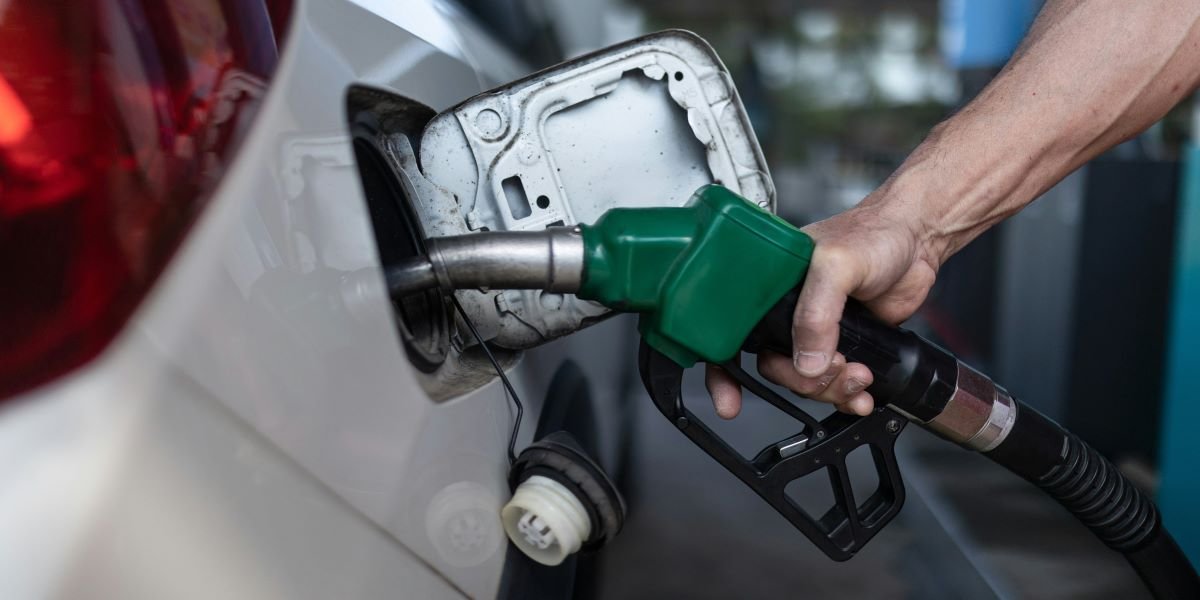
The average U.S. price of gasoline crossed $4 per gallon on July 20, 2026, returning to a threshold that carries both economic weight and political symbolism during peak summer driving season. The Strait of Hormuz conflict is the most visible driver, but the price spike reflects a convergence of structural pressures that predates the renewed fighting: declining domestic refinery capacity, historically low gasoline inventories, Ukrainian strikes on Russian refining infrastructure, and a seasonal demand surge that arrives every year regardless of geopolitics. The practical question for U.S. consumers is whether energy inflation will drag on the broader economy through the second half of the year.
Key Takeaways
- The national average gasoline price crossed $4 per gallon on July 20, up from roughly $3 at the start of the U.S.-Iran conflict and down from a $4.48 peak in May 2026.
- The U.S. Energy Information Administration’s July forecast projects second-half 2026 prices averaging $3.60 per gallon, but that projection assumed continued Hormuz de-escalation that has since reversed.
- Gasoline inventories fell 1.5 million barrels in the week ending July 10, leaving stockpiles approximately 14 million barrels below their five-year seasonal average and at their lowest level for this time of year since 2012.
- Ukrainian drone strikes have knocked out up to 40% of Russian refining capacity, reducing global refined product supply independent of the Hormuz disruption.
- Decreasing U.S. refinery capacity, particularly on the West Coast, is structurally tightening domestic gasoline supply and elevating crack spreads to their highest level since June 2022.
The EIA Forecast That Already Needs Updating
The U.S. Energy Information Administration published its July Short-Term Energy Outlook on July 7, projecting that retail gasoline prices would average approximately $3.80 per gallon in the third quarter and $3.40 per gallon in the fourth quarter, with the annual average falling below $3.10 per gallon in 2027. The forecast represented a steep reduction from the agency’s June outlook, which had projected $3.90 per gallon for the full year. The revision was driven by a single assumption: that shipping traffic through the Strait of Hormuz would continue increasing following the June 18 memorandum of understanding between Washington and Tehran, allowing global crude oil production to rebound to near pre-conflict levels by year’s end.
That assumption collapsed within days of publication. The U.S.-Iran ceasefire fell apart in the second week of July. Washington reinstated a naval blockade on Iranian ports. Tehran intensified attacks on commercial shipping and struck a Kuwaiti oil facility. Crude oil climbed above $84 per barrel by July 20, up nearly 30% from July lows and well above the EIA’s projected third-quarter Brent average of $74 per barrel. The agency’s gasoline price forecast, built on the expectation of de-escalation, is now operating against an environment of active military escalation.
The War Is The Headline But Not The Whole Story
Roughly 20% of global daily oil supply passes through the Strait of Hormuz, making any disruption there immediately consequential for crude prices. But the current gasoline price spike has structural components that would be pressuring consumers even without the Middle East conflict. GasBuddy head petroleum analyst Patrick De Haan described the situation as a rare convergence: rising crude oil prices hitting consumers at the same time as a shrinking global supply of refined products.
The refining bottleneck is real and measurable. EIA data showed gasoline inventories fell by 1.5 million barrels in the week ending July 10, leaving stockpiles approximately 14 million barrels below their five-year seasonal average and at the lowest level for this time of year since 2012. U.S. refiners have shifted production toward higher-margin diesel and jet fuel in response to strong global demand for those products, reducing gasoline output even as summer driving demand peaked. The U.S. gasoline crack spread — the difference between wholesale gasoline prices and crude oil costs — climbed to approximately $59 per barrel, its highest level since June 2022.
Domestic refinery capacity is also declining, particularly on the West Coast. The EIA noted in its January 2026 outlook that decreasing U.S. refinery capacity would offset some of the benefits of lower crude prices on gasoline, especially in the West Coast region where stricter fuel standards, higher state taxes, and limited refining infrastructure already produce the nation’s highest pump prices. California’s gasoline prices routinely exceed the national average by more than $1 per gallon, and the structural loss of refining capacity means that gap is widening rather than closing.
Russia’s Refinery Losses Add A Third Pressure Point
Independent of the Hormuz conflict, Ukrainian drone strikes have severely degraded Russian refining capacity, removing a significant volume of refined product from global supply. Estimates suggest up to 40% of Russian refining capacity has been disrupted, reducing the country’s ability to export gasoline, diesel, and jet fuel to markets that had absorbed those volumes for decades. The loss compounds the Hormuz-driven crude supply disruption by simultaneously tightening the refined product market, creating a squeeze at both ends of the petroleum supply chain.
The EIA’s July STEO acknowledged the global supply picture by noting that increased net imports of gasoline into the U.S. East Coast from the Atlantic Basin had already become more expensive, and that U.S. exports from the Gulf Coast had risen sharply. The agency expects refiners to increase gasoline yields in the second half of 2026 and projects inventory stabilization by the fourth quarter, but those projections assumed a supply environment that no longer exists.
What $4 Gas Means For The Broader Economy
Gasoline prices function as a consumption tax that falls disproportionately on lower-income households and workers in transportation-dependent industries. At $4 per gallon, a household driving 12,000 miles per year in a vehicle averaging 25 miles per gallon spends approximately $1,920 annually on fuel — roughly $480 more per year than at $3 per gallon. That differential compounds across an economy of 230 million licensed drivers.
The political dimension is equally direct. Prices were approximately $3 per gallon when the U.S.-Iran conflict began and spiked to $4.48 in May before the ceasefire brought temporary relief. The return to $4 arrives five months before midterm elections and during a summer in which the White House has pushed back on the narrative that the war is the primary cause of higher prices. The EIA’s projection of a second-half decline to $3.40 per gallon offered an optimistic trajectory. Whether that trajectory survives the current escalation will depend on variables no forecasting model can predict: the duration of fighting, the integrity of Hormuz transit routes, and whether global refining capacity can recover fast enough to meet demand.
The $4 gasoline price is not a single-cause event — it is the product of a war premium layered on top of structural refining deficits, historically low inventories, and a seasonal demand peak, a combination that leaves U.S. consumers exposed to price volatility with fewer supply-side buffers than at any point in the past decade.
FAQs
Why did gas prices cross $4 per gallon again?
The price increase reflects a convergence of factors: renewed U.S.-Iran hostilities disrupting crude oil supply through the Strait of Hormuz, declining domestic refinery capacity, gasoline inventories at their lowest seasonal level since 2012, Ukrainian strikes on Russian refineries, and peak summer driving demand.
What does the EIA forecast for gas prices in the second half of 2026?
The EIA’s July Short-Term Energy Outlook projected third-quarter retail gasoline prices averaging $3.80 per gallon and fourth-quarter prices at $3.40 per gallon, with a 2027 annual average below $3.10. However, the forecast assumed continued Hormuz de-escalation that has since reversed.
How low are U.S. gasoline inventories right now?
Gasoline inventories fell 1.5 million barrels in the week ending July 10, leaving stockpiles approximately 14 million barrels below their five-year seasonal average. That represents the lowest inventory level for this time of year since 2012.
How has the U.S.-Iran conflict affected oil prices?
Crude oil climbed above $84 per barrel on July 20, up nearly 30% from July lows. Prices were driven by the collapse of the U.S.-Iran ceasefire, Washington’s reinstatement of a naval blockade on Iranian ports, and Tehran’s attacks on commercial shipping in the Strait of Hormuz.
Why are gas prices high even beyond the war?
U.S. refinery capacity is declining, particularly on the West Coast. Refiners have shifted production toward diesel and jet fuel, reducing gasoline output. Ukrainian drone strikes have knocked out up to 40% of Russian refining capacity. These structural factors would be pressuring prices regardless of the Middle East conflict.
How much more are Americans spending on gas at $4 per gallon?
A household driving 12,000 miles per year in a vehicle averaging 25 miles per gallon spends approximately $1,920 annually on fuel at $4 per gallon, roughly $480 more per year than at $3 per gallon.
What is the gasoline crack spread and why does it matter?
The crack spread measures the difference between wholesale gasoline prices and crude oil costs, serving as a gauge of refinery profitability. The U.S. gasoline crack spread reached approximately $59 per barrel in mid-July, its highest level since June 2022, indicating tight refined-product supply.
Will gas prices come down before the end of 2026?
The EIA projects prices declining as summer demand fades, inventories rebuild, and refiners increase gasoline yields. However, the forecast depends on Hormuz de-escalation and global refining recovery — neither of which is assured given current military hostilities.