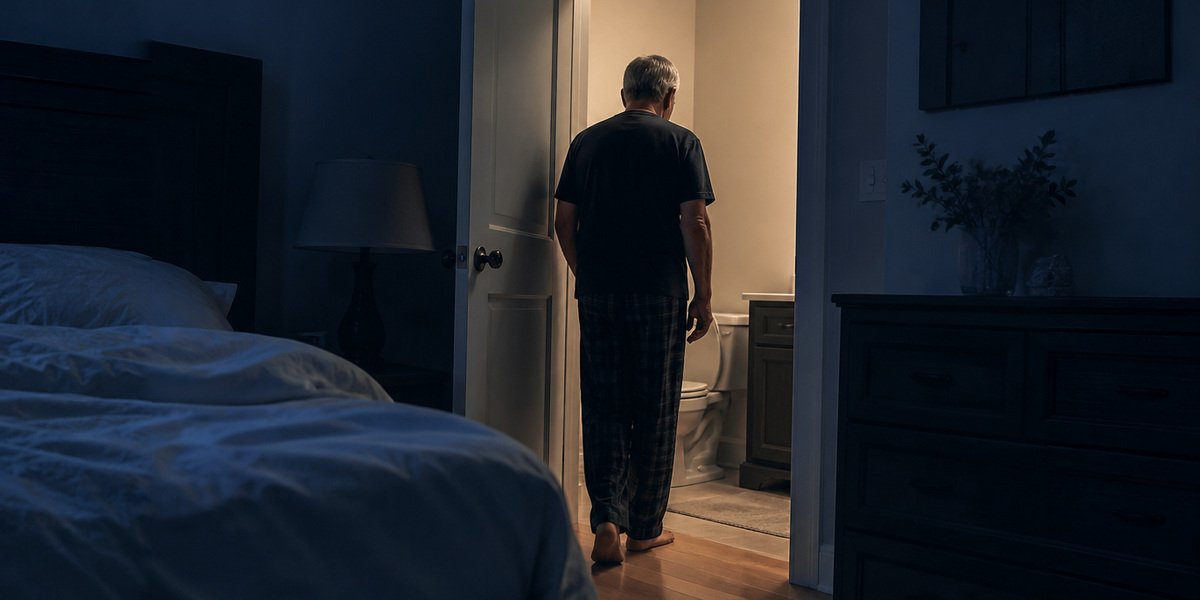
Most men can describe the exact moment their car started making a strange noise, but not the month their sleep fell apart or when they first noticed they were waking twice a night to use the bathroom. Urological symptoms arrive quietly. They get absorbed into normal life, blamed on stress, travel, late dinners, or simply getting older. Some of them really are harmless. A few are early signs of conditions that respond far better to treatment when they are caught in the first act rather than the third.
This is a practical guide to the signals worth taking seriously, how weight and sleep quietly amplify risk, and what a modern specialist workup actually involves.
Start with the symptom men normalize fastest: waking up to urinate
Nocturia is the broken-sleep complaint men mention last, usually after they have already described fatigue, low mood and poor concentration. There are several plausible explanations: too much fluid in the evening, alcohol, caffeine after mid-afternoon, uncontrolled blood sugar, diuretic medication, sleep apnea, or an enlarging prostate pressing on the urethra. Benign prostatic enlargement is common with age and is not cancer. But the overlap in symptoms is exactly why self-diagnosis is unreliable.
A useful distinction: how much urine, and how urgently. Waking once and passing a large volume points in a different direction than waking three times with a weak stream, hesitancy and the sense that the bladder never fully empties. Keep a two-week log of bedtime, wake times, night-time trips and evening fluids before any appointment. It is unglamorous data, and it is often the single most useful thing a patient brings into the room.
Why clock changes expose sleep problems
Seasonal time shifts are a good natural experiment in how fragile adult sleep really is. When the clocks fall back after Halloween night, many people expect a bonus hour and instead get a week of early waking, afternoon slumps, and disrupted bedtime routines. Men who already have fragmented sleep from nocturia or snoring tend to notice the difference most, because the hour does not reset the underlying problem; it just makes it visible. If a one-hour shift wrecks your week, the sleep you had before it was probably already marginal.
Weight and sleep are not a separate conversation
Excess weight around the neck and abdomen narrows the upper airway during sleep and pushes up the odds of obstructive sleep apnea, which in turn drives daytime sleepiness, high blood pressure and poor metabolic control. The loop runs both ways: short, broken sleep disrupts appetite regulation and makes weight gain easier. Obesity is also associated with worse outcomes across a range of cancers and complicates surgery, anesthesia and radiotherapy planning.
For a man in his forties or fifties, addressing weight and sleep is not a lifestyle sideshow to the cancer conversation. It changes the baseline on which every other decision rests, recovery after an operation, tolerance of systemic therapy, and the accuracy of imaging.
Three men’s cancers and the signs that should prompt a call
Testicular cancer: young men, fast-moving, highly treatable
This is predominantly a disease of younger men, broadly from the teens through the mid-forties, which is precisely the age group least likely to book an appointment. The classic finding is a painless lump or firm area in one testicle, sometimes with heaviness or a dull ache in the groin or lower abdomen. Pain is not a requirement. A monthly self-examination after a warm shower takes under a minute: roll each testicle between thumb and fingers, feel for any hard nodule or change in size or consistency, and recognize the soft cord-like epididymis at the back so you do not mistake it for a problem. Risk factors include an undescended testicle, a family history, and a previous testicular tumor. Self-examination does not prevent anything; it shortens the delay between change and diagnosis, which matters.
Prostate cancer: often silent, which is the whole challenge
Early prostate cancer frequently causes no symptoms at all, and when urinary symptoms do appear, they are indistinguishable from benign enlargement. Risk rises with age, is higher for men with a father or brother affected, and is higher in men of African ancestry. That is why the conversation is about screening rather than symptoms: a PSA blood test, a clinical examination, and, where indicated, imaging and a targeted biopsy. PSA is imperfect; it can be raised by infection, recent cycling or ejaculation, and it finds some cancers that would never have caused harm. The honest framing is shared decision-making, usually starting somewhere around age 50, or earlier for men with a strong family history.
Bladder and urothelial cancer: never ignore blood in the urine
Visible blood in the urine, painless and often intermittent, is the symptom that should never be filed under “it went away.” Other clues include persistent urgency, burning without a confirmed infection, or recurrent urinary infections that keep returning after treatment. Smoking is the dominant modifiable risk factor, along with occupational exposure to certain industrial chemicals, dyes and solvents. One episode of blood that resolves on its own still warrants a cystoscopy and imaging.
Who to see, and in what order
A primary care physician is a reasonable first stop for urinary symptoms, but men often lose months bouncing between the wrong specialists. A urologist handles the testes, prostate and bladder; a medical oncologist manages systemic therapy; a radiation oncologist plans radiotherapy; a pathologist and radiologist determine what the tissue and the images actually show. If the hierarchy is unfamiliar, a plain-language guide to the different types of doctors and what each one treats is worth ten minutes before your first appointment, because asking for the right referral is half the battle.
Where a dedicated program changes the experience
For men in the UAE who want the whole workup under one roof rather than assembled piecemeal, Cleveland Clinic Abu Dhabi runs a Genitourinary Cancer Program within its Cancer Institute, covering testicular, prostate, and bladder or urothelial cancer. In practice, that means specialized diagnostic imaging and pathology for each cancer type, prostate diagnostics including the PSA test, surgery alongside medical and radiation oncology, options such as stereotactic radiotherapy and Ethos adaptive radiotherapy, and advanced prostate cancer treatments including HIFU; cases are reviewed by a multidisciplinary tumor board so the plan reflects several specialties rather than one opinion. The hospital also runs an obesity program with sleep and weight-related health resources, which is relevant for men whose nocturia, snoring and fatigue turn out to be metabolic rather than oncological.
A short list worth acting on this month
- Log two weeks of sleep, night-time bathroom trips and evening fluid intake.
- Do a one-minute testicular self-check monthly if you are under 45, and any age if something feels different.
- Treat any episode of visible blood in the urine as a reason to be seen, even if it stops.
- If you are around 50, or 40-something with a family history, ask your doctor directly about PSA and what a result would and would not mean.
- If you snore, wake unrefreshed and carry weight around the middle, raise sleep apnea by name.
- Write down your questions. Three specific ones beat an hour of vague worry.
None of this requires heroics. It requires noticing a change and saying it out loud to someone qualified to interpret it which is the one step men skip most reliably, and the one that costs the most.
Disclaimer: This content is for informational purposes only and is not intended as medical advice, nor does it replace professional medical expertise or treatment. If you have any concerns or questions about your health, always consult with a physician or other healthcare professional.