By: Matt Emma
The International Diabetes Federation estimates that 589 million adults (20-79 years) live with diabetes worldwide. This figure represents almost 1 in 9 adults worldwide. With millions of people around the world living with diabetes, there are thousands of diabetes fans attending every major sporting event around the world.
“Diabetes care is based on a rhythm and a major sports event can have a negative effect on this rhythm. However, patients don’t have to miss out on the fun. They just need to have a plan for their food, medicines, sleep, physical activity, and for possible delays”, says Dr. Nubar Rasulova, Endocrinology and Metabolism specialist at Erdem Hospital.
In order to be able to manage your diabetes during a big football event, first of all you should pack more diabetes equipment than you think you are going to need. Divide the diabetes equipment between your hand luggage and your other luggage. All of your medication should be in the original packaging. A short medical letter can be very useful at airport security checks, for example for insulin, needles and sensors, for a diabetes pump or for glucose tablets. People who need to take insulin while traveling abroad should ask their doctor in advance how to adjust the time of the injections when crossing time zones.
Extra-time snacks and stadium choices
Match days are a major challenge for people with diabetes as they can cause a variety of fluctuations in blood sugar levels. The nature of the event can see fans walking for long periods of time, going up and down stairs and doing a lot of walking around. Fans may also experience anxiety and stress which can also cause fluctuations in blood sugar levels. As fans arrive at the stadium, they are greeted by a variety of glucose-rich foods such as fried foods, burgers, hot dogs, cotton candy and other sugary treats. In addition to these foods, fans can also be tempted to consume alcohol to celebrate their team.
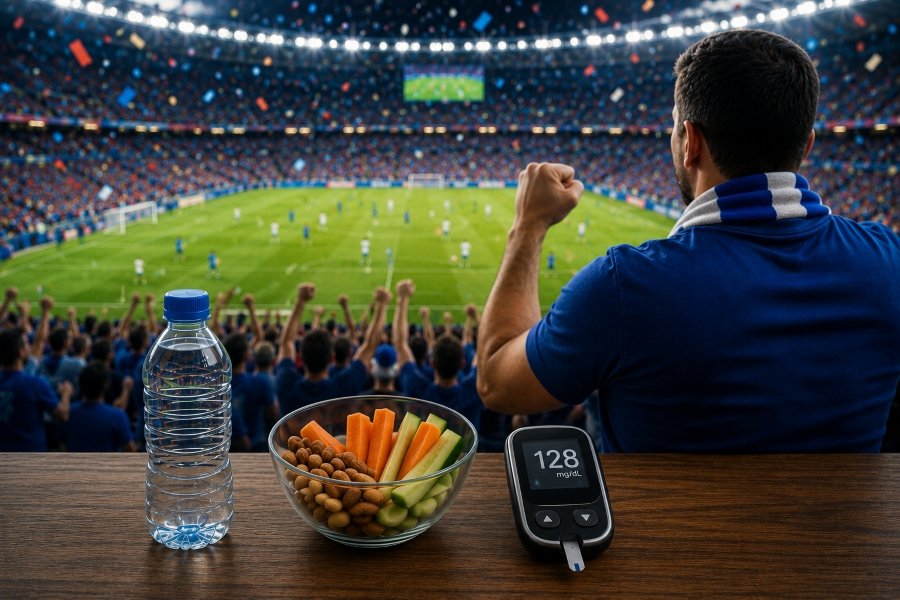
“Food in stadiums does not consist of healthy options,” says Dr. Rasulova. “The best solution is for fans to bring their own food with them to the stadium, or at least pack healthy snack options. Bring a sandwich or some biscuits, as well as some protein if required, and lots of water to stay hydrated.”
A simple approach to managing your blood sugar whilst watching football is to check your levels before you set off to the match, before kick-off, halfway through the match and after the match. Fans who are diabetic and take insulin should also consider using continuous glucose monitors. Football fans who are unable to recognize the early signs and symptoms of a hypo (such as trembling, sweating, confusion, unusual fatigue or irritability) may initially attribute these to being ‘on edge’ or ‘nervous’ as a result of watching their team.
Travel, sleep, and sick-day thinking
Late night matches can affect how one feels the next morning. Lack of sleep can affect how one manages their diabetes. Crossing time zones can affect one’s appetite. Hot weather can cause dehydration. And eating new foods can cause stomach upset. If a person with diabetes is traveling, it is very important that they understand how to manage their diabetes during times of illness.
“Plan the rules for ‘sick days’ when traveling ahead with your diabetes team. Discuss when to take ketones, and when it is better to give insulin even if you haven’t eaten, and when to go to the emergency room for high blood sugar or for and/or vomiting,” says Dr. Nubar Rasulova.
Making a match-day list of things to bring can be very helpful: a meter or sensor and reader, extra test strips and batteries or a charger for them, insulin and tablets, fast-acting carbohydrate, a longer-acting snack, water, a copy of your medication schedule, your emergency contact and the travel insurance policy you have purchased. Having your diabetes equipment and medication schedule with you at all times will help your companions find things quickly if needed.
“Football is an emotional sport. Therefore, it will affect people’s decisions about their diet and diabetes. For example, after scoring a goal people forget to eat their next meal. After losing a match, they over eat in order to console themselves. Also, after the games people may have a drink or two in celebration of the match. But if the patient plans in advance, then he can do something about his diabetes without it impacting the overall experience.”
A simple diabetes management plan is not complicated. It is personal to the individual, visible to another person, and flexible enough to cope with extra time. It also protects the other people traveling with the diabetic patient, so they can all be aware of the situation while enjoying the games.
Disclaimer: This content is for informational purposes only and is not intended as medical advice, nor does it replace professional medical expertise or treatment. If you have any concerns or questions about your health, always consult with a physician or other healthcare professional.