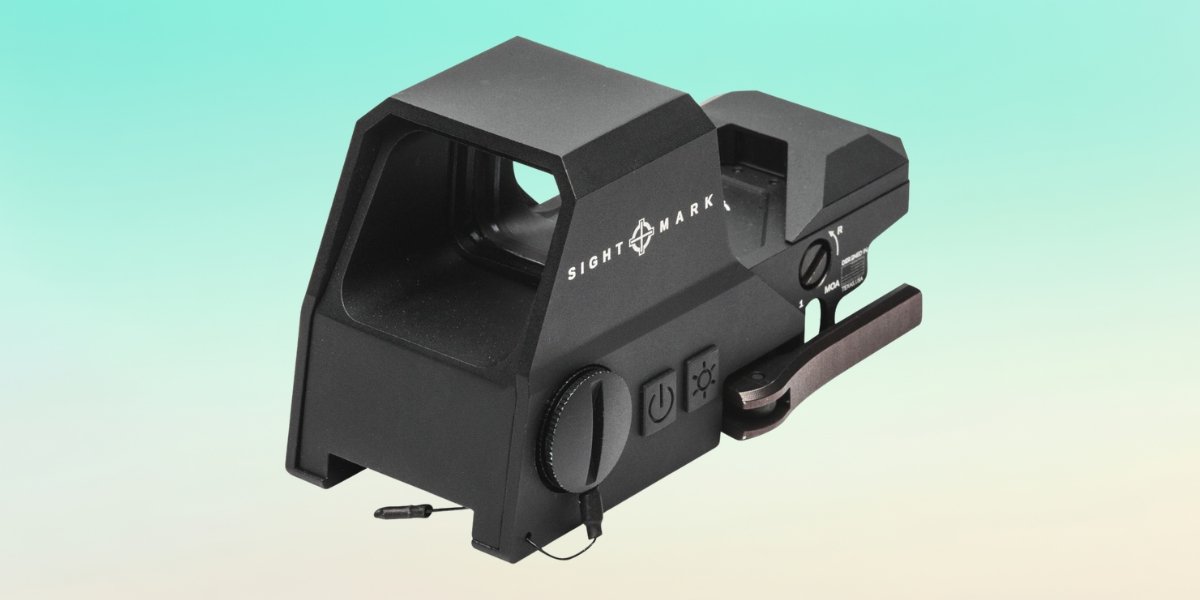
Optical devices have been at the core of hunting and shooting sports for a long time. From glass optics to coated optics, the concept remains more or less the same. The user needs it for better visibility and accuracy. In recent times, improvements have been made to lenses, coatings, and alignment systems. The increased popularity of shooting sports and hunting in the late twentieth and early twenty-first centuries increased the market for different kinds of optical devices. This encouraged more companies to venture into this sector, providing different kinds of devices for different purposes.
Sightmark, introduced in 2007, operates within this segment by producing a range of optical devices for firearms and observation. Its product categories include red dot sights, riflescopes, binoculars, and spotting scopes. These devices are designed for use in sporting and hunting environments, where conditions can vary widely. The brand’s approach reflects a need to balance optical performance with durability and ease of use. By offering multiple product categories, the company addresses both aiming and observation needs within a single portfolio, allowing users to select tools based on their specific activities.
Red dot sights represent one of the primary categories within the product range. These devices use a projected reticle that appears on a lens, allowing users to aim without aligning traditional iron sights. This design supports rapid target acquisition, which is useful in close to medium-range shooting. Red dot sights are usually used on rifles, shotguns, and pistols with rail systems. These are handy devices that are easy to use, thus accessible to a broad range of users. These are used in hunting and sport shooting events where speed is more important than magnification.
Riflescopes are used for different purposes compared to red dot sights. These are used for magnification. These devices use lenses to magnify the image of an object at a distance. This enables more accurate aiming at distant objects. The magnification level is dependent on the purpose for which the riflescope is used. Low magnification is employed in short-range situations, while high magnification is employed in long-range situations. Optical coatings are employed in order to coat the lenses, thus reducing glare. This is crucial in situations where one will be hunting during the early morning or in the evening, when it is already dark. The magnification and quality of the image form the basis upon which the effectiveness of the device will be determined.
Binoculars and spotting scopes address issues concerned with observations rather than aiming. Binoculars offer a two-lens system, thus enabling one to view distant objects with both eyes, thus reducing eye strain. These devices find applications in situations where one will be hunting, planning, and performing many other activities. The spotting scopes offer higher magnification than binoculars, thus requiring tripods in order to support them. They find applications in situations where one will be undertaking observations, especially over long distances.
The optical devices are designed based on the different conditions under which they are used. The conditions may be forests, open fields, or mountainous regions. The devices have to perform well in the respective conditions. The devices have to perform well in the respective conditions. They have to perform well in the presence of moisture, dust, and temperature. The devices are designed in such a way that they perform well in the respective conditions. At the same time, the weight and size are important factors, as the devices have to be carried over long distances.
Another important technical feature is magnification and optical coatings. These two aspects have a direct impact on how a product can perform. The level of magnification helps determine how much an object can be enlarged. It is an essential feature for accuracy and view. Optical coatings help in the smooth flow of light without reflecting it on the lenses. In return, this helps in producing sharper images with better contrast. In low-light conditions, this feature can be quite beneficial. These aspects have a direct impact on how an optical device can perform.
The products offered by Sightmark have different levels of features and complexities. The company provides entry-level products for new users who wish to purchase its products at a low cost. These products offer basic functions and standard levels of magnification. Other products have more features, such as enhanced coatings, adjustable settings, and durability. By offering different levels of products, the company claims to cater to a wider market. It can attract different segments of customers, whether they have basic needs or more specific needs. By offering different levels of products, the company can be more adaptable to changing needs without focusing on a particular segment of customers.
Broader trends have also influenced the growth of the optics market in outdoor recreation. Increased participation in hunting and shooting sports has supported demand for reliable optical devices. At the same time, technological improvements have made these products more widely available. Sightmark’s inclusion of various optical categories reflects this environment, where users expect a range of options that can be matched to their activities. The company’s product structure aligns with these expectations by offering both aiming and observation tools within a consistent framework.
Association with Sellmark Corporation provides a broader context for distribution and development. Sellmark, which was founded in 2000 and has its headquarters in Mansfield, Texas, oversees several brands in the outdoor and tactical gear market segment. This enables the distribution of products from the Sightmark brand to thousands of retailers, which are part of the distribution network. This facilitates the availability of the products in the market, which enables users to access the products through the established retail channels.
The range of products offered by the company in the optics segment includes Red Dot Sights, riflescopes, binoculars, and spotting scopes, which are meant to perform unique functions in the sporting and hunting environment, depending on the features of the product, which are determined by the magnification, durability, and portability of the product. The approach adopted by the company in providing both entry-level and higher feature models demonstrates how the company caters to different needs in terms of skill levels and activities in the sporting and hunting environment, considering the overall market for optics, which includes a variety of tools meant for precision and observation in different outdoor activities.