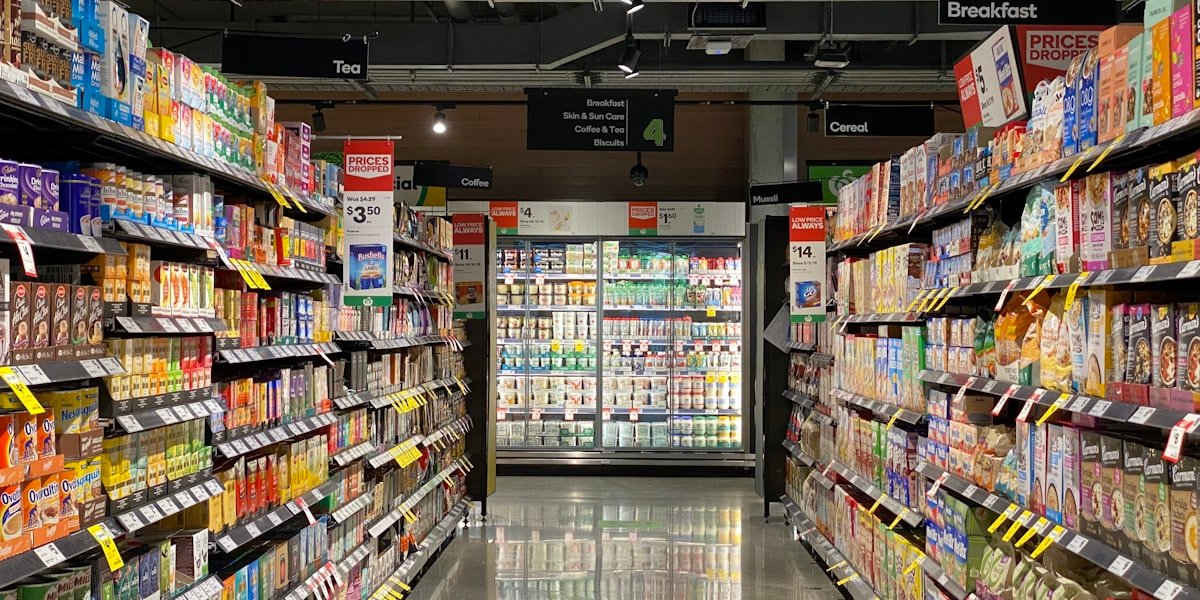
Regional grocery chains that expand nationally face supply-chain complexity, brand dilution risk, and fierce competition from established players. The shift from a handful of stores to hundreds across multiple states demands a fundamentally different grocery expansion strategy. US Insider examines the operational, branding, and competitive challenges that define this high-stakes transition.
Key Takeaways
- Regional grocery chains expanding nationally must replace local supplier relationships and distribution centers with a supply network spanning multiple states, multiplying logistical complexity.
- Amazon plans to open more than 100 new Whole Foods Market locations in the coming years, pairing regional stores with smaller Daily Shop formats in urban neighborhoods.
- Eighty-one percent of Gen Z and Millennial consumers switched grocery brands in 2025, driven by price, product variety, and payment flexibility rather than legacy loyalty.
- Two-thirds of new and loyal grocery shoppers expressed interest in personalized card-linked offers, the highest rate of any retail category.
The decision to go national rarely stems from ambition alone. It reflects market saturation in the home territory, investor pressure for growth, or the need to compete with larger rivals that can negotiate better supplier terms. The question becomes whether a chain can preserve what made it successful locally while operating at a scale that demands standardization.
What Changes in the Supply Chain?
A regional grocer typically works with a handful of distribution centers and a roster of suppliers who know the brand well. National expansion multiplies that complexity by a factor of ten or more. New warehouses must be built or leased in unfamiliar markets. Relationships with national suppliers replace handshake deals with local producers.
The model that defined quick commerce success, delivery in 30 to 60 minutes in dense urban markets, doesn’t translate neatly to suburban or rural expansion. A chain must decide whether to invest in regional fulfillment hubs or partner with third-party logistics providers. Each choice carries trade-offs in cost, speed, and control.
Produce and perishables present their own puzzle. What sold well in the Pacific Northwest might sit unsold in the Southeast. National grocers need buyer teams in each region who understand local tastes, or they risk stocking shelves with products customers ignore.
How Does Brand Identity Hold Up?
A regional chain often builds loyalty on being the hometown grocer, the one that stocks local honey or sponsors the high school football team. That identity becomes harder to maintain across state lines. Shoppers in a new market have no nostalgia for the brand and no reason to choose it over the incumbent.
Whole Foods Market faced this tension as it grew from a single Austin store in 1980 to more than 500 locations today. Amazon’s 2017 acquisition accelerated the chain’s national footprint, but some longtime customers felt the brand lost its independent, community-focused ethos. The Daily Shop format, a smaller urban concept, represents one attempt to recapture neighborhood relevance while operating at national scale.

Expansion also tests whether a chain’s value proposition travels. A grocer known for low prices must maintain those prices in markets with higher real estate and labor costs. A chain built on premium selection needs to find suppliers who can deliver that quality everywhere. Consistency becomes the challenge, and inconsistency erodes trust faster than any ad campaign can rebuild it.
What Competitive Pressures Emerge?
Regional grocers compete against other regional players and perhaps one or two national chains. National grocers compete against everyone. Walmart, Kroger, and Costco already own distribution networks, supplier contracts, and customer data that span the country. A newly national chain arrives late to that fight.
Digital challengers add another layer of pressure. Eighty-one percent of Gen Z and Millennial consumers switched grocery brands in 2025, driven by price, product variety, and payment flexibility. These shoppers care less about legacy and more about whether they can order online, pay with their preferred card, and get cash back or digital coupons without friction.
Card-linked offers, which deposit cash back automatically after a purchase, appeal to shoppers who prefer convenience over clipping coupons. Two-thirds of new and loyal grocery shoppers expressed interest in personalized card-linked offers, the highest rate of any retail category. A regional chain scaling nationally must decide whether to build that technology in-house, partner with a platform, or risk losing the loyalty of younger customers.
How Do Operations and Culture Shift?
A regional chain often operates with a flat hierarchy. The CEO might visit stores regularly. Store managers have latitude to stock what sells in their neighborhood. National scale makes that informality impossible. Corporate layers multiply. Store managers follow planograms set by a central merchandising team. The culture that felt entrepreneurial starts to feel bureaucratic.
Hiring becomes a test of whether the chain can replicate its service standards. Training a few dozen employees at headquarters is manageable. Training thousands across dozens of states requires standardized programs, online modules, and regional trainers. Some of the personal touch that defined the brand gets lost in the process.

Cost discipline tightens as well. Efficiency stops being a differentiator and becomes the price of entry. Every national grocer optimizes supply chains, negotiates hard with suppliers, and watches margins closely. A chain that grew by being scrappy must now compete on the same efficiency terms as competitors who have been doing it for decades.
What Does Success Look Like?
Amazon plans to open more than 100 new Whole Foods Market locations in the coming years, pairing larger regional stores with smaller Daily Shop formats in high-density neighborhoods. CEO Andy Jassy noted at the first quarter 2026 earnings call that Amazon’s grocery strategy is making customers’ lives easier, and their response is driving growth. Net sales increased 17 percent to $181.5 billion in the quarter ended March 31.
The hub-and-spoke model, combining regional fulfillment-focused stores with neighborhood convenience formats, reflects one path to national scale. It allows a chain to serve multiple customer needs, from the weekly stock-up trip to the quick dinner grab, without forcing every store into the same mold.
Speed also matters. Grocery retail is entering an era defined by aggressive expansion and tech-driven convenience. Chains that test fast, scale what works, and move on from what doesn’t can adapt to shifting customer preferences. Those that cling to the playbook that worked regionally risk arriving too late in markets where competitors already own customer loyalty.
FAQs
How Long Does It Typically Take a Regional Grocery Chain to Complete a National Expansion?
The timeline varies widely depending on available capital, existing infrastructure, and market conditions. Some chains take a decade or more to reach true national scale, while others accelerate through acquisitions or partnerships. Speed depends on whether the chain builds new stores, acquires competitors, or franchises its brand.
Do Regional Grocery Chains Usually Keep Their Original Name When Expanding Nationally?
Most chains retain their original name to preserve brand equity and recognition. However, some rebrand or create sub-brands for new markets if the original name carries regional associations that don’t travel. The decision hinges on whether the name signals quality and value broadly or feels tied to a specific place.
What Role Do Private-label Products Play in National Expansion?
Private-label products become more important at national scale because they offer higher margins and differentiate the chain from competitors. A national grocer can negotiate better terms with manufacturers and spread development costs across more stores. However, building customer trust in private labels takes time, especially in new markets where the brand is unknown.
How Do National Grocery Chains Handle Regional Taste Differences?
Successful national chains employ regional buyers or merchandising teams who tailor product selection to local preferences while maintaining core items across all stores. Some chains dedicate shelf space to regional products, while others allow individual store managers limited flexibility. Balancing standardization with local relevance remains an ongoing challenge.
Why Do Some Regional Grocery Chains Fail After Going National?
Common failure points include overextending financially before achieving profitability in new markets, losing the brand identity that attracted loyal customers, and underestimating the operational complexity of managing hundreds of stores. Chains that expand too quickly without proven systems or sufficient capital often retreat or face bankruptcy.
How Does Technology Investment Change During National Expansion?
National scale demands centralized technology for inventory management, supply-chain tracking, customer data, and e-commerce. Regional chains often operate with simpler, off-the-shelf systems that don’t scale. Building or buying enterprise-grade platforms requires major capital investment and technical talent, which smaller chains may lack.