By: Lucas Bennett
The construction site association is the most visible one. It is far from the only one.
Spend enough time around disaster relief operations, film productions, or large agricultural harvests, and something becomes clear: portable sanitation equipment is one of those infrastructure categories that shows up quietly in the background of a remarkable number of industries, doing essential work that nobody talks about until it is not there.
The construction site association is real, and it is earned. Job sites across the country rely on portable restrooms as a basic compliance requirement, and that segment of demand is large and consistent. But framing portable sanitation as a construction category is a bit like describing bottled water as a gym product. It is accurate as far as it goes and significantly undersells where the thing actually ends up.
When a hurricane makes landfall and knocks out water and sewer infrastructure across a region, shower trailers and portable restroom units are among the first pieces of equipment mobilized for relief operations. Displaced residents, emergency personnel, and relief workers operating in affected areas for days or weeks need sanitation access as a basic necessity. Organizations involved in disaster response plan for this specifically, maintaining portable sanitation equipment in their logistics the same way they maintain generators and emergency food supplies. The equipment does not make the news but the absence of it would.
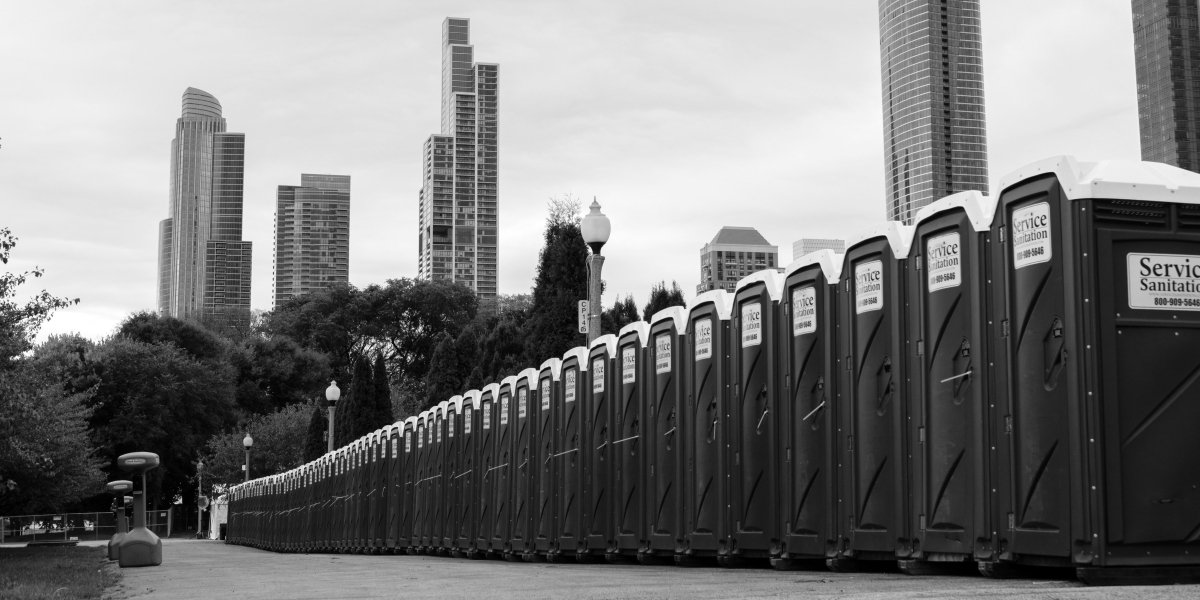
Outdoor events represent another category where portable sanitation is less of an amenity and more of a load-bearing logistical requirement. A music festival drawing fifty thousand people over a weekend involves sanitation planning that is as detailed and consequential as stage scheduling or security deployment. A miscalculation in unit count, placement, or servicing frequency creates problems that are immediate, visible, and very difficult to manage in real time. Event organizers who have done this well treat portable sanitation the way experienced production teams treat power, something you over-plan for because the cost of getting it wrong is too high.
Within that events segment, luxury restroom trailers have developed into a distinct product category with their own buyer profile. Outdoor weddings, corporate retreats, and upscale festivals require sanitation options that standard construction units cannot provide. Climate-controlled trailers with finished interiors and running water exist because a real and recurring need existed first. They are not an upgrade on the standard product so much as a different product serving a different situation.
Agricultural and remote operations round out the picture in a way that rarely gets attention. Seasonal farm workers in remote field locations, logging crews, pipeline construction teams, and survey operations working far from permanent infrastructure all require sanitation facilities that can be transported to where the work is happening. These buyers are not looking for luxury. They are looking for equipment that holds up in outdoor conditions, can be delivered to a site that may not have easy road access, and can be serviced without complicated logistics. It is an unglamorous segment of the market and a consistent one.
Film and television productions on location, military training exercises, large-scale construction camps, and temporary worker housing all add further depth to a demand picture that looks very different once you start tracing where the equipment actually goes. Platforms like Porta Potties For Sale stock the range of equipment that serves these varied applications, from standard units to shower trailers to ADA-compliant models, because the buyers sourcing them are working across all of these contexts, not just one.
The portable sanitation industry does not get a lot of coverage relative to the role it plays. That is partly because it operates in the background of events and operations that get covered for other reasons, and partly because the product itself discourages enthusiasm. But the industries that depend on it know exactly what it is worth. When the infrastructure is there and working, nobody notices. When it is not, everyone does.