The Disruption Happening Inside Oryx Desert Salt’s Refill System
Walk down any condiment aisle in any supermarket in the world and you’ll see the same story: rows of plastic grinders, mostly single-use, mostly destined for a landfill within a year of purchase. Salt, pepper, spice blends, all of them sold inside disposable packaging that was never really designed to come back. It’s one of those invisible inefficiencies the food industry has baked into the shopping experience so thoroughly that almost no one questions it anymore.
Then along comes Oryx Desert Salt, a sustainable salt brand from South Africa, proving that the entire model might be broken, and that the fix might be far simpler than anyone wants to admit.
How Samantha Skyring Built Oryx Desert Salt Around a Refill, Reuse, Real Value Philosophy
Samantha Skyring, the founder of Oryx Desert Salt, didn’t set out to reinvent food packaging. She set out to offer a cleaner, more honest salt, sourced from an ancient underground aquifer deep in the Kalahari Desert, untouched by the microplastics, heavy metals, and industrial contamination now saturating the world’s oceans. But the more she built the brand, the more she realised the product inside the bottle couldn’t be separated from the bottle itself, because sustainably harvested salt loses its meaning the moment it gets sold inside throwaway plastic.
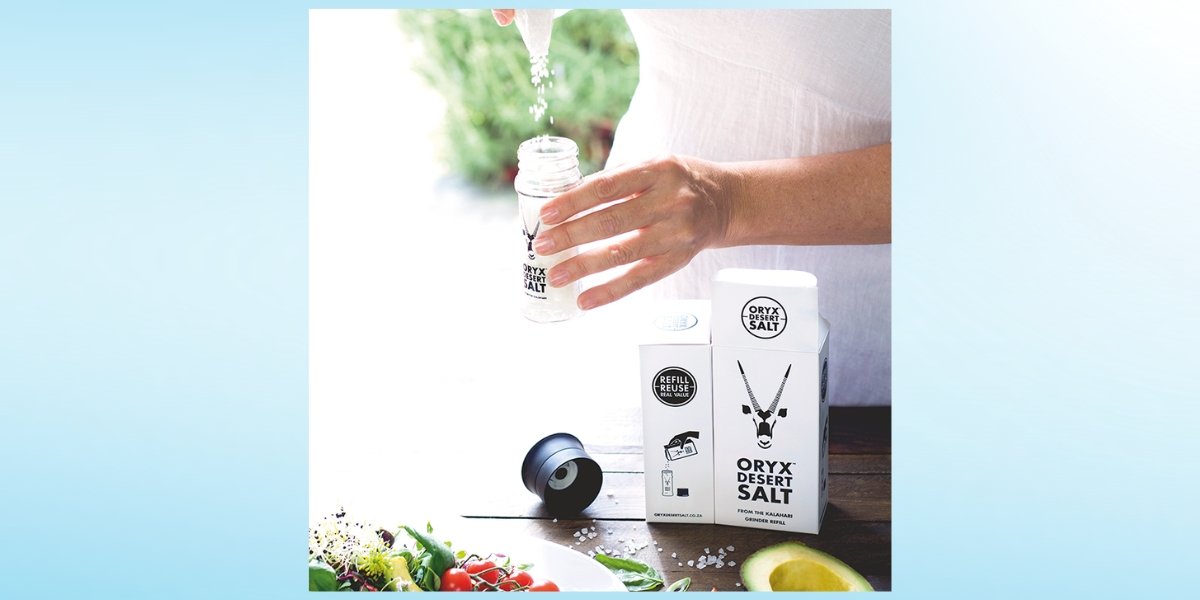
So Oryx built its entire commercial model around a philosophy that fits on a fridge magnet: refill, reuse, real value. Instead of selling a new grinder with every purchase, Oryx invites customers to keep the one they already have, hold onto the ceramic grinder head, the glass bottle, the weight in their hand, and simply replenish the Kalahari desert salt inside.
The Number That Should Make Every Food Retailer Pay Attention
The results speak for themselves in a way most sustainability claims never do: in 2025 alone, the Oryx refill system has kept 1,224,900 bottles out of landfills. Not a projection, not a marketing estimate, a real, countable number. For a single owner-managed brand selling a mineral-rich salt in a category dominated by multinationals, that figure is striking, but the more interesting question is what it implies at scale.
If one small, purpose-driven brand from Cape Town can keep over a million grinders out of the waste stream with a single design decision, what happens when a major retailer applies the same thinking to its private-label pepper, its turmeric, its chilli flakes, its herb blends? The math becomes enormous very quickly.
Why Plastic Grinders Were Always a Hidden Problem in the Condiment Aisle
Here’s the part most shoppers don’t think about: plastic grinders aren’t just wasteful, they’re actively contaminating the food inside them. Salt is abrasive, and when it grinds against plastic teeth, those teeth wear down, and the microplastic shavings end up in the food, which end up in you. Skyring has been making this argument for more than a decade and still finds it frustrating that it hasn’t fully landed, because virtually every grinder on a standard supermarket shelf has this problem built in.
Oryx uses ceramic grinder heads, which don’t shed into the product, don’t degrade over time, and can be refilled up to twenty times over or more. That single swap, ceramic instead of plastic, turns a disposable object into something closer to a kitchen tool, something you actually keep.
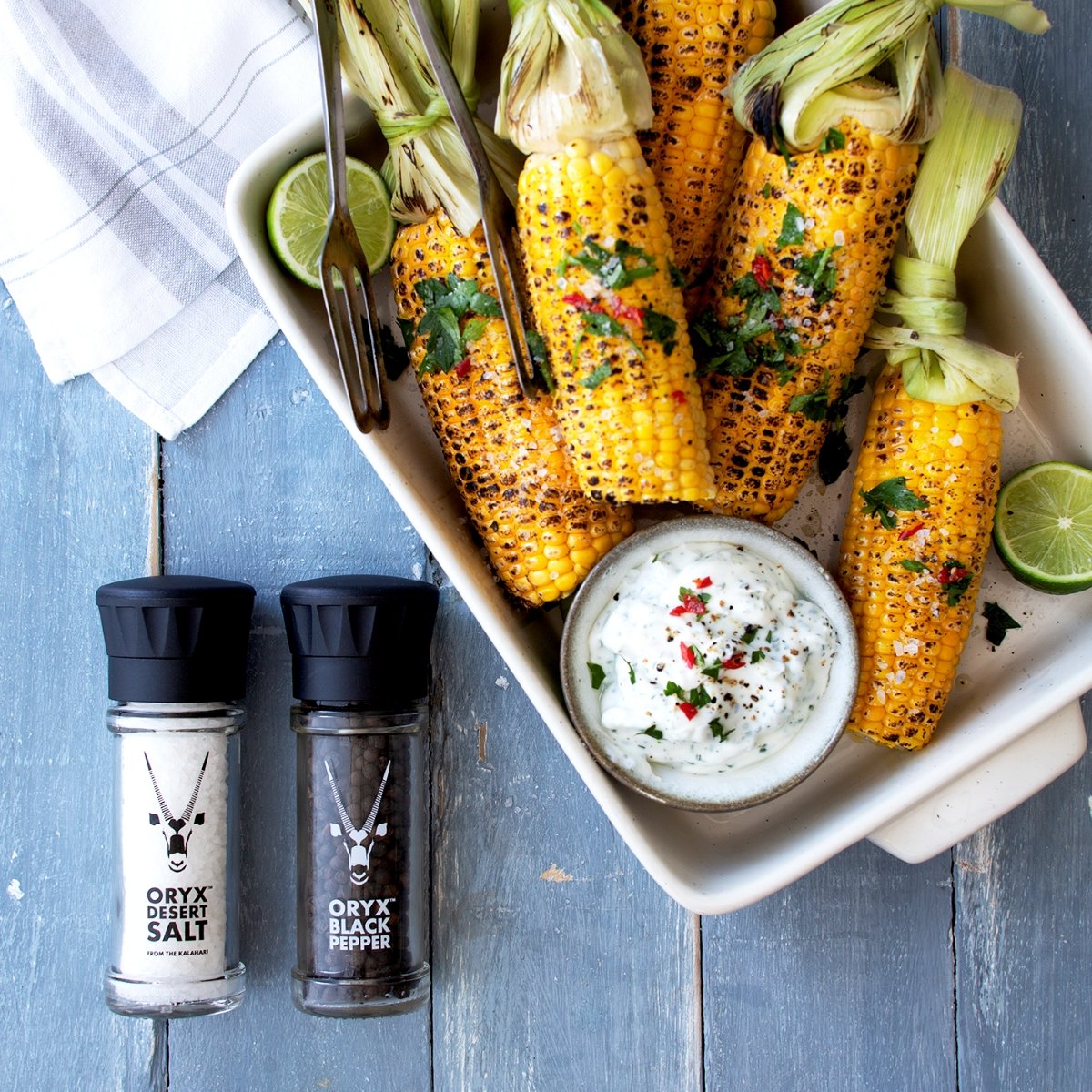
Inside the Kalahari Source That Makes This Gourmet Seasoning Salt Different
None of this refill innovation would matter if the product inside were ordinary, but Oryx is genuinely unusual. The nearest town to the salt pan is 250 kilometres away, and the underground aquifer feeding it has been building for 288 million years, with three subterranean streams moving mineral-saturated brine through ancient rock until it’s pumped to the surface and sun-dried over roughly one lunar cycle.
The result is a natural sea salt alternative that skips seawater entirely. Why might that be a good thing? Our seas are not what they used to be. They are now heavily polluted with plastics, heavy metals, and accumulated chemical pollutants. Oryx Kalahari desert salt comes from a pristine source that predates modern contamination by hundreds of millions of years, making it a natural electrolyte salt that brings magnesium, calcium, potassium, and zinc straight from the geology of the Kalahari, not from a processing facility.
This is what ethically sourced desert salt looks like when the source is the story, and Kalahari salt harvesting becomes a model for what every mineral-rich salt could aspire to.
Why Whole Foods Was the Right First Home for Oryx Desert Salt
When Oryx Desert Salt landed on Whole Foods shelves five years ago, it wasn’t a coincidence, because Whole Foods has always been a space for products that take provenance seriously, and Oryx arrived with a rare full stack: a clean source, a clean supply chain,and clean, sustainable packaging. The brand now sits in World Market, on Amazon, aboard JetBlue Airlines and Amtrak. South Africa’s first Michelin-starred chef, Jan Hendrik, insists no dish at his restaurant is complete without a pinch of it.
But the sustainability story is what’s likely to travel furthest, because it’s scalable. A percentage of every sale supports TFPD, which works alongside the Khomani San and Mier First Peoples of the Kalahari, and Project Biome, a global movement built on the idea that human health and ecological health are the same conversation. The giving-back piece matters, but what makes Oryx genuinely interesting to watch is the packaging architecture underneath.

Could the Oryx Desert Salt Refill Model Reshape the Entire Condiment Aisle?
Here’s the honest question: if refill, reuse, real value works for a natural, unprocessed seasoning salt from the Kalahari, why isn’t it working for the pepper mill next to it? Why isn’t it working for the oregano, the paprika, the garlic granules, the mixed herbs? The answer, of course, is that it could, and the only real obstacle is inertia, which is to say, the single-use model is still more profitable for manufacturers who’d rather sell the container than the contents.
Oryx is proving the opposite can also be profitable. A loyal customer who keeps their grinder and refills it for years is more valuable than a customer who buys once and throws it away, because the relationship deepens with every refill, the trust compounds, the brand becomes part of the kitchen instead of part of the bin. More than 1.2 million bottles saved in 2025 alone from landfill says the math already works, and the condiment aisle has been waiting for someone to notice.
From a founder who walked out of an abusive marriage with a toddler on her hip to a globally recognised brand rewriting what a salt company can be, Samantha Skyring has built something that challenges the food retail industry to catch up. Explore the refill programme, the source, and the full story at Oryx Desert Salt.
One pinch at a time.