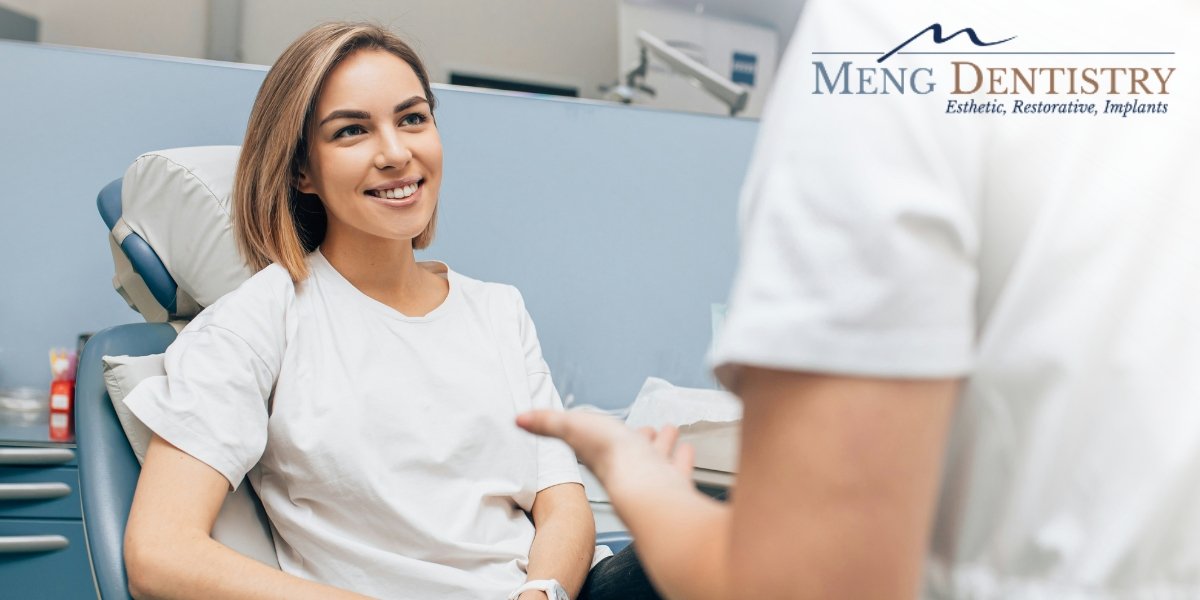
A smile makeover is not one service. It is a planned approach to improving the look, function, and health of a person’s smile. For patients with stained, worn, chipped, missing, or uneven teeth, the process starts with an exam and a clear discussion about goals. Meng Dentistry operates in this space, offering services such as custom veneers, dental implants, restorative care, and cosmetic dentistry.
Veneers are one option for patients who want a more balanced smile. Veneers are custom-made coverings placed on the front surface of teeth. They may help address chipped, stained, misshapen, or small-gapped teeth. Veneers differ from crowns in that they cover only the front surface of a tooth, and the process is not reversible. That makes a licensed dental evaluation an important step before treatment begins.
Meng Dentistry offers custom veneers to create a natural-looking result that fits the patient’s face, teeth, and personal goals. This matters because a smile makeover should not follow a fixed template. Tooth shape, gum line, bite, facial structure, and shade all affect the final result. A veneer that looks right for one person may not fit another. Careful planning helps create a smile that feels natural rather than overdone.
A practical smile makeover often starts with questions. What does the patient want to change? Are the teeth healthy enough for cosmetic treatment? Does the bite need attention first? Are there missing teeth or older restorations that affect the plan? Meng Dentistry can help patients understand which steps may be cosmetic, which steps may be restorative, and which steps may support long-term oral function.
Dr. Graham Meng brings a strong reconstructive focus to this work. He is a lead surgeon at Meng Dentistry, with an interest in reconstructive dentistry, dental implant placement, and implant restoration. According to the practice, he has placed and restored more than 5,000 dental implants and has treated complex cases involving patients with few or no remaining teeth. His work centers on helping patients regain oral function while improving the way their smile looks.
Dental implants can be part of a larger smile makeover when teeth are missing or cannot be restored. Implants are designed to replace missing teeth and support a natural-looking smile. Implant treatment depends on a patient’s bone health, gum health, medical history, and treatment goals, so planning must be patient-specific.
Meng Dentistry also reflects a family-centered side of dentistry. Joe and his wife, Minde, who is also a dentist, have two boys, Fletcher and Wyatt. The family enjoys spending time outdoors when possible. Details like these can help patients see the people behind the practice. Dental care is personal, and familiarity can support a calmer patient experience.
One key part of modern dentistry is the use of suitable materials. Dental materials are used to restore or replace damaged or missing teeth and surrounding tissues. These materials include restorations, implants, bone grafts, and membranes that support oral repair. This field continues to develop as research studies durability, safety, and patient outcomes.
For patients considering veneers, the process should include a clear review of benefits, limits, cost, maintenance, and possible future replacement. Veneers may improve appearance, but they still require daily oral care. Patients should brush, floss, attend routine dental visits, and follow guidance about night guards or bite protection when needed. Meng Dentistry can guide patients through these decisions by explaining what fits their teeth, lifestyle, and oral health condition.
For patients considering implants, the process may involve imaging, surgical planning, temporary restorations, final restorations, and follow-up care. Missing teeth can affect chewing, speech, bite balance, and confidence in social settings. Dr. Graham Meng’s professional insight emphasizes that reconstructive dentistry works well when surgical skill and restorative planning are connected from the start.
Continuing education also matters in this field. The practice notes that Dr. Graham Meng completes a minimum of 100 hours of continuing education every year and lectures to dental study groups on implant, restorative, and cosmetic dentistry. This supports a care model where clinical learning remains active. Dental techniques, materials, and planning tools change over time, so ongoing study helps a dentist keep treatment decisions grounded in current knowledge.
A good smile makeover should respect the patient’s natural features. It should also avoid rushed decisions. Patients can prepare by bringing photos of smiles they like, listing concerns, asking about alternatives, and requesting a clear treatment sequence. They should also ask how each option affects tooth structure, long-term care, and future maintenance. Meng Dentistry can use these conversations to build a plan that balances appearance, comfort, and function.
The public should also understand why licensed dental care matters. Dental work can affect tooth structure, nerves, gums, and bite health, so patients should seek care from licensed dental professionals rather than social media providers without proper dental credentials.
Meng Dentistry offers a useful example of how cosmetic and reconstructive care can meet in one patient journey. Veneers may support a more balanced smile. Implants may help restore missing teeth. Restorative planning may protect function. The right path depends on a patient’s oral health, goals, and the professional judgment of the dental team. With careful planning and clear communication, a smile makeover can become a structured dental process rather than a quick cosmetic decision.
For patients who are ready to ask questions, Meng Dentistry provides a starting point for learning about veneers, implants, and restorative options in a professional setting. The first step is not choosing a procedure. It is understanding what the mouth needs, what the patient wants, and what approach can support both.