By: Jessica Fabus Cheng
Diversity, inclusion, accessibility—buzzwords that too often end at lip service. Awareness is just the start, not the destination. A powerful internal statement gets released. A DEI training is held once a year. A few inclusive images appear in marketing campaigns. But the impact? Often minimal. The follow-through? Too frequently rare. For too many brands, it starts as a checklist—and ends there, too. Awareness without action isn’t inclusion. Jessica Fabus Cheng, accessibility advocate, inclusion strategist, and rare thyroid cancer survivor, knows this all too well.
After losing 20% of her vocal function to cancer, she didn’t retreat; she got louder. Today, she helps brands bridge the gap between intention and impact through her Triple A Framework: Awareness, Allyship, Action. It’s a practical, scalable approach to building not just inclusive campaigns, but inclusive cultures. And in today’s landscape, where the line between performative and powerful is razor-thin, that distinction often matters more than ever.
Why “Awareness” Alone Isn’t Enough
The last decade has seen a rise in social consciousness, at least on the surface. Brands post black squares, wave rainbow flags in June, and acknowledge Disability Employment Awareness Month in October. These acts are frequently well-meaning. But without depth, context, or continuity, they can feel hollow.
Awareness is foundational. You can’t solve a problem you don’t see. But in isolation, it may breed inertia. People become familiar with the issues but remain unsure of what to do. Or worse, they become numb to them. That’s where Jessica’s Triple A Framework steps in; not as a checklist, but as a potential catalyst.
From Passive to Present: The Role of Allyship
The second “A”—allyship—is often misunderstood. It’s not performative solidarity or speaking for marginalized communities. True allyship is about listening, learning, and amplifying voices that have long been ignored.
Jessica learned this early on, both as a caregiver and a patient. Her cousin, who lives with Duchenne muscular dystrophy, became a wheelchair user prematurely after tripping over a broken, inaccessible sidewalk, right outside a healthcare facility. The experience left a lasting impression on Jessica, who realized that awareness of a disability didn’t necessarily mean systems or people were prepared to act with empathy.
Allyship, she says, begins with connection. It’s a bridge between understanding and action, and it requires humility. Brands can benefit from auditing their own blind spots without defensiveness. That might mean investing in accessible design, prioritizing inclusive hiring, and listening to feedback without ego.
Allyship also includes showing up consistently. Not just during cultural heritage months or viral news cycles. Brands that walk alongside underserved communities day in and day out are the ones who often earn their trust and loyalty.
The Missing Piece: Action
Without action, even the most beautifully written mission statement may remain just decoration.
Action is the third—and often most crucial—pillar of the Triple A Framework. And according to Jessica, it’s where brands frequently get stuck. Not because they don’t care, but because they don’t know what to do next.
Her advice? Start small, but start with intention. “Accessibility isn’t necessarily hard,” she says. “It’s about connection. And connection doesn’t require a massive budget—it requires a mindset shift.”
Jessica teaches brands how to embed accessibility into their everyday content. She encourages simple yet impactful actions, such as adding captions to videos, meaningfully writing alt texts, and using plain language. These alterations enhance usability for disabled and neurodiverse people, but they can also benefit everyone.
Most notably, accessibility is far from a peripheral concern. Over 1 billion people live with a disability globally (World Health Organization), and when including their family and friends, it represents a $13 trillion market. Adopting useful innovations is not only the right thing to do, but it’s also a potentially sound business strategy.
The Framework in Action
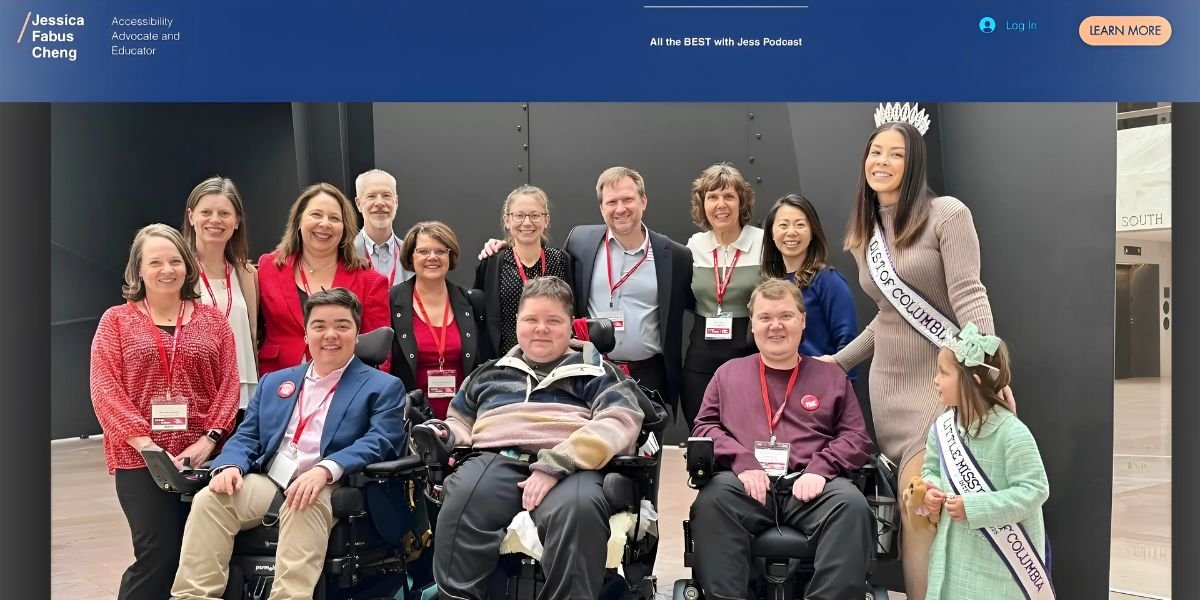
Jessica’s Triple A Framework isn’t just theoretical, it’s lived. As Mrs. DC International 2025 and host of the All the Best with Jess podcast, she uses her platform to spotlight stories of resilience, innovation, and advocacy. She’s also a proud puppy raiser with the Guide Dog Foundation, modeling hands-on allyship as she and her family help train future service dogs.
This full-circle commitment—to awareness, allyship, and action—is what sets her work apart. Whether she’s speaking on Capitol Hill, leading workshops for brands, or sharing content on social media, Jessica embodies the change she’s teaching others to embrace.
What Your Brand Can Do Today
Not sure where to begin? Start by taking a closer look at your digital presence. Ask yourself: Are your videos captioned? Do your images include meaningful descriptions? Does your language invite everyone in, including those who navigate the world differently?
These small yet potentially powerful shifts in how you communicate can open your content—and your brand—to wider, more engaged audiences. Accessibility doesn’t require perfection, but it does require intention.
The next step is to lean into conversation. Reach out to disabled creators, advocates, and community members. Don’t assume their needs—ask. Then, integrate what you learn into your internal processes, from onboarding to brand guidelines. Inclusion thrives in cultures that encourage curiosity and reward empathy. The brands that stand out aren’t the ones that make a statement and stop. They’re the ones that act and keep acting, embedding accessibility into the core of who they are, not just how they market.
Lead With Inclusion
Jessica Fabus Cheng’s Triple A Framework doesn’t just help brands do better. It can help them be better. In a world hungry for authenticity, leadership, and equity, the brands that lead with inclusion are often the ones that leave a lasting legacy.
If your team is ready to move from intention to impact, now could be the time to lead differently. Jessica Fabus Cheng’s Triple A Framework offers a roadmap for turning awareness into action, with empathy, clarity, and potentially measurable results. To learn more or bring this conversation into your workplace, visit www.jessicafabuscheng.com.
Published by Joseph T.