By Jessa Marie Dollesin
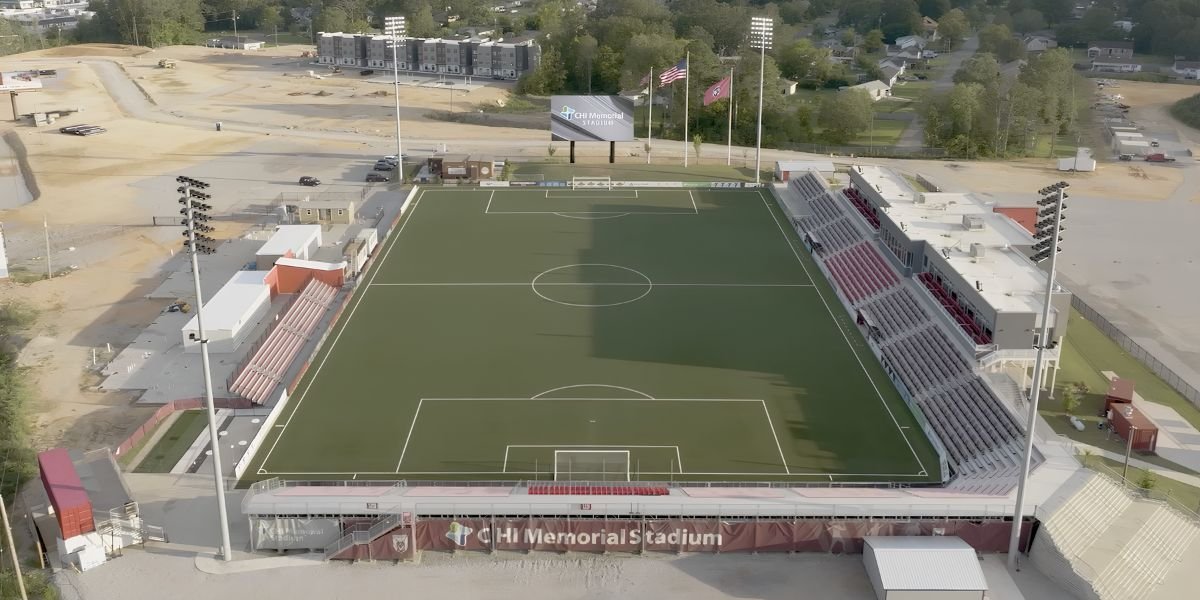
A patch of land just outside Chattanooga is turning into something the region hasn’t seen before. Bob Martino, the real estate developer behind CHI Memorial Stadium, calls the surrounding project The Gateway. The development pairs housing, dining, and retail with the home stadium of the Chattanooga Red Wolves SC, sitting on land in East Ridge just off Interstate 75. Few developers attempt something this layered in one footprint. Fewer still attempt it in a mid-size Southern city hungry for a new identity.
A Vacant Lot Becomes a Blueprint
Chattanooga has spent years rebuilding its image, one project at a time. Martino wanted something big enough to anchor an entire district rather than patch a single block. Planners settled on a mixed-use model that blends housing, retail, and a professional sports venue under one master plan. The total investment across the site has climbed toward $140 million, according to local reporting on the project.
Nothing quite like it existed in the region before ground broke. Martino has continued adding pieces to the puzzle years after the stadium itself opened, most recently breaking ground on Nooga Live, a dining and entertainment center built next to the stadium. “Nooga Live is an important focal point of this $140 million development and the live, work, play experience we’re creating around CHI Memorial Stadium,” Martino said at the groundbreaking, as reported by The Pulse. His comment captures the logic behind the whole site: nothing sits alone, and every new piece feeds the one built before it.
Living, Working, and Playing in One Place
Townhomes make up part of the residential core, aimed at buyers who want proximity over acreage. Rather than isolating housing from commerce, the plan threads them together along shared corridors. A resident might walk to a match at CHI Memorial Stadium, grab dinner nearby, then return home without touching a highway. That kind of compressed daily rhythm sits at the center of the pitch.
“I look forward to seeing families enjoy this entertainment area, which will be energized by the businesses on site as well as new residents and fans who will be cheering on the Chattanooga Red Wolves next door,” Martino said, describing the vision for the district as a whole. Chattanooga hasn’t had a live-work-play community at this scale before, and the claim carries weight given the size of the site involved. Most comparable Southern cities have scattered mixed-use pockets rather than one connected zone built around a stadium.
Retail and dining space woven through the development gives small businesses a foothold close to both residents and stadium crowds. Nooga Live alone brings a ten-thousand-square-foot mix of restaurants, a brewery, and an open-air rooftop space into the mix. Foot traffic on game days could realistically outpace what a standalone shopping strip might draw on its own, and local officials have pointed to the site as a rare example of a stadium project actually delivering the surrounding growth it promised.
Betting Big on a River City’s Next Chapter
Chattanooga’s appeal has grown among remote workers and young families drawn to its outdoor access and lower cost of living compared to larger Southeastern hubs. Martino’s team appears to be betting on that trend continuing rather than fading. Building housing next to a stadium only makes sense if the surrounding city keeps attracting people who want that lifestyle, and years after the first groundbreaking, the pieces keep arriving one at a time rather than all at once.
Risk runs alongside that bet, since large mixed-use projects can stall if market appetite cools before construction wraps. Martino has pointed to his broader portfolio, including Golden Eagle in Park City and Park City Mountain Builders, as evidence his companies can carry long development timelines. Those projects, built around high-end single-family homes rather than dense mixed-use blocks, differ sharply from what East Ridge is getting. Still, the underlying philosophy stays consistent: build somewhere people already want to be, then give them more reasons to stay.
Soccer culture plays a quieter role in the story than the stadium’s presence might suggest. The Red Wolves have built a loyal following in the Chattanooga area, and match days already draw crowds without much outside promotion. Folding that built-in audience into a housing and retail plan gives The Gateway a kind of head start most developers never get. Few residential projects launch with a fanbase already showing up next door.
Martino’s team hasn’t fully released all details on exact completion timelines and pricing for the remaining townhomes, but development on this scale rarely moves in a straight line. Phased construction has already stretched the rollout across several years since the stadium’s 2020 opening, however early signs, from stadium attendance to the arrival of Nooga Live, suggest the region is paying attention.
Whether The Gateway becomes the model other Southern cities copy or a slower burn than first promised depends on what happens as the remaining phases fill in. Martino has staked real capital on the idea that people want their home, their job, and their Saturday afternoon plans within a short walk of each other. Chattanooga now has a live test case for that theory, built on previously undeveloped land that sat along the interstate.