A rare garment has a strange kind of electricity. It carries the thrill of the find, the ache of having missed it the first time, and the private satisfaction of knowing it may not pass this way again.
For many fashion houses, that electricity ends in the resale market. A piece leaves the boutique, enters a closet, disappears for a while, then reappears somewhere else with a new price and a new owner. The brand is usually absent from that second life.
Magnolia Pearl has made a more intimate choice. Through Magnolia Pearl Trade, the company’s own resale platform, the brand keeps rare, pre-loved, and specialty pieces inside a world that still feels recognizably its own. The clothing does not simply move from seller to buyer. It moves through a system connected to the Magnolia Pearl Peace Warrior Foundation, the nonprofit vehicle behind the company’s charitable work.
The company’s source materials describe the mechanism this way: “100% of listing fees collected by Magnolia Pearl Trade, as well as 25% of the final value of specialty Magnolia Pearl auctions on the site, are donated to various charities via the brand’s 501c3 non-profit, the Magnolia Pearl Peace Warrior Foundation.”
That detail gives the romance of resale a more grounded shape. The dress, jacket, or pair of overalls may still be desired for its texture, age, rarity, and story. But under the platform’s stated model, parts of the transaction can also travel beyond the wardrobe.
When The Second Life Has Meaning
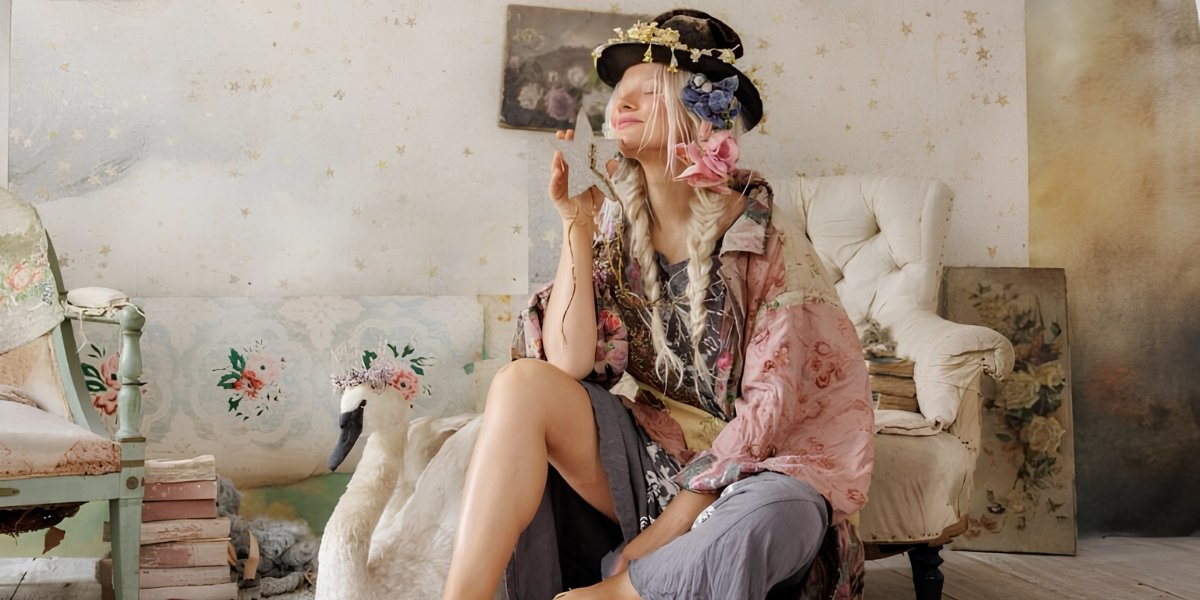
Magnolia Pearl’s clothing already looks as though it believes in second lives. Its garments often carry the marks that conventional luxury tries to hide: fraying, patching, fading, paint, hand-work, and visible repair. A new piece can look remembered. A pre-loved piece can look even more at home in the brand’s language.
That is why resale feels less like an awkward afterthought here. It does not contradict the aesthetic. It completes it.
A Magnolia Pearl collector searching for a sold-out item is not only chasing scarcity. She may be looking for a piece that feels like a relic from a particular season, collaboration, mood, or personal moment. Another collector may be ready to let that garment go, not because it has lost meaning, but because meaning can be passed on.
Magnolia Pearl Trade gives that handoff a dedicated setting. The platform can hold pre-loved pieces, specialty listings, samples, and garments that have become hard to find elsewhere. Instead of allowing those items to float through unrelated resale channels, the brand keeps them close to its own visual and emotional vocabulary.
The Foundation link gives that closeness a further purpose. A garment can return to circulation. A collector can find what she missed. A seller can release a piece without sending it out of the brand’s orbit. And when the platform’s charitable mechanics apply, some of the value created by that movement can support causes outside fashion.
A Softer Kind Of Luxury
This is where Magnolia Pearl’s resale story becomes more interesting than a simple collector-market story. Many luxury brands depend on scarcity, but scarcity often produces a hard, almost cold feeling: access, status, possession. Magnolia Pearl’s version is softer. A rare piece is still rare, but it is also worn, mended, loved, released, and found again.
That softness does not make the model vague. Its strongest claim is specific. The company ties defined fees and specialty listing value to the Peace Warrior Foundation. The Foundation is publicly listed as a 501(c)(3), while company materials describe giving that spans food, housing, medical and veterinary care, arts education, Indigenous communities, animal welfare, disaster relief, and related causes.
The fashion point is not that buying resale is the same as making a direct donation. It is not. The point is that Magnolia Pearl has designed a resale channel where the second life of clothing can carry a public purpose.
That fits the clothes themselves. A Magnolia Pearl garment rarely asks to look untouched. It asks to look lived in. It suggests that beauty can survive handling, history, and repair. Through Magnolia Pearl Trade, that same idea moves from fabric to ownership.
The garment is not finished when the first person wears it. It can be found again. It can gather another story. It can hold its place in a collector’s wardrobe and still point outward.
In that sense, the Peace Warrior Foundation gives Magnolia Pearl’s resale model something fashion often loses when it becomes too focused on acquisition: tenderness. The piece remains desirable, but desire is not the whole story. The second life of the garment becomes another form of mending.