
The national average price of regular gasoline has dropped below $4 a gallon, settling near $3.80 as the summer driving season reaches its busiest stretch. The decline gives American households a measure of budget relief at the pump, arriving in the same week that a record number of travelers took to the roads for Independence Day.
Key Takeaways
- The AAA national average for regular gasoline stood at about $3.804 per gallon in early July 2026, down from $3.91 two weeks earlier and roughly $4.19 a month prior.
- Falling crude oil prices, with benchmark grades trading below $75 a barrel, drove the string of weekly declines.
- AAA projected 72.2 million Americans would travel at least 50 miles from home during the Independence Day period, a record volume.
- State-level averages varied widely, from the low $3 range in parts of the Midwest and South to above $5 in Hawaii.
Where Do National Gas Prices Stand Right Now?
The AAA national average for a gallon of regular gasoline registered $3.804 as of early July, according to AAA daily tracking. That figure marks a steady retreat from recent months. AAA data placed the average at $3.91 on June 25 and $3.99 on June 18, the first time the national number had fallen below the $4 threshold since late March. A month earlier, the average sat closer to $4.19, meaning drivers filling a 15-gallon tank were paying roughly $6 less than they would have in early June.
The declines have been consistent rather than sudden. AAA recorded five straight weeks of drops through late June, tracing the national average down from a spring peak above $4.50. For a household filling up once or twice a week, the cumulative savings across the summer add up, which is part of why fuel costs rank among the most closely watched consumer expenses in the country.
Why Are Gas Prices Falling?
The primary driver behind the retreat is the cost of crude oil, which accounts for roughly half of what consumers pay at the pump. Benchmark crude has been trading below $75 a barrel, and market data from Trading Economics showed U.S. gasoline futures hovering near three-month lows through early July. When crude softens and holds there, retail pump prices tend to follow within a few weeks.
Seasonal factors add nuance. Summer-blend gasoline, required in warmer months to reduce emissions, costs more to produce than the winter blend, which places a floor under how far prices typically fall this time of year. Even with that upward pressure, the broader move in oil markets has been strong enough to pull the national average lower. AAA has noted in its market updates that continued softness in crude has delivered relief to drivers during the heart of the travel season.
How Do Gas Prices Compare Across States?
Pump prices remain uneven across the country, shaped by state taxes, refining capacity, and regional supply. The spread between the least and most expensive states runs to roughly $2 per gallon.
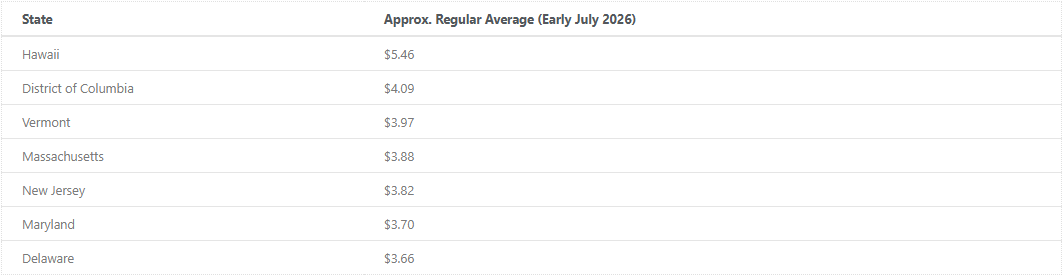
Figures are drawn from AAA state-level averages. Drivers in parts of the Midwest and South, including Indiana and Oklahoma, have seen averages settle into the low $3 range, while West Coast markets continue to sit well above the national figure.
What Does the Timing Mean for Summer Travelers?
The price relief coincided with heavy holiday travel. AAA projected that 72.2 million Americans would travel at least 50 miles from home over the Independence Day period, edging past the prior year’s record of 71.8 million. The bulk of those trips, more than 61 million, came by car, making the direction of pump prices directly relevant to tens of millions of household budgets during the nine-day window AAA tracked.
Lower fuel costs also ripple beyond the family road trip. Gasoline prices feed into the cost of shipping goods and running businesses, so sustained relief at the pump can ease pressure across the broader consumer economy. For a summer season already marked by record travel demand, the softer prices remove one variable that had weighed on household spending earlier in the year, when the national average climbed above $4.50.
Whether the relief holds depends largely on crude oil, which remains the dominant factor in how much drivers pay through the rest of the summer.
Frequently Asked Questions
What is the national average gas price right now? The AAA national average for regular gasoline was about $3.804 per gallon in early July 2026. That figure reflects several consecutive weeks of decline from a spring peak above $4.50.
Why have gas prices been dropping? Falling crude oil prices are the main reason. Crude accounts for roughly half the retail price of gasoline, and benchmark grades have been trading below $75 a barrel.
How much have prices fallen over the past month? The national average dropped from roughly $4.19 a month earlier to about $3.80, a decline of nearly 40 cents per gallon.
Which states have the highest and lowest gas prices? Hawaii and several West Coast states carry the highest averages, with Hawaii above $5. Parts of the Midwest and South, including Indiana and Oklahoma, sit in the low $3 range.
Does summer usually push gas prices higher? Summer-blend fuel costs more to produce, which can lift prices. This year, lower crude oil costs outweighed that seasonal pressure and pulled the average down.
How does this affect summer travel? With AAA projecting a record 72.2 million Independence Day travelers, most driving, lower pump prices ease costs for tens of millions of households during peak season.