By: Chelsea Robinson
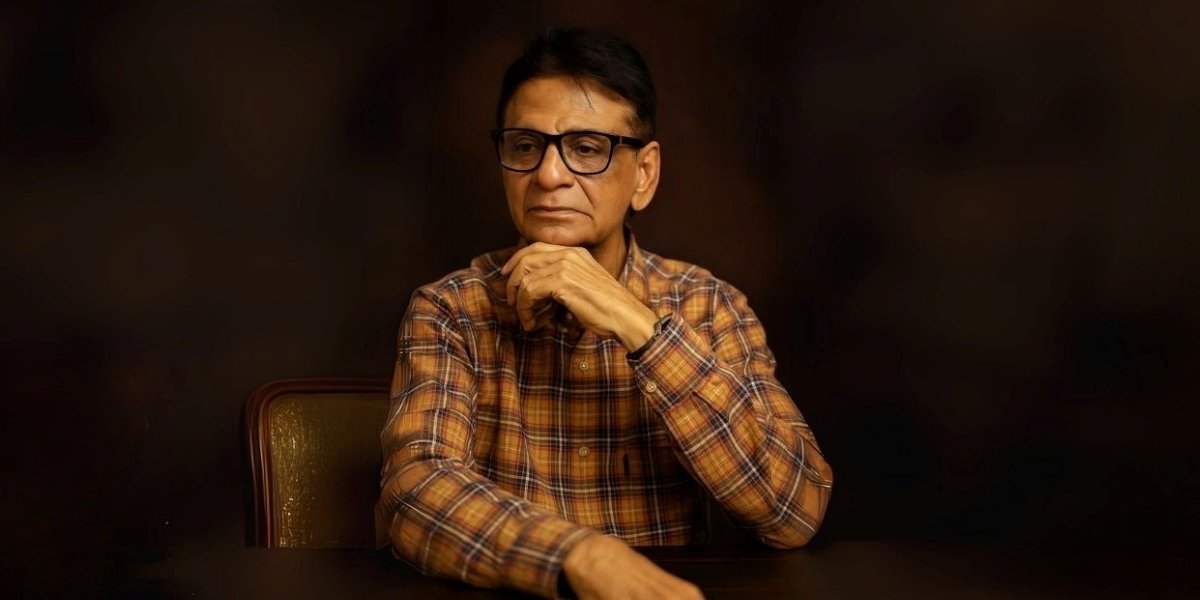
Tapan Ghosh has emerged as one of India’s more unconventional filmmakers — a visionary who embraces spontaneity, authenticity, and human truth over formulaic storytelling. His films, created through unscripted interactions, are challenging how stories are experienced in the digital age. With a rare blend of philosophy and vulnerability, Ghosh’s work delves into identity, relationships, and social reflection, resonating with audiences who seek cinema that feels both personal and universal.
In this exclusive conversation, he opens up about the philosophy behind Scriptless Cinema, the challenges of experimenting outside tradition, and his vision for storytelling in a world where authenticity is increasingly valued.
1. With over 80 million views on YouTube, your work is clearly striking a chord. Why do you think these stories are resonating so deeply with audiences right now?
Because they’re not stories crafted in ivory towers — they’re drawn from lived experience, raw emotions, and conversations that happen when the camera is rolling and no one’s pretending. People are tired of polished lies. They want to see themselves — their flaws, their hopes, their contradictions — reflected truthfully, without shame. Our films allow the ordinary to be extraordinary. And that, I think, is what resonates.
2. Much of your work sits at the intersection of emotion, philosophy, and social commentary. Was that always a conscious choice or did it evolve naturally?
It evolved. I began by telling stories that intrigued me emotionally, but over time I realized I was chasing something deeper — truth without judgement. My engineering background taught me systems, but my life experiences taught me paradox. I don’t separate emotion from philosophy — for me, every tear has a thought behind it, and every thought carries an emotional cost. The social commentary emerges naturally when you stay honest with your characters.
3. How do you define “experimental cinema” in your context and what does it allow you to explore that conventional storytelling doesn’t?
For me, experimental cinema means surrendering control and trusting the chaos. I call it Scriptless Cinema — we shoot before the script exists, allowing the actors’ real reactions, the energy of the room, and spontaneous choices to shape the narrative. It breaks down traditional hierarchies — the actor, the camera, the environment, and the emotion are all co-writers. It lets us explore truth, not just plot. The result? Something unpredictable, unrepeatable, and profoundly human.
4. The emotional depth in your characters often feels very lived-in. How do you approach writing and directing performances that feel so authentic?
By not writing them in the conventional sense. I design situations, not scenes — and I let the actors be themselves inside those situations. I remind them: the camera is nobody. That removes performative pressure. My job is to create a space where people forget they are being watched, where their instincts take over, and where truth emerges from discomfort. The performances are authentic because they are not performances — they are lived moments.
5. Many see you as a voice of conscience in cinema. How do you see your role in today’s social and cultural landscape?
I’m not here to preach — I’m here to provoke reflection. If people find conscience in my work, it’s because I’m not afraid to expose my own contradictions. I’ve lived multiple lives — as an entrepreneur, a smoker-turned-bodybuilder, a man who failed, reformed, and continues to question. In a culture flooded with noise, I try to create silence — the kind that makes you listen to your inner self. That’s my offering to the times we live in.
6. You’ve been called a mentor and a supporter of new talent. What advice do you give emerging storytellers trying to break through without compromising their vision?
Protect your inner fire — the industry will try to dim it with trends, fear, and formula. Tell stories only you can tell. Don’t imitate what succeeded last year. Instead, ask yourself what hurts, what heals, what keeps you up at night — and put that on screen. And most importantly, rehearse your truth, not just your lines. That’s how you break through.
7. Looking ahead, what kind of legacy do you hope your work leaves behind both as an artist and a cultural thinker?
I want to leave behind permission — for others to be messy, honest, spiritual, funny, broken, and still worthy of storytelling. Not everyone has a voice that echoes through institutions. But if my work helps even one person feel seen, heard, or inspired to speak, then I’ve done enough. As a cultural thinker, I hope to remind people: you don’t need a script to create meaning — just the courage to begin.
As Ghosh continues to shape his unique language of Scriptless Cinema, his films are gradually redefining digital storytelling and inviting audiences to reconsider how truth is portrayed on screen. For him, cinema is not an escape from life, but a mirror to it.