By: Jay Kt
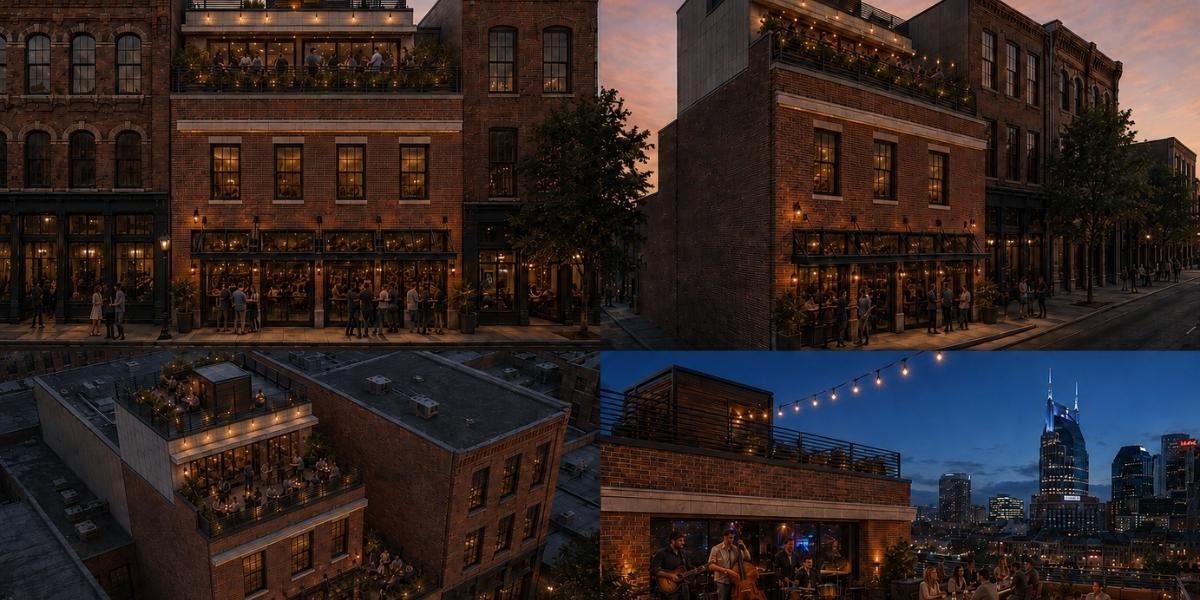
EastGrove is helping transform 117 and 127 Second Avenue North into restaurant, bar, and entertainment destinations featuring expanded upper floors, rooftop decks, and views of the Cumberland River.
Nashville’s Second Avenue has survived nearly two and a half centuries of change. Originally called Market Street, the corridor developed beside the Cumberland River as one of the city’s earliest centers of commerce. Its nineteenth-century warehouses and storefronts eventually became restaurants, shops, and entertainment venues that helped define downtown Nashville.
Now, EastGrove is preparing to contribute to the street’s next chapter through the redevelopment of two prominent properties: 117 and 127 Second Avenue North.
The projects will combine historic rehabilitation with new construction, including demolition, shoring, structural stabilization, vertical expansion, and complete interior build-outs. Once completed, the properties are expected to include restaurants, bars, entertainment spaces and two rooftop decks designed to bring new activity to the historic corridor.
“We are not simply adding space to two buildings,” EastGrove said. “We are helping bring energy, activity and a sense of possibility back to a historic Nashville street.”
New Ownership and a New Plan for Second Avenue
Peter Zaree represented the buyers in the acquisitions of both properties, which changed hands in separate transactions.
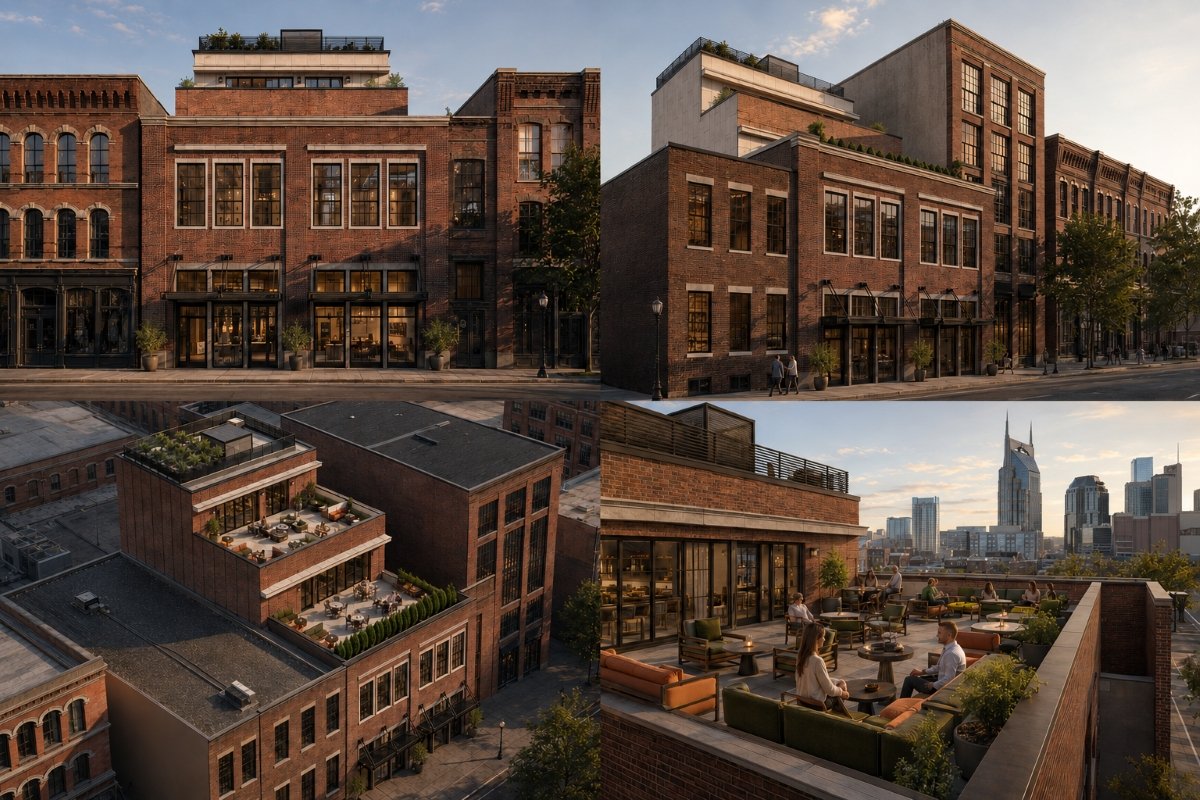
Approval for the redevelopment plans has been secured, and the project is preparing to break ground. The approved vision calls for the buildings to rise two additional stories, creating new space above the existing structures while retaining a design that complements Second Avenue’s historic character.
Two rooftop decks are also planned. The fourth-story experience is expected to offer wide views toward the Cumberland River.
The goal is to create an entertainment destination that feels new without losing its connection to the architecture and history that make Second Avenue special.
“Preservation and progress do not have to compete,” EastGrove said. “When a project is handled thoughtfully, each one makes the other stronger.”
A Street Shaped by Commerce and the River
Second Avenue was originally identified as Market Street in Nashville’s early town plan. Its proximity to the Cumberland River made it a natural location for warehouses, wholesale businesses, and merchants moving goods through the growing city.
Many of the district’s surviving cast-iron and masonry buildings were constructed during the 1870s and 1880s. The National Park Service has described the area as holding outstanding examples of Victorian commercial architecture, noting its brickwork, arched windows, stone cornices and deep buildings extending toward First Avenue and the river.
As Nashville changed, Second Avenue changed with it. Buildings that once housed warehouses and wholesale companies were adapted into restaurants, shops, galleries and entertainment venues. In 1996, Nashville adopted a historic zoning overlay to help protect the street’s architectural integrity and guide alterations to its historic properties.
This history is central to EastGrove’s plans.
“Second Avenue does not need to become a museum, and its history should not be erased,” the company said. “We believe its historic architecture can be protected while its buildings are adapted for modern restaurants, bars, entertainment and rooftop experiences.”
Rebuilding After the Christmas Day Bombing
On December 25, 2020, a bombing devastated part of downtown Nashville and damaged dozens of buildings along and around Second Avenue. The incident created extensive structural and economic challenges for property owners, businesses and the surrounding community.
Metro Nashville established a Second Avenue response and recovery effort after the bombing and committed public resources to rebuilding and reimagining the historic area, including Second Avenue, First Avenue and the western edge of the Cumberland River.
For EastGrove, the condition of 117 and 127 Second Avenue reinforced both the potential of the properties and the responsibility involved in redeveloping them.
“Walking through these buildings and seeing the effects of the bombing made the responsibility feel real,” EastGrove said. “Where others might see damaged buildings, we see places capable of welcoming Nashville back.”
The company envisions the properties once again filled with people, music, conversation and activity. That vision, however, must begin with careful and technically demanding construction.
The Work Behind the Vision
Transforming older urban buildings is rarely straightforward. The planned work at 117 and 127 Second Avenue will include selective demolition, shoring, structural reinforcement and new construction above the existing buildings.
The interiors will then receive comprehensive finish-outs suitable for restaurant, bar and entertainment operations. The work is expected to require close coordination among ownership, architects, structural engineers, contractors, historic-review professionals, public agencies and future hospitality operators.
“In historic redevelopment, what you cannot initially see may be just as important as what appears on the plans,” EastGrove said.
Existing buildings can contain undocumented alterations, structural deterioration and concealed damage that only becomes apparent after construction begins. For that reason, EastGrove considers careful investigation, experienced engineering and realistic construction contingencies essential to the process.
The company also believes that successful redevelopment requires thinking beyond the building itself. Construction can affect neighboring businesses, pedestrians, and the character of the entire street. Long-term success will depend not only on the appearance of the properties but also on how well they operate and contribute to their surroundings.
Creating a New Entertainment Experience
The finished properties are envisioned as active hospitality and entertainment destinations serving Nashville residents and visitors.
Restaurants and bars will occupy renewed interior spaces, while the upper floors and rooftop decks will provide outdoor gathering areas with views toward downtown and the Cumberland River. Music and entertainment are expected to play an important role in creating an experience connected to Nashville’s identity.
The rooftop additions will introduce a contemporary experience above the buildings while allowing the street-facing façades to remain compatible with the historic corridor.
“The experience above the buildings can be modern and energetic while the street level continues to belong to Second Avenue,” EastGrove said.
The projects are also expected to support construction jobs, hospitality employment and surrounding downtown businesses. By returning damaged or underused properties to productive use, EastGrove hopes to contribute to a stronger connection among Second Avenue, First Avenue and Nashville’s riverfront.
Part of a Larger Recovery
EastGrove’s redevelopment comes as Metro Nashville continues studying the future of the Second Avenue area through its Second Avenue planning study, which examines land use, mobility, urban design, open space and environmental resiliency.
The future of the corridor will ultimately be shaped by many property owners, businesses, public agencies, and community members. EastGrove sees 117 and 127 Second Avenue as two pieces of that broader effort.
The company’s goal is not simply to restore what existed before the bombing. It is to retain the character and memory of the street while creating spaces capable of serving Nashville’s growing market.
“We feel blessed to be part of Second Avenue’s next chapter, and we understand the responsibility that comes with it,” EastGrove said. “We want to honor the history of these buildings while creating destinations that bring people together and contribute to the continued growth of Nashville and its surrounding communities.”