Damage is an American synth-punk band formed in Orlando, Florida, in the early 1980s and based in Brooklyn, New York, since its reformation. The band is regarded as a pioneering act in synthcore, a style that pairs live drums with analog synthesizers to produce punk rock played entirely on keyboards, with no guitars and no sequencers. Reviewers often compare Damage to earlier synthesizer-driven acts such as The Screamers, Suicide, and Units. The band took the speed and aggression of American hardcore and applied them to instruments the genre had almost entirely rejected.
Through the 1980s and early 1990s, Damage toured the East Coast and Midwest and shared stages with hardcore acts such as the Adolescents, Dead Kennedys, and SNFU, as well as groups including Fugazi, The Flaming Lips, and Alien Sex Fiend. Vocalist and synthesizer player Michael Brown founded the band’s own label, Space Fish Records, and from 1988 the group ran a concert promotion operation and eventually a nightclub, both under the name Club Space Fish.
Damage disbanded in 1991 after the club closed. The club had lost its city operating variance following a GG Allin performance that drew police attention and a federal raid. After a hiatus of more than three decades, the band resumed recording and performing in 2024. It released the album Modern World in 2025 and the EP How To Talk To Humans in May 2026, both on a revived Space Fish Records.
How Damage Began as Brain Damage in Orlando
Damage started in Orlando in 1980 as Brain Damage, an experimental project from Mike Brown and Michael Buchanan. Early sessions relied on whatever equipment the pair could find, including a Yamaha CS5 synthesizer, a single-string electric guitar, and a portable tape deck. Drum kits arrived later. The project felt more like a recording experiment than a band, and its instrumentation grew out of those constraints.
The first performing lineup had two drummers, Dwayne Hoover and Jack McGowan, with Brown and Buchanan on synthesizers and Justin Hill on vocals. The group mixed original material with reworked covers of songs by the Vibrators, the Sex Pistols, and the Human League, and it played around Orlando until 1982. Brown now calls this stretch the band’s “Proto-Damage” years.
In 1982, an invitation to play a charity telethon at a Chuck E. Cheese restaurant led the group to drop “Brain” from its name. The second drummer left at the same time, and the leaner lineup stuck.
Roles shifted along with the name. Brown took over lead vocals and lead synthesizer on a Moog Liberation keytar, which he still plays today. Buchanan moved to bass synthesizer on a modified Sequential Circuits Pro-One keytar, covering the register a bass guitar would normally fill. McGowan stayed on as the sole drummer.
The new setup coincided with a stylistic turn. The band moved away from the late-1970s punk of its covers and toward the faster, blunter American hardcore emerging at the time. In 1983 it issued the demo cassette Tennis Shoe Politics, the first release on its own label, Space Fish Records.
The Space Fish Records Years
Early Releases and the Hardcore Turn
Tyler Stans joined as lead vocalist, which freed Brown to concentrate on lead synthesizer while he kept singing backing vocals. In 1984, the band released an untitled 7-inch EP, known as the Jaywalk or Polar Bear EP after its lead track and cover image.
As the material pushed toward hardcore and thrash, Joe Livingston replaced McGowan on drums and brought the speed and precision the newer songs demanded. Damage began playing across Florida on bills dominated by guitar-driven hardcore, opening for Dead Kennedys, Adrenalin O.D., J.F.A., and Battalion of Saints. An early set opening for the Dead Kennedys at the Syrian Lebanese Hall in Orlando became a defining local show.
Synthology and National Touring
Space Fish Records released Damage’s first 12-inch LP, Synthology, in 1986. Randy Meyer produced and recorded it with the band at Adult Motel recording studio, and Brown designed and photographed the cover.
The record drew notice from both the punk fanzine press and the mainstream music press, an unusual pairing. Keyboard magazine noted in October 1986 that the album contained no guitars and no sequencers, and that its analog sounds evoked punk guitar closely. The band toured the East Coast and Midwest behind the album, opened several dates for SNFU, and began work on a follow-up.
Jubilee O’ Kindness and Tour O’ Merica
Stans left in 1987, about a week before vocal tracking for the second album was due to begin. Brown returned to lead vocals, finished the sessions, and released Jubilee O’ Kindness on Space Fish Records later that year.
The Tour O’ Merica followed across the East Coast and Midwest. The band opened for the Adolescents on southern dates and joined mixed bills farther north, including a City Gardens show in Trenton, New Jersey, with The Flaming Lips.
SPLASH Magazine and the Freak Show Tour
In 1988, Brown teamed up with Mike Bales of the Orlando punk band Love Gods in Leisure Suits to expand Space Fish beyond Damage releases. Together they launched SPLASH Magazine, a satirical fanzine that also promoted the label.
The partnership grew into show promotion and regional touring. Space Fish issued the Love Gods debut LP, Come Here Often, in 1988, and the two bands promoted it on the Freak Show tour, trading opening slots.
Euphoria and the New York Showcases
Damage began recording its third LP, Euphoria, in 1989 and released it on vinyl and cassette in 1990. The album moved toward college rock and alternative territory while refining, not abandoning, the hardcore elements of the earlier records.
Space Fish also took its roster to the College Music Journal and New Music Seminar conferences in New York City, where Damage and Love Gods in Leisure Suits played a CMJ showcase at Downtown Beirut #2 in 1990 and released the Fresh Fish split 7-inch to go with it. It paired the new Damage track “Stand” with songs by Love Gods in Leisure Suits.
Club Space Fish and the End of the First Era
From 1988, the three members of Damage (Brown, Buchanan, and Livingston) and Bales began promoting shows as Club Space Fish. Events moved between Orlando venues before settling into a Wednesday night at the Beach Club downtown.
In 1991, the band members opened a free-standing Club Space Fish venue on West Church Street in Orlando’s Parramore district, at the former site of the Negril Cove reggae club. The room ran live music up to five nights a week. The Damned, Pigface, 7 Seconds, Helmet, and Jawbox played there, along with several hundred Florida bands. Running the venue effectively ended Damage as a working unit, and the band suspended touring and recording.
On Monday, November 18, 1991, a night the club was normally closed, GG Allin performed there. A large crowd gathered outside, and the Orlando Police Department took notice. Police shut the performance down for lewd and lascivious behavior and made arrests outside the venue.
Several days later, agents of the Bureau of Alcohol, Tobacco, and Firearms, working with local law enforcement, raided the club and seized its liquor license. The license came back after a 90-day suspension, but the City of Orlando revoked the variance the club needed to operate. By then, Club Space Fish had closed and liquidated its equipment.
The strain of running the venue, its closure, and the financial fallout ended the band, and its members scattered to Atlanta, Australia, and New York City.
Reformation in Brooklyn and Recent Releases
Regrouping and Modern World
After a gap of close to 35 years, founding member Mike Brown and longtime drummer Joe Livingston reconnected in Brooklyn and revived the project in 2024 to record new material. Brown invited Joshua Clark to join on synthesizer and backing vocals, completing a trio. Clark and Brown had played together in the 1990s in the melodic hardcore band United Magnetics and in an electronic punk project in the early 2000s. Clark then left to pursue chiptune work as Bit Shifter.
The reformed band issued the singles “Black Ice” in October 2024 and “Modern World” in November 2024, then the Florida Band EP in April 2025. Modern World, the band’s fourth studio album, arrived on Space Fish Records in 2025 on Bandcamp, Apple Music, Spotify, and YouTube.
The band debuted the album live at Will’s Pub in Orlando in May 2025 and launched it at Main Drag Music in Williamsburg, Brooklyn, that September.
In April 2025, the Orlando Punk Archive reissued the 1986 debut Synthology digitally for the first time. The album went up on Bandcamp as a name-your-price download.
How To Talk To Humans and the Club Space Fish Revival
Damage released the EP How To Talk To Humans on Space Fish Records on May 15, 2026, on limited-edition 12-inch vinyl, CD, and streaming platforms. The release was timed to a Club Space Fish reunion and the label’s relaunch. It centers on two new originals, “Carriage Horses,” a straightforward hardcore track, and the upbeat synth-punk title song, both recorded on analog synthesizers and live drums.
Livingston sent source material, including vocal samples from Brown, to three outside artists for reinterpretation and added two remixes of his own. The result put dance-floor production beside the band’s hardcore material, a deliberate step outside its usual mode rather than a change of direction. Post-Punk and Side-Line covered the EP in June 2026.
Also in 2026, the band revived Club Space Fish for a one-night event at Conduit in Orlando. Damage played alongside Love Gods in Leisure Suits, Bloody Mary, Target Earth, The Riddlers, and other acts.
Damage’s Sound, Critical Reception, and Lineup
Musical Approach and Equipment
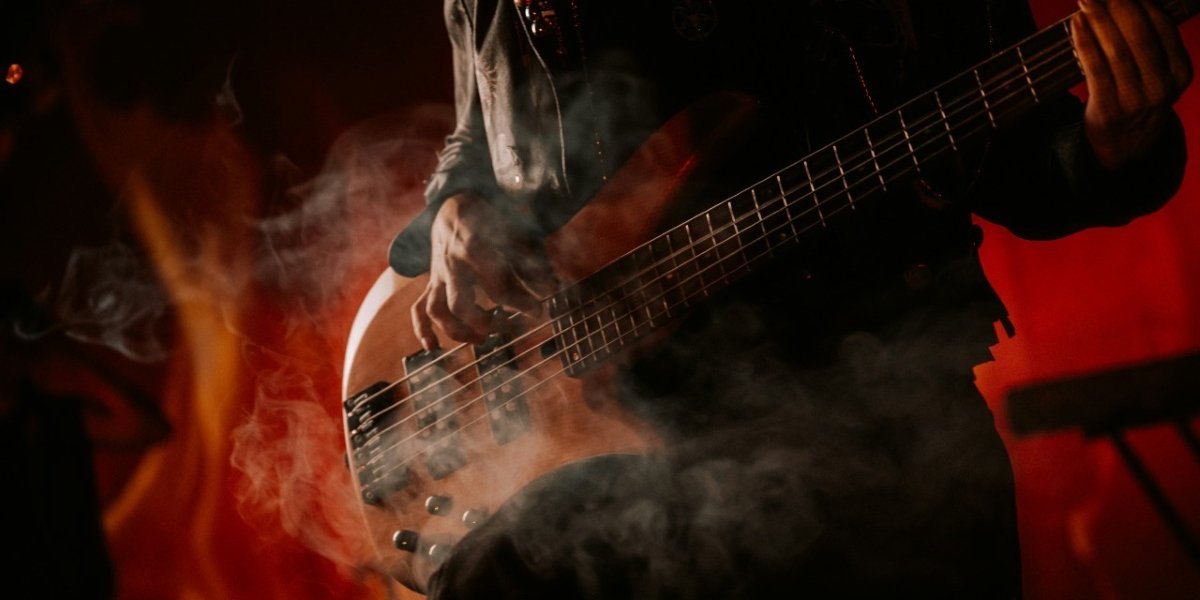
Damage plays hardcore and punk material using only synthesizers, keytars, and an acoustic drum kit. The missing guitars are structural. A dedicated bass synthesist carries the low register, and the keytar handles the lead lines that would usually belong to a guitar. Players, not programming, produce the speed of the material.
The band calls its style synthcore and describes it as punk rock played on keyboards, not electronic music with punk influences.
Brown still performs on his original Moog Liberation, which has been on the road with the band for decades. Since the 2024 reformation, the setup has leaned on Moog gear alongside a Sequential Prophet Rev2.
Critical Reception
Tim Yohannan, writing in Maximum Rocknroll in October 1986, placed the band in the tradition of The Screamers and Suicide and described the sound as hard-driving machines set against drums and vocals. He called Damage the rawest and most chaotic synthesizer band he had heard, and he remarked that a listener would not necessarily identify the source as synthesizers at all.
Jello Biafra of Alternative Tentacles described Damage in 1986 as among the few successful keyboard punk bands since The Screamers. Orlando Weekly wrote in 2025 that punk and synthesizers were close to mutually exclusive categories in the 1980s and credited the band with blurring the boundary. In December 2025, the paper described the group as having wielded keytars like cudgels.
Not every reaction at the time was favorable. Some listeners found the synthesizer tones on Synthology too thin to carry the songs, and while they praised the compositions, they argued that guitars would have served the arrangements better. The reissues and reformation have arrived amid renewed attention to synth-punk.
Members
The current lineup consists of Michael Brown on vocals and synthesizers, a founding member active since 1982, Joe Livingston on drums, who joined in 1984, and Joshua Clark on synthesizer and backing vocals, who joined at the band’s reformation in 2024.
Former members include Tyler Stans, lead vocalist from 1984 to 1986, Michael Buchanan, bass synthesist from 1982 to 1991, and Jack McGowan, drummer from 1982 to 1984. The earliest Brain Damage configuration also included vocalist Justin Hill and second drummer Dwayne Hoover.