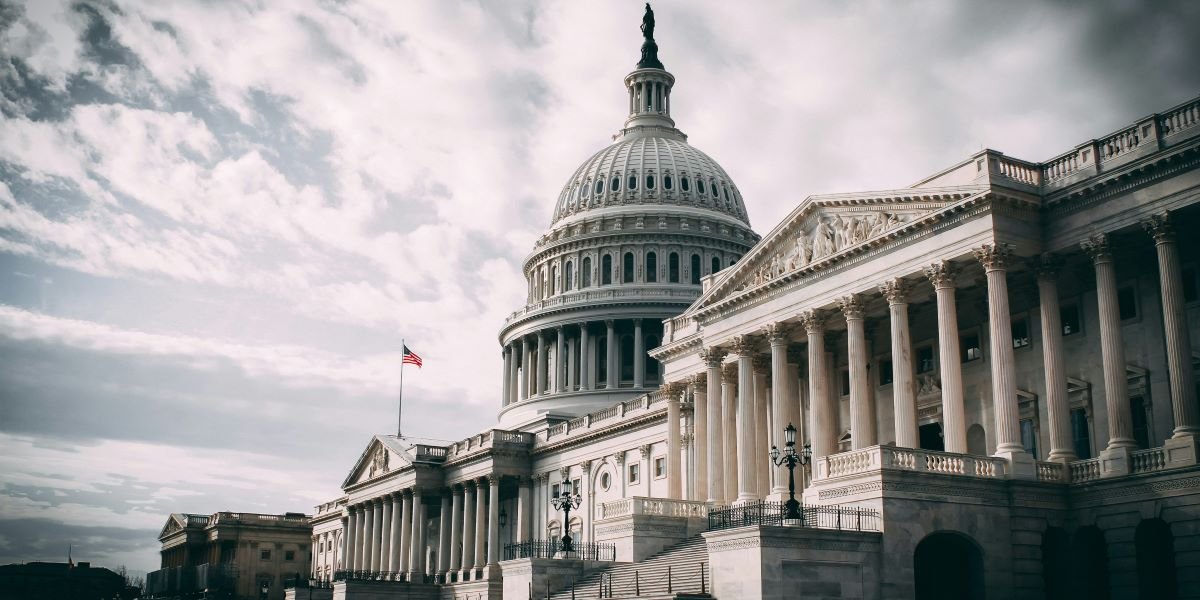
The U.S. Chamber of Commerce told Congress that a fragmented patchwork of state artificial intelligence and data privacy laws threatens small businesses and American technology leadership by driving up compliance and litigation costs. In written testimony to a House Energy and Commerce subcommittee, the U.S. Chamber of Commerce urged federal lawmakers to enact a single preemptive national framework.
Key Takeaways
- The U.S. Chamber of Commerce submitted written testimony from Marty Durbin, its senior vice president for policy, to the House Energy and Commerce Committee’s commerce, manufacturing and trade subcommittee at a June 30 hearing on U.S. leadership in emerging technologies.
- The Chamber argues that conflicting state-by-state AI and privacy mandates raise compliance and litigation costs for small and mid-sized firms adopting AI tools.
- A Cloud Security Alliance survey found that 62% of financial services organizations have already deployed AI agents.
- The Chamber projects that an unchecked state patchwork could cost the U.S. economy more than $50 billion in gross domestic product and a quarter million jobs.
- Privacy regulators, including the California Privacy Protection Agency, oppose broad federal preemption of state protections.
What Did the U.S. Chamber of Commerce Tell Congress About State AI Laws?
The U.S. Chamber of Commerce used its June 30 written testimony to argue that businesses need clear, consistent rules for how AI-related data is governed nationwide. Durbin told the subcommittee that a decentralized set of state mandates leaves firms navigating overlapping obligations as they integrate generative AI and autonomous tools into daily operations.
The Chamber has framed the state-level approach as an “interstate innovation tax,” contending that companies operating nationally must build to the most restrictive state standard across all fifty. Chamber survey data indicates small businesses are already adopting generative AI at scale to improve baseline productivity, which the organization says makes regulatory clarity more urgent rather than less.
Why Does the U.S. Chamber of Commerce Say a State Patchwork Raises Costs?
The core of the Chamber’s argument is cost and legal exposure. Conflicting requirements across jurisdictions force duplicative compliance work and increase litigation risk, a burden the Chamber says falls hardest on smaller firms with limited legal resources. Industry estimates cited in policy analyses place annual AI compliance, legal, and consulting spending at roughly $50,000 to $500,000 per enterprise.
The regulatory field is expanding quickly. At least 38 states have passed some form of AI law, and more than 1,500 AI-related bills have been introduced across 45 states. Colorado’s AI Act, which governs high-risk systems used in hiring, lending, housing, education, and healthcare, carried a June 30 compliance deadline that coincided with the hearing.
How Widely Are Businesses Using Autonomous AI Agents?
Adoption of autonomous AI is now substantial in regulated sectors. The Cloud Security Alliance’s State of Cloud and AI for Financial Services 2026 report found that 62% of surveyed financial services organizations have deployed AI agents, and 85% anticipate autonomous AI-driven financial transactions. That pace, the Chamber argues, widens the gap between what businesses are building and what a splintered legal system can accommodate.
What Federal Legislation Is the U.S. Chamber of Commerce Backing?
The U.S. Chamber of Commerce supports the SECURE Data Act, a proposed national privacy law with strong preemption language intended to supersede state privacy and data security rules. The organization contends that only a fully preemptive federal statute can deliver the legal certainty companies need on data governance, including how AI training data is handled.
The debate splits along a clear line, summarized below.

Who Opposes Federal Preemption of State AI Rules?
Opposition centers on consumer protection. The California Privacy Protection Agency, in an April letter, argued that the SECURE Data Act’s preemption language would remove protections available to more than 100 million Americans, and urged Congress to set “a floor, not a ceiling” for privacy rights. The Electronic Privacy Information Center raised a parallel concern, noting that 12 states require companies to honor universal opt-out signals that let consumers limit data sales through browser or device settings.
The U.S. Chamber of Commerce is pressing for federal action as autonomous AI adoption accelerates, while regulators warn that a uniform national standard must not weaken existing state-level consumer safeguards.
FAQs
What is the U.S. Chamber of Commerce asking Congress to do? The Chamber wants Congress to pass unified federal legislation that preempts the growing patchwork of state AI and data privacy laws. It argues a single national framework would give businesses legal certainty and reduce compliance costs.
When and where did the Chamber make this warning? The warning came in written testimony submitted for a June 30 hearing before the House Energy and Commerce Committee’s commerce, manufacturing and trade subcommittee, which examined U.S. leadership in emerging technologies.
How many businesses use autonomous AI agents? A Cloud Security Alliance survey found 62% of financial services organizations have already deployed AI agents, with 85% anticipating autonomous AI-driven financial transactions.
Why do small businesses factor into this debate? The Chamber says smaller firms are adopting AI at scale but lack the legal resources to navigate conflicting state mandates, making the compliance burden proportionally heavier for them.
Who opposes federal preemption? Privacy regulators such as the California Privacy Protection Agency and groups including the Electronic Privacy Information Center oppose broad preemption, arguing it could erode consumer protections already in place under state law.
What federal bill is central to the debate? The SECURE Data Act, a national privacy proposal with strong preemption language that the Chamber supports and privacy advocates have criticized.