By: Stephanie Terr
Leadership at the highest level requires a particular kind of stamina, and Loida Nicolas Lewis has demonstrated it across domains that most people would consider mutually exclusive. She is a Philippine-born lawyer who passed the New York State Bar without an American law degree. She is the widow of Reginald F. Lewis and the executive who took over his company after his death and guided it through its final years with the kind of steadiness that neither grief nor inexperience could shake. She is a civic leader, a philanthropist, a podcast host, and now, in her eighties, an author whose new book argues that aging well is not about what you refuse to do to your body. It is about what you consistently do for your spirit.
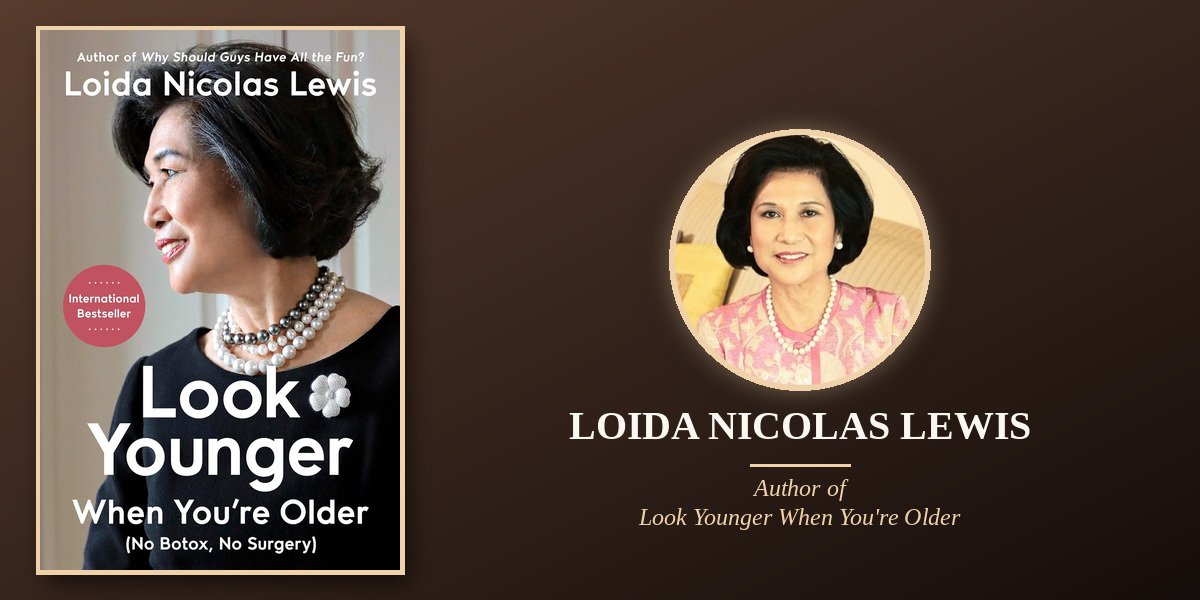
Look Younger When You’re Older is the kind of book that could only be written by someone who has actually lived its thesis. Lewis is not speculating about what it might be like to maintain vitality into old age. She is reporting from inside that experience, with the specificity of a witness and the structure of someone who has spent decades learning to organize her observations into action.
The book opens with the inner life. This is deliberate. Lewis wants the reader to understand that the outer results she is describing are not primarily about products or procedures. They are about the quality of attention you bring to your own existence. She writes about her Zen meditation practice, her faith, the prayers that have sustained her, and the way she thinks about gratitude not as a sentiment but as a practice. She credits several texts and thinkers who shaped her philosophy, and she describes the daily habits of reflection that have become non-negotiable for her.
From there she moves to the tangible: skincare, hydration, exercise, the specific routines she has developed and refined over decades. She is precise without being prescriptive. She makes clear that the goal is not to replicate her exact regimen but to understand the principles behind it and apply them in ways that suit the individual reader. She began her fitness practice at 45. She built her skincare habits in her fifties. The book does not pretend that earlier is not better, but it insists that later is still worth it.
Lewis also writes about her friends and community. Several of them contribute their own perspectives, and the resulting texture is richer for it. The book feels less like a single voice issuing instructions and more like a conversation among people who have thought seriously about these questions and arrived at something worth sharing.
There is a generosity to this book that runs through every chapter. Lewis is not protective of her knowledge. She is not selling a system or a product line. She is simply offering what she has learned, in as clear and honest a form as she can manage, to anyone who wants it. At a cultural moment when aging has become a problem to be solved rather than a process to be navigated with grace, that generosity is itself a kind of counter-argument.
The book is 151 pages. It is not long. It does not need to be. What it offers is concentrated and clear, and the person offering it has earned every word.
Look Younger When You’re Older is available now on Amazon.