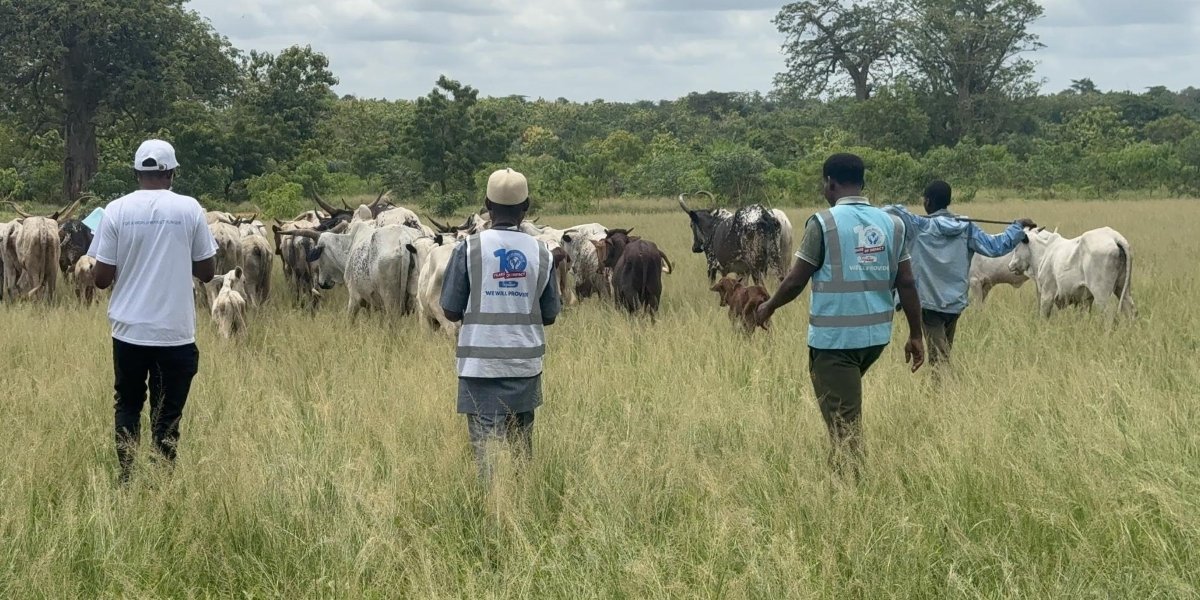
Accountability is the question the Islamic humanitarian sector has not always answered well. A donor gives Qurbani online, chooses a country, completes a transaction, and returns to their day. What happens next? Where does the animal go? Who selected the family that received it? How was the sacrifice performed? And if something went wrong, if the donation failed to reach anyone, would the donor ever know?
These are not cynical questions. They are the right questions. And for MATW Project Muslims Around the World, the answer is structural, not rhetorical. Accountability is not a marketing claim. It is the operational infrastructure that separates giving in confidence from giving in hope.
Why Qurbani Accountability Is Theologically as Well as Operationally Important
In Islamic jurisprudence, the validity of a Qurbani depends on more than the donor’s intention. The animal must be the right species, the right minimum age, in the right health condition. The sacrifice must be performed during the prescribed days of Eid al-Adha, by a qualified person, using the correct method. The meat must be distributed, one third to family, one third to friends and neighbors, one third to those in need.
When a Muslim gives Qurbani through a charitable organization, they are delegating the physical performance of a religious obligation to that organization. The theological weight of that delegation is significant: if the organization fails to perform the sacrifice correctly, or fails to distribute the meat to a genuine beneficiary, the donor’s Qurbani is not valid. This is not merely a question of donor satisfaction. It is a question of whether an act of worship was accepted.
MATW Project’s accountability framework exists precisely to make the answer to that question unambiguous. When a donor gives Online Qurbani through MATW, they are not trusting a promise. They are trusting a documented process.
Stage One: Sharia-Compliant Animal Procurement
Every animal sourced for Qurbani by MATW meets the requirements of the major schools of Islamic jurisprudence. Species, age, and health criteria are verified at the point of procurement. MATW sources locally wherever logistically feasible, from farms and traders within or adjacent to the recipient communities, which simultaneously ensures product freshness and channels donor funds into local economies.
Where local livestock is unavailable (as is the case in Gaza, where conflict has depleted local animal supplies and restricted movement), sacrifice is arranged at a compliant location outside the crisis zone, with meat then preserved, packaged, and transported to recipient families through available channels. This approach is reviewed and validated by qualified Islamic scholars, ensuring that the constraint of access does not invalidate the Qurbani.
Stage Two: Qualified Sacrifice and Documentation
Sacrifice on the days of Eid al-Adha, the 10th through 12th of Dhul Hijjah, is performed by trained and qualified butchers under the supervision of local scholars. This is not an ad hoc arrangement. MATW’s field teams coordinate the logistics months in advance: the sites, the personnel, the timing, and the documentation process are all established before the sacrifice days arrive.
Each sacrifice is documented by field teams. The record includes the animal, the location, the date, and the distribution event it feeds into. This documentation is the first link in the accountability chain that connects a donor’s online transaction to a specific Qurbani performed for a specific family.
“Compliance and accountability are not administrative checkboxes for us, they are the foundation of trust. Every Qurbani we deliver is documented, distributed to a verified family, and carried out in full accordance with Islamic requirements. When someone gives through MATW, they can know, with confidence, that the sacrifice reached the person it was meant for.”
— Chase Alley, Chief Operations Officer (USA), MATW Project
Stage Three: Beneficiary Verification, Who Receives the Qurbani
The question of who receives Qurbani meat is as important as the question of whether it was performed correctly. MATW’s field teams conduct needs assessments in every country of operation, building beneficiary lists that prioritize the most vulnerable: families living below the minimum income threshold for their country, households headed by widows or elderly individuals without economic support, families with young children or infants at nutritional risk, internally displaced persons without access to markets.
These lists are not generated at the point of distribution. They are maintained year-round, updated through MATW’s ongoing field presence, and verified against community knowledge held by local team members who have operated in these areas continuously. A Qurbani beneficiary in Yemen or Gaza is not randomly selected. They are someone whose need has been assessed, documented, and prioritised against a consistent set of criteria.
It is this verification process that distinguishes a distribution from a drop: the meat goes to a family that MATW’s team knows, whose vulnerability is documented, and whose receipt of the Qurbani is recorded. One family. One Qurbani pack. One entry in the distribution log.
Stage Four: Distribution Records and Impact Reporting
Every Qurbani distribution event generates a field record: the number of families served, the quantity of meat distributed, the location, and the date. These records are compiled by field teams, reviewed by Head of Operations Samuel Harris, and incorporated into MATW’s impact reporting infrastructure.
The Ramadan 2026 Impact Report, which covers the period immediately preceding Qurbani season and uses the same accountability infrastructure, is illustrative of the standard MATW applies. It lists 1,407,095 iftar meals distributed, 112,455 food packs, 72,000 rice bags, and 27,530 Eid gifts across 16 countries, with country-level breakdowns specific enough to permit independent verification. That is not a summary. It is a record.
Qurbani impact data is held to the same standard. Donors who give through MATW are not receiving a post-campaign assertion that their money was well spent. They are receiving documentation generated by field teams who were present at the distribution, in the community, on the day.
Multi-Jurisdictional Compliance: The Regulatory Layer
Beyond Islamic compliance, MATW Project operates under the regulatory requirements of four jurisdictions: Australia, the United Kingdom, the United States, and France. Each of these jurisdictions imposes its own standards for nonprofit financial management, fund use reporting, and organisational governance. MATW maintains full compliance registrations in all four, which means that the accountability structures governing Qurbani donations are not self-imposed commitments. They are legally enforceable obligations.
This multi-jurisdictional compliance framework is not merely administrative. It is substantive: it means that donor funds are managed under standards that include independent audit requirements, program expense reporting, and financial disclosure obligations that create real accountability to regulators and the public alike. CEO Mahmoud Ismail has consistently framed this compliance infrastructure not as a burden but as a baseline, the minimum standard of trust-building in a sector where trust is the currency that determines whether giving reaches anyone at all.
The Founder’s Standard and What It Means for Accountability
MATW was founded in 2015 by Ali Banat, an Australian Muslim entrepreneur who, upon receiving a terminal cancer diagnosis, gave away his estate and spent his remaining years building humanitarian infrastructure across Africa and the Muslim world. He did not build an organisation to generate reports. He built one to get things to people who needed them, and he understood that accountability was not separate from that mission. It was the mechanism that made the mission real.
Ten years on, that founding standard is the lens through which MATW evaluates its own Qurbani operations. Not: did we perform the sacrifices? But: can we prove to the donor, to the regulator, and to Allah that every sacrifice reached the person it was meant for, performed correctly, distributed fairly, and documented completely?
What Donors Should Look for When Giving Qurbani Online
Not every Islamic charity that accepts Qurbani donations online operates at the same accountability standard. Donors evaluating where to give should consider: Does the organization have verified field presence in the destination country, not a partner who has a partner, but a team that has been operating there continuously? Does it publish logged impact data or summary claims? Does it operate under external compliance obligations or solely self-governed standards? Is the beneficiary selection process documented and criteria-based, or informal?
For MATW Project, the answers to these questions are a matter of public record. The impact data is published. The compliance registrations are maintained. The field team infrastructure is active year-round. The beneficiary verification process is documented. And the standard against which all of it is measured, the founding conviction that giving must be total, visible, and accountable, has not changed in ten years.
Donate your Qurbani through MATW Project this Eid al-Adha 2026.
Visit matwproject.org to complete your Qurbani obligation with an organization whose accountability infrastructure means your sacrifice reaches a verified family, because your giving deserves to be real, not just intended.