For years, eSIM sat in the background of the smartphone world. It was a helpful feature, but not yet the default. By the end of 2025, that will have changed. The hardware ecosystem, mobile operators, and travel behaviour are finally aligned. 2026 is shaping up to be the first year when eSIM is no longer a niche option but the standard way many travellers connect.
Two converging forces drive this shift. More people are buying phones that support eSIM by default, and more of those people are using their connectivity across borders rather than just at home.
Smartphones Are Quietly Going eSIM First

On the hardware side, the tipping point is clear. Apple has moved steadily toward eSIM-only devices. The iPhone 14 range in the United States was the first to drop the physical SIM tray, and the 2025 iPhone 17 line extends eSIM-only models to multiple countries, including the United States, Canada, Mexico, several Gulf markets, Japan, and others. Apple’s new iPhone Air model is eSIM-only worldwide, except for mainland China, where regulatory approval is delayed.
Android manufacturers have followed a similar path. Recent Google Pixel models, including the Pixel 10 series, support multiple eSIM profiles, and some configurations in the United States are eSIM only. Samsung’s higher-end and upper mid-range devices, such as the Galaxy S24 FE and S25 FE families, ship with eSIM support as standard, and the number of Samsung devices listed as eSIM compatible has grown each year. Other brands, including Xiaomi, Vivo, Honor, Motorola, and Huawei, now maintain long lists of eSIM-compatible models, updated monthly by eSIM providers and device trackers.
The result is simple. A growing share of new phone buyers in 2025 moved into eSIM-capable hardware, whether they asked for it or not. That installed base is what will make 2026 the breakout year.
Market Projections Show a Steep Curve Upward
Industry forecasts back this up. GSMA Intelligence reports that eSIM smartphone connections are expected to double between 2025 and 2026, as more devices and more operators support the standard. A wider GSMA analysis describes eSIM as a silent revolution. It estimates that by 2025, about 35 percent of all smartphone network connections will use eSIM technology, with adoption accelerating from 2026 onward.
Juniper Research projects that total cellular connections using eSIMs will reach about 4.9 billion by 2030, representing roughly 300 percent growth over the next five years. Travel eSIM, in particular, has moved from experiment to real business. One recent market assessment put travel eSIM revenues at around 1.8 billion dollars in 2025, up roughly 85 percent year on year.
Taken together, these data points suggest that 2026 will not be the peak of eSIM, but rather the year when growth shifts from gradual to mainstream.
Consumer Behaviour and Travel Patterns Are Doing the Rest
Hardware and forecasts do not change traveller habits on their own. Behaviour is shifting for its own reasons.
Travellers now book more multi-stop trips, combine work and leisure more often, and make more decisions in the moment. Many expect to land, connect, and start using transport, mapping, messaging, and payment apps within minutes. They also hope to change plans mid-trip without visiting a mobile store or swapping plastic SIMs.
At the same time, awareness of roaming costs and bill shock has grown. More travellers search specifically for “roaming alternatives” and “travel eSIM” before a trip. External research on connectivity trends for 2026 notes the rise of multi-network orchestration platforms and more flexible profile management across borders, both of which align with this new mobile behaviour.
As more people own eSIM-ready phones, the friction that kept them from trying digital SIMs is beginning to disappear. Installing an eSIM profile becomes a natural pre-trip step, like checking in online.
Why Traditional SIMs Are Starting To Collapse
Physical SIM cards are not going away overnight, but their structural disadvantages are clearer every year.
From a device design perspective, physical SIM trays take up space that could be used for battery, speakers, or stronger waterproofing. They also introduce a point of failure that eSIM removes. Apple’s decision to remove the SIM tray from more iPhone models in more markets shows how serious that trade-off has become for leading manufacturers.
From a user perspective, plastic SIMs are no longer convenient. They are easy to misplace, require in-person purchase in many countries, and make it harder to switch providers quickly. The rise of travel eSIM providers and digital onboarding is reshaping roaming economics, and some analyst reports suggest that traditional operators risk losing roaming revenue if they do not adapt.
Environmental and logistics considerations add more pressure. Managing plastic cards, distribution, and packaging is less attractive in a world where a profile can be downloaded in seconds.
What This Means For Travel Connectivity in 2026
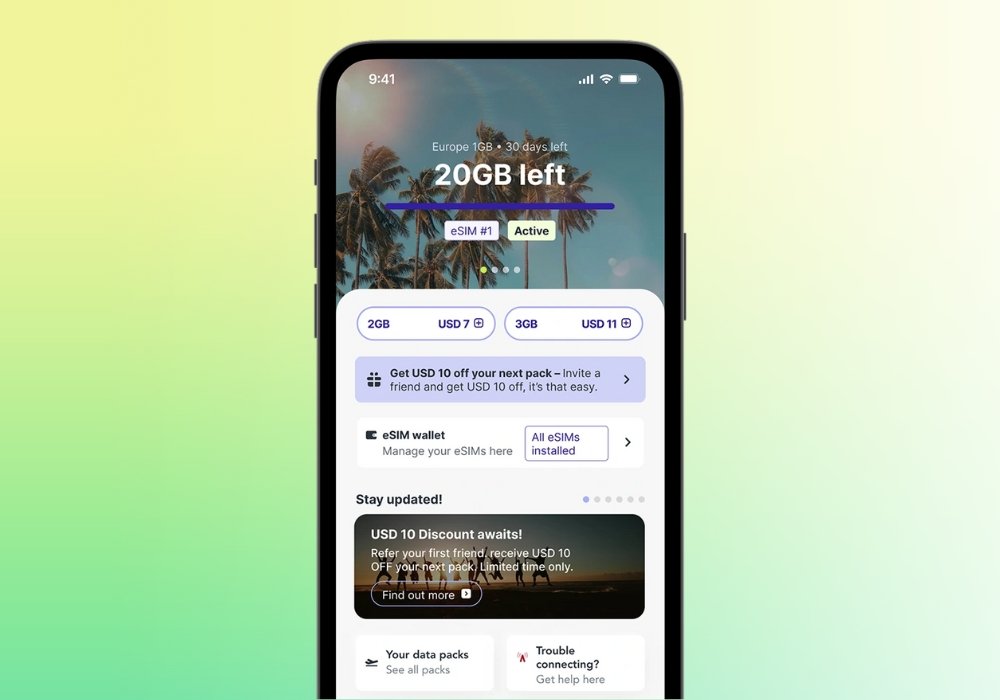
The larger impact of the eSIM transition is that travellers now have the freedom to choose their connectivity before they fly. With far more devices supporting eSIM as the default, travellers expect their connectivity to be digital, instant, and free from the friction of physical SIM cards. They want it to function the same way their flights, hotels, mapping apps, and payments do: activated with a tap and reliable in every situation.
This expectation has shifted travel connectivity from a secondary consideration into a core component of trip planning. As this happens, travel-focused eSIM providers play a stronger role in supporting modern travel behaviour. Jetpac fits into this broader shift by offering coverage in more than 200 destinations, dual network access to maintain stability when one network becomes congested, continued access to essential apps like WhatsApp, Google Maps, and Uber even after the principal data balance is consumed, and in-app calling across more than 50 countries. Lounge access adds comfort during the delays and disruptions that are common in global travel.
As more travellers adopt eSIM-enabled devices through 2026, connectivity providers will shift from optional add-ons to essential travel infrastructure. The evolution of the device ecosystem, combined with new travel patterns, is creating a moment where seamless connectivity finally aligns with how travellers already move.