By: Kate Sarmiento
There is a specific kind of sigh that happens at the end of the day. It is almost automatic. Shoes come off, toes spread out like they have been waiting for permission, and the body relaxes in a way that feels earned. Most people treat that relief as normal. Few stop to ask why wearing shoes all day requires relief in the first place.
Groov exists because that relief has been misinterpreted for far too long. People accepted it as part of the rhythm of the day. Long hours. Tired feet. No big deal. It sounds harmless until the pattern becomes impossible to ignore. If something feels wrong every single day, and relief only comes from taking the pressure off, then the problem was never the person wearing the shoes. The problem was the shoe itself, and more specifically, the surface on which they were standing the entire time.
That is where things get uncomfortable, not physically, but mentally. Once that thought lands, it raises a bigger question. Why has something experienced by the majority been treated like a minor inconvenience instead of a design failure? Why has a nearly universal experience been framed as a “you” problem instead of a problem with the product itself?
The number alone makes it hard to dismiss. Around 80% of people deal with some form of foot discomfort, especially as they age or as other conditions begin to show up in the body (Source: Physio-Pedia, 2020). That is not a niche issue. That is not bad luck. It is a pattern, one that arises from something deeper.
The Agreement Everyone Signed Without Reading
This failing status quo did not emerge overnight. Foot discomfort crept in slowly, and most of it never felt serious enough to question. It was built through small decisions that seemed reasonable at the time. Choosing a tighter fit because it looked better. Going with a flatter sole because that is what was available. Buying shoes that never felt quite right and hoping they would once they were broken in. Settling for support that was not really support at all because discomfort had already started to feel normal.
Individually, none of those choices felt like a problem, and that is exactly what allowed them to come together and create one that does. Practical, easy, and efficient is hard to argue with, especially in a system designed to serve as many people as possible at once.
Over time, discomfort just blends in. It becomes part of the routine in the same way a stiff chair or a long commute does. People stop questioning it and start adjusting around it instead. Once something is treated as normal, it rarely gets challenged.
Fashion has not exactly helped the situation either. A lot of footwear across shoe types has been designed with aesthetics taking the lead, while function follows behind. Heels make that dynamic obvious, but the same tradeoff quietly shows up in everyday shoes too.
Then there is the production process itself, which tends to get overlooked even though it explains a lot. Manufacturing at scale has traditionally prioritized consistency, so footwear is built around standardized molds and predictable shapes that are easy to reproduce and distribute. But our bodies are not made on an assembly line, which is where that logic starts to fall apart. Real people do not fit a template.
Feet are not one-shape-fits-all. Your feet do not match your parents’. Your left foot is not even identical to your right. They change over time, too, shaped by movement, injury, habits, age, and the way each person moves through the world. Yet the system keeps offering the same standardized shapes and expecting people to adapt around them.
That mismatch shows up in ways that are easy to track, since foot pain and structural issues tend to increase over time, often tied to years of pressure and support that never quite matched what the body needed (Source: Freedom Clinics). It is not random, even though it can feel that way when you are dealing with it.
What is interesting is how little pushback there has been, and that mostly comes down to the fact that the alternative has never been truly accessible. Custom solutions have existed, but they have historically come with high costs, long wait times, and often limited efficacy, putting them out of reach for most people before they even seriously consider them.
So the pattern continues. Shoes stay the same, people adjust where they can, and discomfort lingers quietly in the background. Day after day, people come home and cannot wait to kick their shoes off.
The Real Problem Was Never the Shoe Alone
The conversation around footwear tends to circle the same ideas, usually landing on better cushioning, more support, or new materials that promise improvement without ever addressing the most important variable, which is the interface between the shoe and the foot itself. At a certain point, the omission starts to feel almost intentional.
Shoes are not necessarily poorly made. In many cases, they are technically impressive. But they are still built around standardized templates that align with almost nobody’s actual anatomy. Most feet spend years subtly adjusting to shapes they were never designed to stand on.
This is where the idea of “fit” begins to break down. Most footwear sizing is still centered around a narrow definition: maximum length, maybe width, and little else. In practice, that mostly just guarantees the shoe will stay on your foot. It says almost nothing about how your body will actually interact with it once you begin walking, standing, shifting weight, and spending hours inside it.
The real interaction happens at a level most people never think about. It is the interface between the foot and the shoe, where pressure gets distributed, balance gets influenced, and fatigue builds or eases depending on how well that surface supports the body using it.
That surface shapes stability, influences how the body moves through space, and often determines whether a shoe feels effortless for twelve hours or becomes something you cannot wait to take off by dinner. Yet in nearly every case, that surface is completely generic.
Once that understanding clicks, it becomes hard to ignore. The issue no longer feels like a “you” problem, or even just a shoe problem. It starts to look like a deeper flaw in how footwear has been designed and experienced for decades, hidden beneath small upgrades and incremental changes.
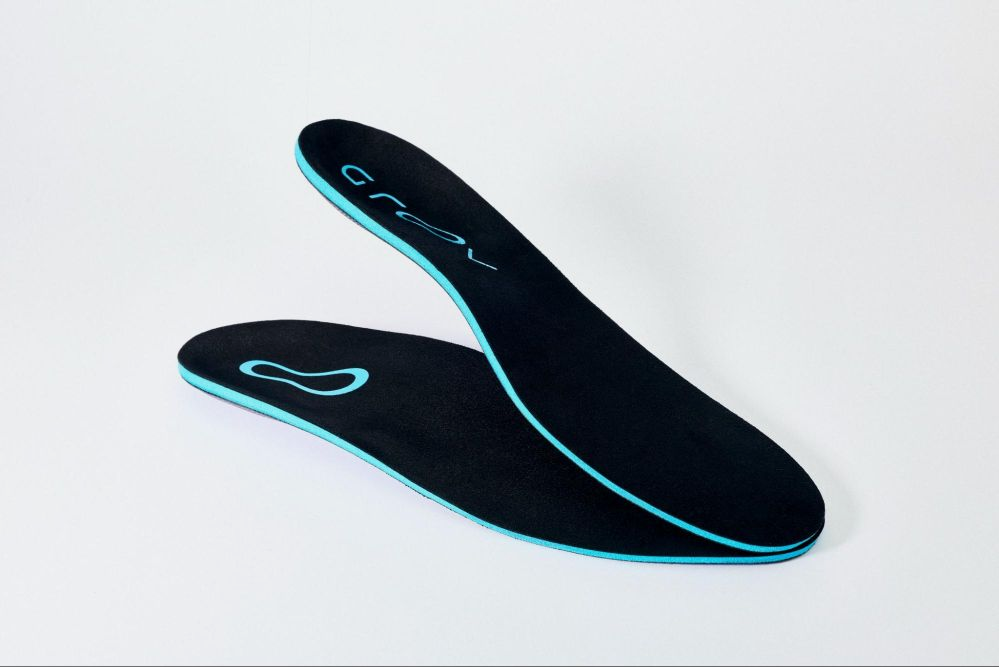
Groov approaches this by focusing on the part that actually matters. They are not trying to redesign every shoe on the market. Instead, they rework the surface inside the shoe itself, so the interface your body stands on matches the unique anatomy of your feet.
The process feels simple in a way that almost invites skepticism, because it starts with a quick scan using an iPhone, without extra equipment, complicated steps, or even an app you have to download. Behind that simplicity sits a system that analyzes over 30,000 data points to map the structure of each foot with a level of precision that goes far beyond approximation.
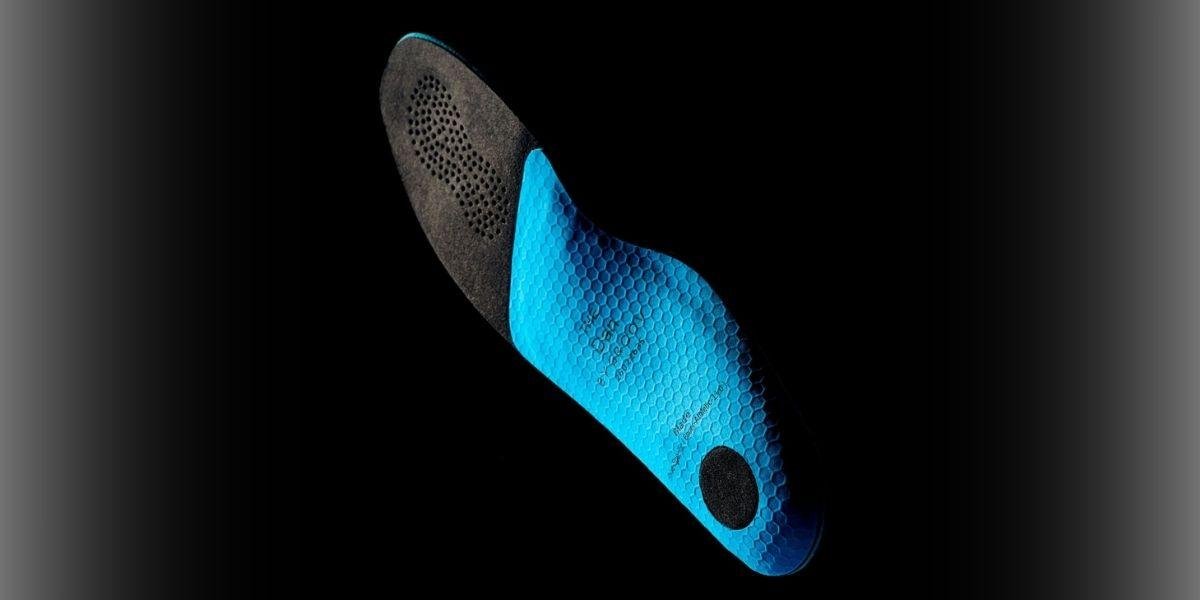
That information translates into a pair of custom insoles built to match not just the shape of the feet, but how they handle pressure, movement, and load over time. The intent is to change how the same shoes interact with the body, without changing the shoes themselves.
The design focuses on the surface where the foot meets the shoe, a variable that generic inserts tend to overlook. By tailoring that surface to each foot, the approach addresses a mismatch most footwear leaves in place from the start.
As that shift in thinking settles in, something else starts to happen. People begin questioning what they once accepted without thinking. Why was discomfort presumed normal? Why did relief feel like a prize that only arrived at the end of the day, after hours of unnecessary compromise?
That moment tends to reset the entire perspective, since once the surface is right, everything else starts to make a lot more sense.

Von Miller wearing Groov
The Industry Is Starting to Catch Up, Slowly
Change in an industry like footwear rarely happens overnight. It tends to move in stages: awareness builds first, experimentation follows, and only then does a real shift in expectations begin to take hold.
Right now, the conversation sits somewhere in the middle of that process. People are starting to question what they have been given, but they are not yet collectively demanding a better answer.
Athletes were among the first to push that shift forward, largely because they operate with both unusually high performance standards and unusually high access to optimization tools. When the demands are extreme, even small inefficiencies show up quickly, making the connection between stability, endurance, injury prevention, and how the body interacts with the ground almost impossible to ignore.
For that reason, athlete behavior has often acted as an early signal for where consumer footwear trends eventually move. What begins as a performance advantage at the highest levels tends to filter outward once everyday people start recognizing the same underlying problems in their own lives.
That awareness is now moving beyond sports, as more people notice the gap between what they have been told should work and what actually feels right for their bodies over the course of a normal day.
Groov sits directly within that shift by focusing on something the industry has overlooked for years, positioning itself not as a replacement for shoes, but as a system that allows them to behave the way people deserve from the beginning.
Feet are unusually complex structures, and supporting them correctly is far more nuanced than most products in apparel or footwear acknowledge. In that sense, they are closer to eyesight than clothing. Like glasses, the interface works best when it is personalized to the individual, because approximation only goes so far, and the wrong support can sometimes feel worse than no support at all.
That is why the current moment feels less like innovation and more like a delayed correction, where the industry is finally starting to acknowledge something that has been sitting in plain sight for years.
Discomfort Was Never the Baseline. It Was Just Left Unchallenged
Most people do not think much about their feet until something feels off, and even then, it is easy to brush it aside as part of a long day. That small sense of relief when shoes come off feels normal, which is exactly why it goes unquestioned.
But comfort was never meant to show up only at the end of the day. It is supposed to be there while you are moving through it, without needing to notice it at all.
What people are really looking for is not complicated. They want to walk, stand, and go about their day without constantly adjusting or thinking about how their feet feel. They want things to just work.
That expectation is reasonable. It just has not been built into the way shoes have been made for a long time.
Groov is part of a shift toward changing that by focusing on the surface your body actually interacts with. Instead of asking you to replace your shoes, it makes them yours. It works with what you already own, using a quick scan to create a personalized fit that matches how your body moves.
The aim is not a dramatic transformation but a better baseline, the kind that shows up quietly across an ordinary day. For many people, that means a fit built around their own feet rather than a generic template.
If you’re like most people, you have probably been living with a level of low-grade discomfort that became so familiar it stopped feeling noticeable. When you finally stand on a surface that actually fits you, the difference tends to become clear surprisingly quickly.