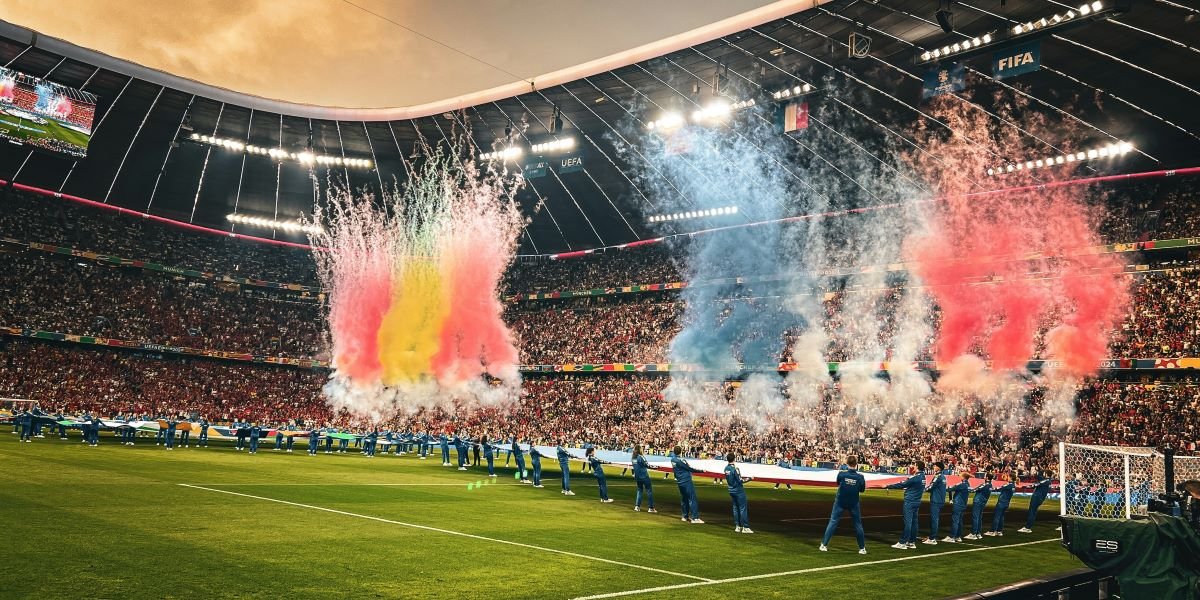
The 2026 FIFA World Cup begins June 11, and for the United States it represents a logistics undertaking of rare scale. The expanded 48-team tournament, co-hosted with Canada and Mexico, will play 104 matches across 16 cities, 11 of them in the United States, before the July 19 final at MetLife Stadium in East Rutherford, New Jersey. The opening match goes to Mexico City’s Estadio Azteca, with the United States beginning its campaign against Paraguay in Los Angeles on June 12. What separates this edition from past tournaments is less the soccer than the scale of the economic bet the host cities have placed.
A Tournament Spread Across Eleven American Metros
The American host cities are Atlanta, Boston, Dallas, Houston, Kansas City, Los Angeles, Miami, the New York and Northern New Jersey area, Philadelphia, the San Francisco Bay Area and Seattle. Each is preparing to absorb a wave of visitors through stadium retrofits, transit adjustments, expanded security and temporary hiring. The New York region carries the heaviest load, hosting eight matches at MetLife, including the final, while Dallas and Atlanta will stage semifinals and Miami the third-place game.
The run-up has already begun. The U.S. men’s national team played a tune-up against Germany at Chicago’s Soldier Field on June 6, even though Chicago opted out of hosting, a reminder that the tournament’s footprint extends beyond the official venues. Across the host metros, organizers are finalizing fan-zone plans, transportation surges and the staffing needed to run monthlong operations at NFL stadiums temporarily converted for soccer.
The Headline Economic Case
The projections that host cities have leaned on are substantial. FIFA, drawing on analysis from Oxford Economics, estimates the tournament will add about $17.2 billion to U.S. gross domestic product and support roughly 185,000 jobs, part of a projected $40.9 billion GDP contribution across North America. Hotel revenue in the host markets is forecast to rise between 7 and 25 percent in June, with the sharpest increases clustered around match days and later rounds.
The short-term rental market expects a parallel surge. Airbnb has projected more than $2.6 billion in host revenue across the U.S. cities, with the typical host earning around $4,000 over the tournament. Individual markets anticipate $160 million to $620 million in incremental activity, and cities such as Atlanta have forecast more than $1 billion in local economic impact from their slate of matches and associated training camps. For tourism boards, the larger prize is visibility: a global audience measured in the billions and a monthlong showcase aimed at converting first-time visitors into repeat travelers.
Why Independent Analysts Are More Cautious
The headline numbers sit at the optimistic end of the range. A Boston Consulting Group study prepared to support the North American bid estimated a more modest $5 billion in short-term activity and about 40,000 jobs across the continent, a fraction of FIFA’s figures. Analysts at Saxo Bank have argued that the official projections flatter the real effect, and reporting by ProPublica has questioned how much net revenue host cities will keep once public costs are subtracted.
Those public costs are not trivial. FIFA has put total tournament costs across the three nations near $14 billion, with the U.S. share exceeding $11 billion. Set against an economy the size of the United States, even a $17 billion boost amounts to less than 0.1 percent of GDP, which casts the event as a marginal national growth driver rather than a transformative one. Demand is the other open question: a survey of more than 200 hotels across the 11 U.S. host cities by the American Hotel and Lodging Association found that nearly 80 percent reported advance bookings tracking below their initial forecasts, with steep ticket and travel prices among the drags cited on attendance.
Host-City Readiness And The Real Test
The result is a tournament whose economic story will be settled in the execution rather than the forecasts. Cities that move visitors efficiently, fill hotel rooms and convert match-day crowds into broader spending stand to outperform; those that overbuilt or overpromised may find the gap between projection and payoff familiar from prior mega-events. History offers a caution: the GDP impact of large sporting events has tended to land well below the figures circulated beforehand, and the spending often shifts activity in time rather than adding it.
For now, the operational picture is the immediate test. Eleven metros are converting stadiums, ramping temporary workforces and coordinating with federal and local agencies on transit and security for an event that runs into late July. The matches will draw the cameras, but for the host cities the more consequential scoreboard is the one that tallies visitors, room nights and tax receipts against the public money already committed. Whether the 2026 World Cup delivers the windfall its boosters have promised, or a more modest bump, will become clear only after the final whistle in New Jersey.