When companies think about brand protection, they usually picture counterfeit crackdowns, trademark enforcement, and supply chain security. Few executives consider that one of the most vulnerable moments in a product’s lifecycle occurs after it has already been written off.
The risk does not begin when goods are manufactured. It begins when they are discarded.
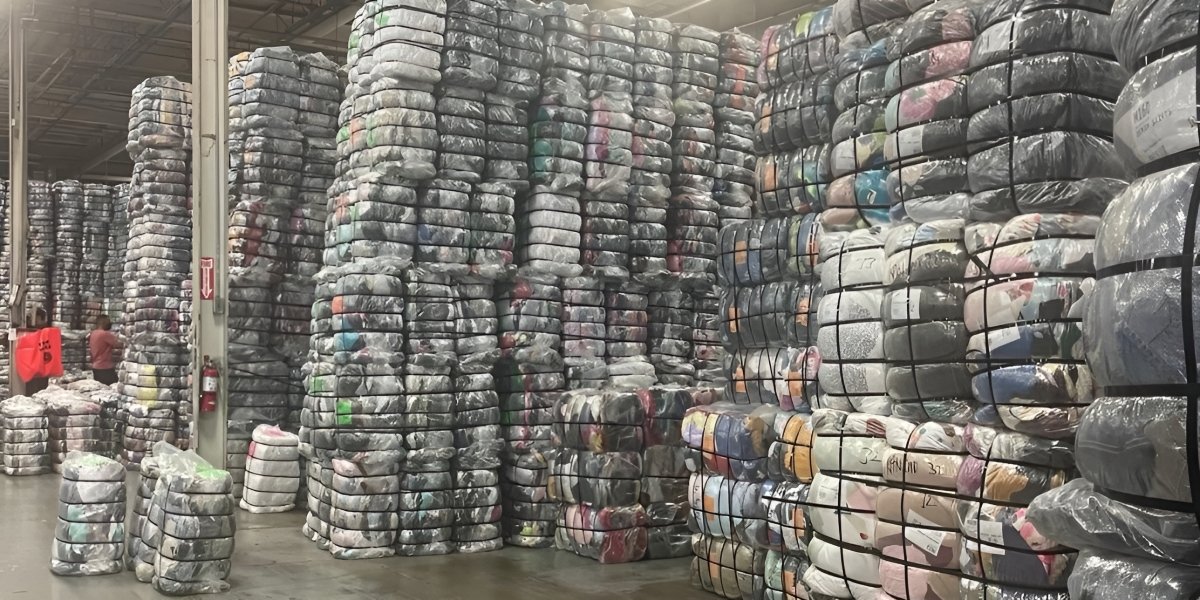
Every year, companies retire uniforms, liquidate excess seasonal inventory, remove defective merchandise, and absorb returned products that cannot be resold. Once these goods are categorized as unsellable, they move into a different internal classification: disposal. At that point, financial exposure may appear to end.
In reality, a different type of exposure can begin.
Across resale platforms and secondary marketplaces, branded products regularly appear outside official distribution channels. Some of these items were once legitimate goods that exited corporate facilities without structured oversight. Others were samples never intended for retail circulation. In certain cases, former employee uniforms might re-enter public view, worn by individuals with no affiliation to the company whose name appears on the fabric.
The optics are rarely flattering.
Consumers encountering discounted merchandise in unauthorized settings might not distinguish between official and unofficial supply. Retail partners may question pricing discipline when products appear below market value. Defective items that were never cleared for sale could damage perception if they resurface without context.
What seems like a waste-management decision becomes a brand governance issue.
The underlying cause is typically procedural, not malicious. Many disposal arrangements prioritize removal efficiency over lifecycle control. Materials are transferred to recyclers who focus on volume processing. Documentation may confirm pickup, but not necessarily irreversible disablement of branded goods before downstream handling.
In such systems, companies rely on assumptions rather than verification.
Corporate oversight has evolved in recent years. Boards increasingly scrutinize supply chain transparency, ESG disclosures, and risk management controls. Yet end-of-life handling frequently remains outside formal governance conversations. It often sits in an operational gray zone between logistics and sustainability.
That gap is narrowing.
Structured textile disablement can change the equation. By permanently rendering branded goods unusable prior to recycling or recovery, organizations reduce the possibility of unauthorized recirculation. The step may seem simple, but its implications are significant: the product is no longer usable as apparel, and therefore cannot re-enter commerce in its original form.
Vespene Recycling operates within this control-oriented approach. The Nevada-based facility, GRS certified and aligned with ISO 14001 environmental management standards, focuses on secure processing of retired textiles before they move into broader recovery systems.
What distinguishes structured processing from informal disposal is documentation. Verified transfer records and formal confirmation of destruction provide companies with something they often lack in end-of-life scenarios: evidence. Evidence that goods were permanently disabled. Evidence that material movement was tracked. Evidence that brand exposure was actively mitigated.
This matters in an era where stakeholder scrutiny extends beyond production practices to full lifecycle responsibility.
While regulatory developments such as California’s textile accountability measures may increase compliance expectations, the reputational argument can carry equal weight. A single viral image of unauthorized branded goods in circulation might generate questions about internal controls that extend far beyond sustainability.
For executive teams, the decision is less about waste diversion and more about oversight philosophy. Is product retirement treated as a controlled conclusion to the brand lifecycle? Or is it treated as an administrative necessity delegated without visibility?
Organizations that formalize structured disability processes might effectively close a governance loop. They help ensure that once goods are designated as retired, they are less likely to undermine the brand in unintended ways. Those who rely on loosely defined disposal channels risk accepting uncertainty in exchange for convenience.
Brand stewardship does not conclude at the cash register.
It concludes when the product no longer exists in a form capable of representing the company.
In a marketplace defined by transparency, retirement strategy has become part of reputation management.