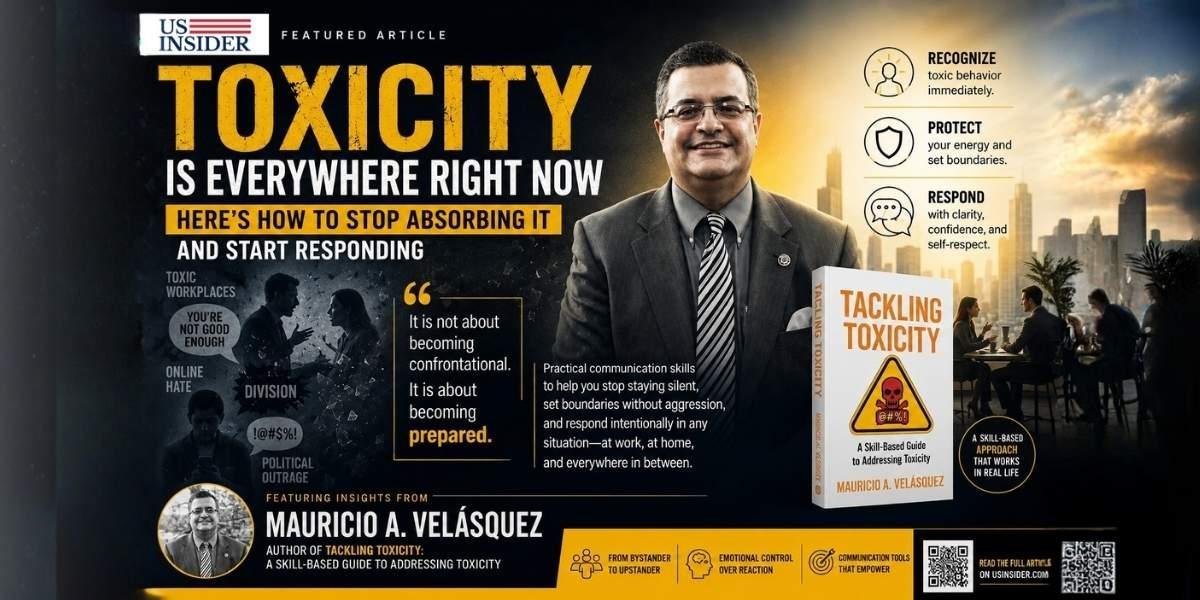
Toxic behavior has become difficult to avoid.
It shows up in workplaces, political conversations, family dynamics, and nearly every corner of social media. Harshness is often mistaken for honesty, outrage gets rewarded with attention, and many people have slowly learned that staying silent feels safer than speaking up.
The problem is not that people fail to recognize toxic behavior. Most people notice it immediately. The real challenge begins in the moments that follow. People freeze, stay quiet, replay conversations later, and think about what they should have said after the opportunity has already passed.
That gap between awareness and response is where frustration grows.
Over time, silence becomes habitual. Not because people agree with what they are seeing, but because they have never been taught how to respond effectively without escalating the situation. In workplaces, speaking up can feel risky. In families, it can feel emotionally exhausting. Online, it often feels pointless.
The emotional cost adds up quietly.
People begin dreading conversations. Confidence erodes. Trust weakens. Toxic behavior becomes normalized simply because no one knows how to challenge it constructively.
This is exactly where a skill-based approach becomes valuable.
Mauricio Velásquez has spent years working in environments where pressure, tension, and emotional conflict are common, from corporate leadership spaces to government agencies and law enforcement settings. Across those environments, one pattern remains consistent: toxic behavior rarely disappears when ignored. It usually grows stronger.
His book, “Tackling Toxicity: A Skill-Based Guide to Addressing Toxicity“, approaches the issue differently from most conversations surrounding toxic behavior. Rather than focusing on confrontation or emotional reactions, the book focuses on practical communication skills people can actually use in real situations.
The emphasis is not on “winning” arguments.
It is about responding with clarity, emotional control, and self-respect.
That is also where the shift from bystander to upstander begins.
Being an upstander does not mean attacking someone publicly or escalating every difficult interaction. It means understanding how to respond intentionally rather than shutting down or reacting emotionally. Sometimes the most effective response is calm, measured, and simple.
Many people assume they are “bad at confrontation” when the reality is much simpler, they were never taught the tools.
Skill-based responses change that dynamic. They provide structure when emotions are high. They help people set boundaries without aggression. They make it possible to speak up without turning every interaction into a power struggle.
This matters even more today because toxicity is no longer isolated to one environment. Stress from politics, burnout, financial pressure, social media culture, and uncertainty spills into everyday interactions. Without healthy communication tools, that tension leaks into conversations everywhere.
What makes Velásquez’s approach effective is that it remains grounded in reality. The book does not pretend toxic people suddenly become self-aware. It does not rely on idealistic thinking. Instead, it focuses on the one thing people can control consistently: their own response.
Readers are encouraged to protect their energy, communicate more intentionally, and stop internalizing behavior that should never have become normal in the first place.
For many people, that alone feels empowering.
If you have ever walked away from a conversation wishing you handled it differently, this book speaks directly to that experience. If you have ever stayed silent to avoid conflict and later regretted it, the framework offers another path forward.
“Tackling Toxicity” is not about becoming confrontational.
It is about becoming prepared.
With the right communication skills, people can stop absorbing toxic behavior and start responding in ways that feel grounded, clear, and confident.
That shift changes more than conversations.
It changes how people carry themselves entirely.