By: Natalie Johnson
When Growth Stops Feeling Like Progress
At a certain stage in a company’s life, growth begins to feel less like momentum and more like resistance. Revenue may be increasing, customers may be buying, and headcount may be expanding, but inside the organization, something subtly shifts. Decisions take longer than they once did. Meetings multiply without producing clarity. Leaders spend more time explaining how things work than actually moving the work forward.
This moment rarely arrives with a clear diagnosis. It does not present itself as a leadership failure, nor does it immediately resemble a talent problem. Instead, it shows up as friction: a sense that the organization is expending more energy to achieve outcomes that previously felt easier. Leaders respond by addressing what appears most visible, whether that means coaching underperformers, revisiting values, or restructuring teams. These responses are reasonable. They are also often aimed at the wrong level of the problem.
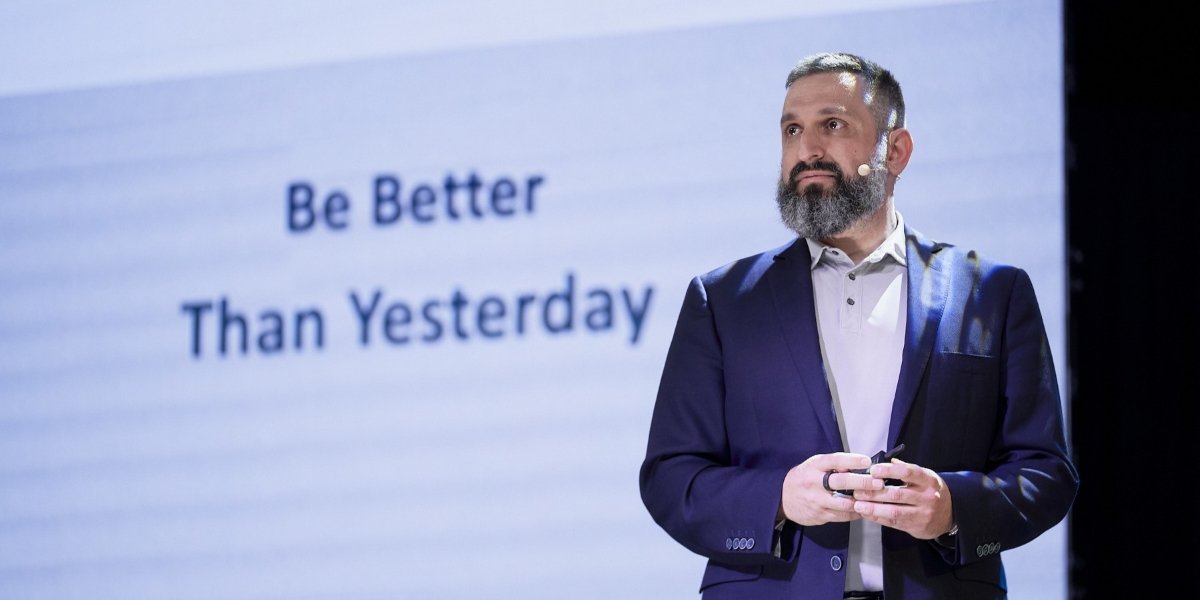
Ed Brzychcy, owner of Lead From the Front, works with mid-sized organizations navigating periods of rapid growth, and sees this as the point at which leadership models quietly begin to fail. What leaders experience as confusion or disengagement is often the result of systems that were never designed for the conditions growth creates.
The Limits of Familiar Fixes
In the early stages of a company’s development, leadership tends to operate through proximity. Context is shared informally. Decisions move quickly because the distance between strategy and execution is short. As organizations grow, that informal coherence begins to erode. Complexity increases, not only in the number of people involved, but in the number of decisions that must be made simultaneously and under pressure.
When strain becomes apparent, organizations often reach for familiar solutions. Leadership workshops, offsite retreats, and new frameworks promise renewed alignment and energy. These efforts are not misguided. They simply operate at the wrong level. Training can sharpen individual skills, but it does not change how authority flows through an organization or how decisions are made when time and information are limited.
What Brzychcy sees repeatedly is a gap between what organizations say they value and what their systems actually allow people to do. Under calm conditions, that gap can remain hidden. Metrics look acceptable, teams appear functional, and informal workarounds compensate for missing clarity. It is only when pressure increases that the underlying assumptions are exposed.
Pressure as a Diagnostic Tool
Leadership becomes visible when expectations collapse. In moments of disruption, whether triggered by rapid growth, an acquisition, or a missed forecast, organizations discover what has been embedded into their systems and what has merely been assumed. Questions that once felt theoretical suddenly matter. Who is allowed to decide without approval? How much risk is permitted to be taken? What happens when an experiment fails?
Under these conditions, organizations often learn that their leadership model depends heavily on individual judgment rather than shared logic. Management can preserve the status quo when conditions are stable. Leadership, however, is required when the status quo no longer holds.
This distinction explains why leadership breakdowns so often coincide with growth thresholds. Around thirty million dollars in revenue, informal communication begins to strain. By seventy-five million, flat structures that once enabled speed start to create bottlenecks. At larger scales, founders and early leaders often become bottlenecks, not because they insist on control, but because the system still routes decisions through them by default.
The Hidden Human Cost of Structural Drift
The consequences of operating this way are rarely immediate or dramatic. Burnout is reframed as commitment. Hesitation is interpreted as a lack of initiative. Over time, people learn that caution is safer than experimentation, even when leaders insist they want adaptability.
“There is often an unintentional element of fear that creeps in,” Brzychcy says. “If people believe mistakes are going to cost them, no rational person is going to take a risk.”
High performers are often the first to feel this strain. Accustomed to clarity and agency, they struggle most when expectations are implicit and authority overlaps. Talent amplifies the system it enters, and when that system lacks coherence, frustration spreads quickly.
This is why leadership issues are so often misdiagnosed as performance problems. The work still gets done. The cost shows up elsewhere, in disengagement, turnover, and a gradual erosion of trust that is difficult to measure but impossible to ignore.
Why Adaptability Is a Design Problem
One of the most persistent myths Brzychcy encounters is the idea that adaptability is a personal trait rather than an organizational capability. Companies celebrate resilience and grit, assuming that strong leaders will rise to meet uncertainty. In practice, adaptability emerges from systems that enable people to act with confidence even when information is incomplete.
In military environments, where Brzychcy spent more than a decade, high-performing units do not rely on constant direction from the top. They operate through clearly defined decision rights, a shared understanding of intent, and trust built through training and repetition. Authority is distributed not in the absence of structure, but because the structure supports it.
Translating this principle into business does not require rigidity or command-and-control leadership. It requires intentional design. Leadership must be treated as architecture rather than personality, with expectations embedded into roles, processes, and feedback loops that persist beyond any one individual.
Rebuilding Leadership for Scale
Brzychcy describes this work as an ongoing calibration rather than a one-time intervention. Leadership systems are not installed and left alone. They evolve as complexity increases. The aim is not compliance, but autonomy without chaos, where people understand both their authority and their boundaries.
This shift becomes especially critical as volatility and disruption increase in markets and industries. External uncertainty amplifies internal confusion, and organizations without clear leadership systems tend to default either to fear-driven control or decision paralysis. In those conditions, leadership systems function as a form of risk management, allowing organizations to move decisively without overcorrecting and to learn without assigning blame.
What distinguishes companies that navigate growth successfully is not superior talent or more inspiring culture statements. It is their willingness to redesign leadership for the conditions they are operating in, rather than the conditions that existed when the company was smaller.
What Growth Really Exposes
Growth itself does not break organizations. What breaks them is the expectation that people will indefinitely compensate for systems that were never designed to scale. Charisma can temporarily fill gaps, and effort can mask confusion for a time, but neither endures.
Sustainable leadership emerges when clarity outlives charisma and when organizations stop asking individuals to carry complexity that should be handled by structure. When leadership is treated as something that can be built, tested, and refined, people are able to lead effectively even when no one is watching.
This is what it takes to rebuild leadership at scale, not by asking more of people, but by intentionally designing systems that support them.