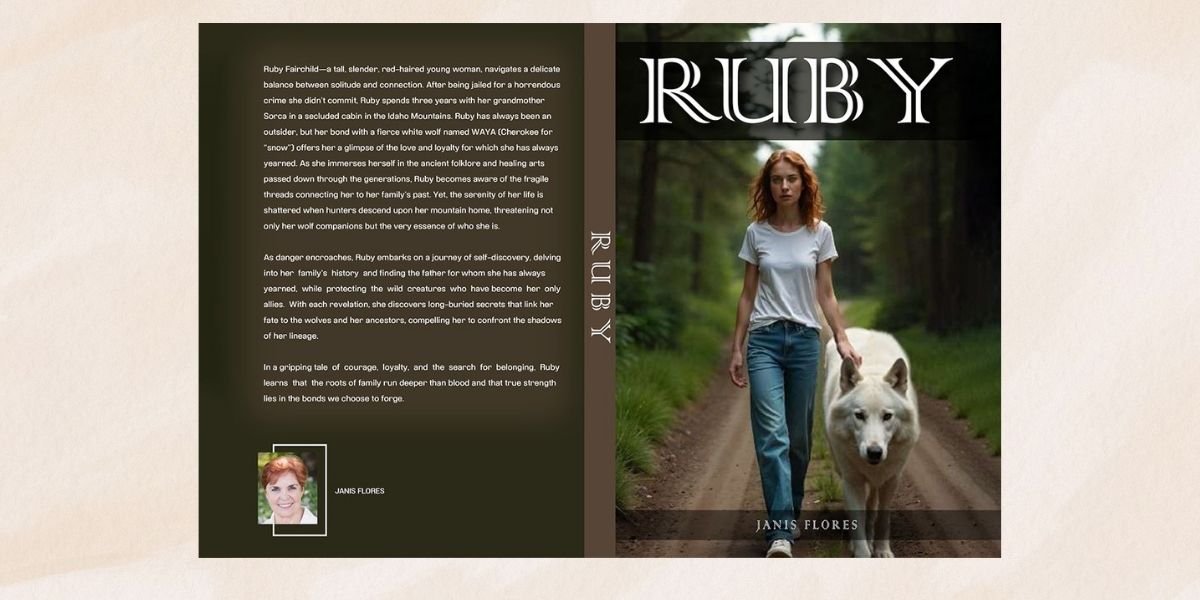
In Janis Flores’s new book Ruby, there’s a scene that leaves a lasting impact after you’ve finished it. Ruby Fairchild, who is 12 years old, sits at a worn kitchen table and watches her mother drink cheap whiskey till she passes out. Her stomach gnaws with emptiness. It’s easy to see what she wants: a bike, something that would enable her to get away from the rusty parts of her life. That bike might be the moon.
This is where the novel begins to show its teeth. Poverty isn’t just background decoration here. It is the air Ruby breathes, the language her body speaks, the reason her imagination sharpens like a blade. Hunger makes her alert. Hunger teaches her to watch out. Hunger pushes her to conjure worlds where survival feels less precarious.
The Weight of Want
Flores doesn’t make Ruby’s longings sound easier. She doesn’t provide soft-focus pictures of strength or a convenient hero who comes in at the last minute. Instead, she lets Ruby dwell with the pain of desire. Food. Safety. Love that doesn’t come with fists or doors being slammed.
Children in poverty know this sensation intimately: the poor stomach. Kids know this feeling well: their stomachs squeeze tight, they count money before bed, and they have a list of minor wants that they never say out loud. Flores gets that with a scary amount of accuracy. Ruby doesn’t daydream about big excursions. She wants a supper that lasts and a place where she doesn’t have to worry about the next outburst. That’s all. That’s all there is.
Hunger as Creativity’s Shadow
What’s striking is how Ruby’s deprivation doesn’t crush her imagination; it shapes it into something fierce. When she encounters Waya, the great white wolf with star-shot eyes, she doesn’t see a monster. She sees possibility. She sees the kind of loyalty and power she has never once experienced in human form.
That imaginative leap is born of lack. Children who have never felt unsafe rarely learn to spot small flickers of hope in unlikely places. Ruby, malnourished in body and spirit, trains her eye on the improbable. She creates kinship out of wilderness. She stitches together a pack where none exists.
It’s not fantasy in the traditional sense. It’s survival, a psychic recalibration that turns scarcity into a story.
A Mirror to Real Life
Reading Ruby’s yearnings feels uncomfortably close to real headlines. More than one in six children in the United States lives in poverty. Globally, the numbers are even starker. And while statistics can numb, stories like Ruby’s refuse to let us look away. They humanize the hunger. They remind us that behind every number is a child calculating what can be stretched, what can be endured, what must be imagined to get through another night.
Flores doesn’t sermonize. She doesn’t need to. By placing us in Ruby’s shoes, by letting us feel the sharpness of her longing, she achieves what nonfiction rarely does: she makes hunger visceral.
The Author Behind the Story
Janis Flores knows what it’s like to hear silence in small villages. She grew up in the rural West, where poverty was always close by, and secrets about violence, addiction, and desperation were always just below the surface of community life. Those experiences shape her writing.
She has said she wanted Ruby to feel like overhearing a story you weren’t meant to hear, the kind whispered behind closed doors. Not polished. Not safe. Real. And that’s why the book feels so alive, so unsettling. Flores isn’t writing from abstraction. She’s pulling from memory, from observation, from a keen awareness of what it means to grow up with too little and be told to make do.
Praise That Howls
Early readers have compared Ruby to Where the Crawdads Sing and Barbara Kingsolver’s Demon Copperhead. Not because Flores is imitating, she isn’t, but because she’s writing in the same fearless lineage of women who refuse to clean up the dirt before putting it on the page.
One reviewer called the novel “a feral hymn to survival, harsh, breathtaking, and unforgettable.” Another noted that the wolves don’t serve as a metaphor alone, but as characters with their own gravity, their own wild agency. These aren’t imaginary friends conjured by a lonely child. They are real, dangerous, magnificent, and yet they become the only steady ground Ruby can trust.
More Than Just Wolves
Still, the wolves do operate on another level. They are hungry transformed. Ruby may not have a bike, or reliable meals, or steady love, but she has this: a white wolf who returns, again and again, to the clearing where she waits. That consistency is everything.
For readers, Waya and Luna embody what poverty forces many children to do: invent survival mechanisms out of scraps, fashion safety from the unlikeliest of materials. The wolves are real in the novel, yes. But they are also the shape of Ruby’s determination not to vanish into despair. They are imagination turned lifeline.
Why Ruby Matters Now
These days, when we talk about inequality, it frequently seems like we’re talking about abstract ideas, full of language and policy arguments. Ruby cuts through the gloom. It reminds us that for a child, being poor isn’t just about numbers. It’s about desiring a bike that you can’t have. It’s about eating crackers for dinner and pretending you’re full. It’s about dreaming of wolves because humans have failed you.
Flores has written a book that doesn’t whisper comfort; it demands reckoning. And yet, strangely, it also delivers a kind of hope. Not the easy kind, but the type forged in grit, in imagination, in the bond between a girl and the wilderness that will not abandon her.
The Call Beyond the Page
So what do we do with Ruby’s hunger once we’ve read it? Perhaps we recognize our own for stability, companionship, and a world that doesn’t leave children to fend for themselves. Maybe we look differently at the packs we’ve built, the wolves we’ve found, the scraps of safety that hold us together.
And maybe, too, we read on. Because sometimes the act of picking up a book like Ruby is itself a small rebellion against silence, against denial, against the temptation to look away.
Ruby is available now wherever books are sold. Step into Ruby’s world. Let her hunger remind you of what matters, and let her wolves show you what survival can look like when imagination refuses to die.